
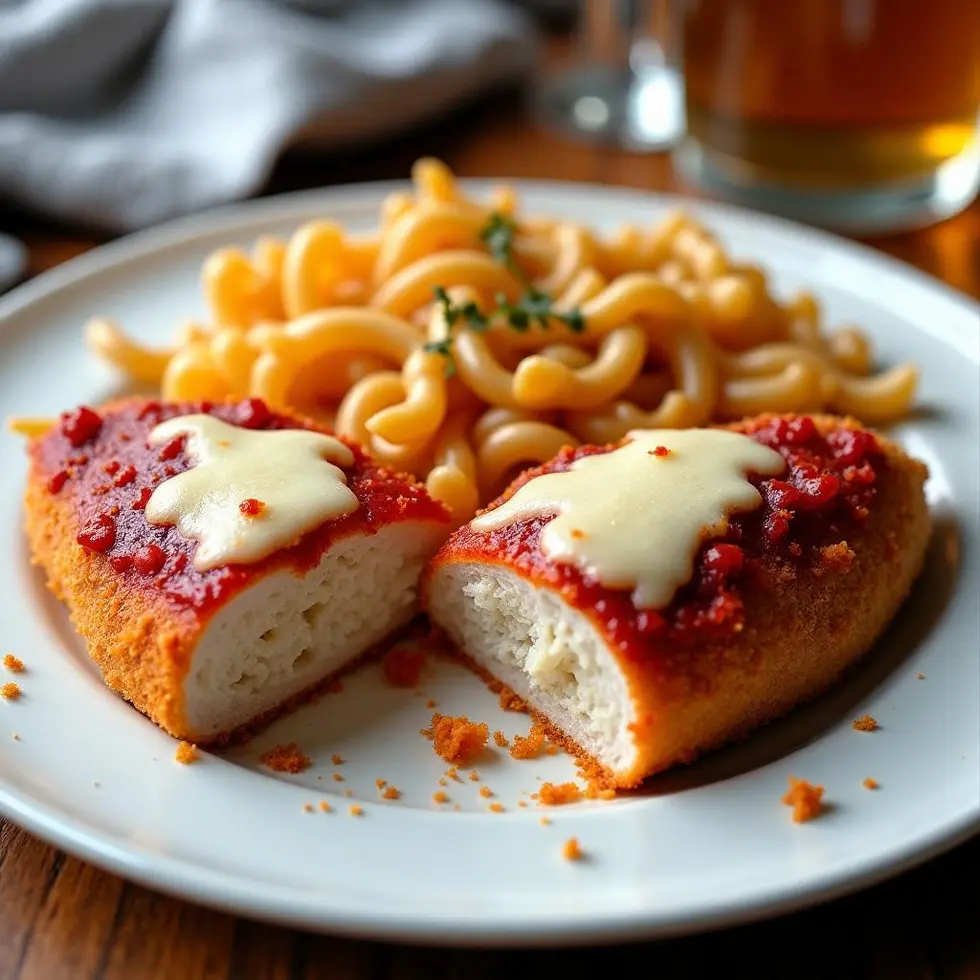
The moment I saw bubbling mozzarella pull away from the marinara as I sliced into the first breast, I knew the resting step had actually worked.
Nothing in this olive garden parmesan chicken recipe runs longer than the 40 minutes on the label.
This method takes 40 minutes from start to finish and serves four, making it practical for weeknight dinners or weekend meal prep. The chicken stays juicy because the breading creates an insulating layer while the oven finishes the cooking. You can prep the coating station ahead and refrigerate the breaded chicken for up to four hours before cooking, which spreads the work across the day.
The restaurant-style texture comes from the double coating of Parmesan cheese. Half of the grated Parmesan goes into the breadcrumb mixture, which gives you a golden crust with toasted cheese flavor. The other half gets sprinkled on top of the marinara and mozzarella before the skillet goes into the oven, creating a second layer of crispy, salty finish. That dual application delivers the familiar cheesy crust without needing a deep fryer or excess oil.
Why This Parmesan Chicken Works
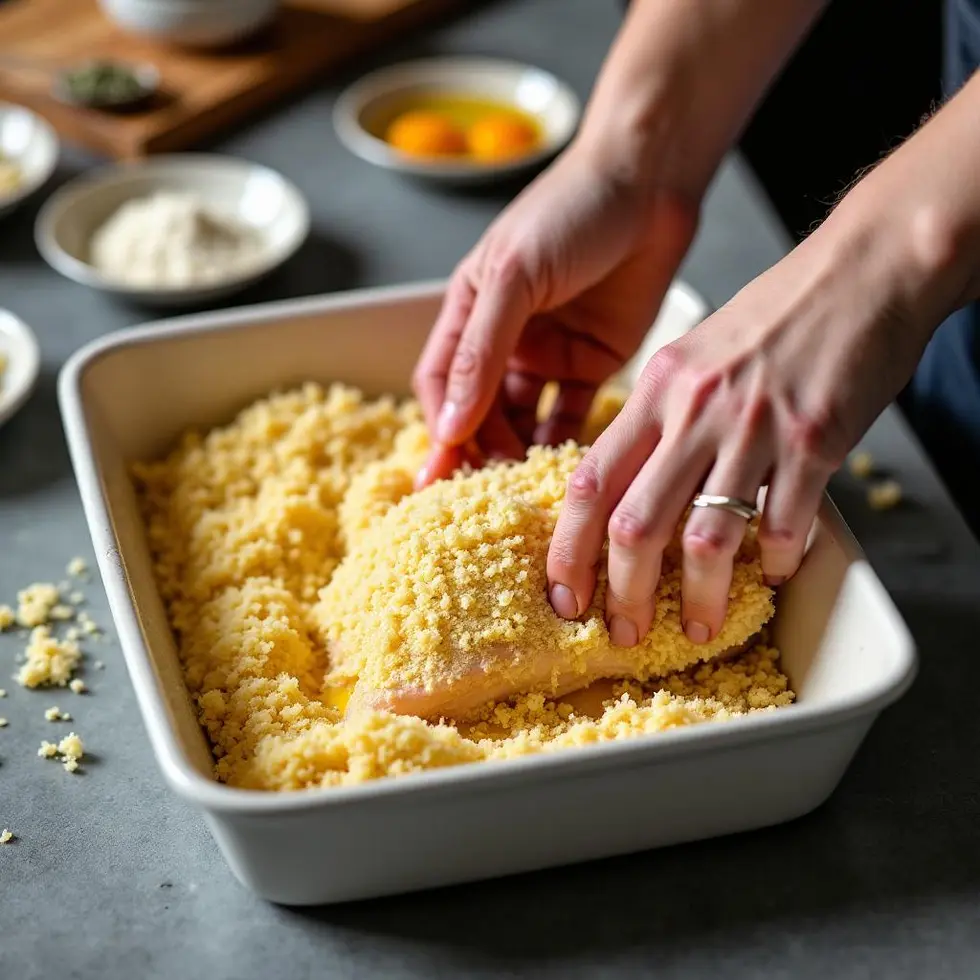
The Coating Builds Flavor in Layers
The three-step breading station creates a coating that sticks through the sear and the bake. Flour dries the surface of the chicken and gives the egg something to grab. The beaten egg acts as glue for the breadcrumb-Parmesan mixture. Italian breadcrumbs already contain dried herbs and garlic, which means you don’t need to season each layer separately.
Mixing half the Parmesan directly into the breadcrumbs ensures every bite of the crust carries cheese flavor. When the chicken hits the hot skillet, the Parmesan in the coating toasts and develops a nutty, salty depth that plain breadcrumbs alone cannot deliver.
Thickness Determines Doneness Timing
Pounding the chicken breasts to half an inch creates even thickness from end to end. That uniform shape means the thin end and the thick end reach 165°F at the same time, so you don’t end up with dry edges and undercooked centers. Most grocery store chicken breasts are thicker on one side, which throws off timing and leaves you guessing.
The 3 to 4 minutes per side in the skillet gives you a golden crust without fully cooking the chicken through. The oven finish brings the internal temperature to 165°F while the cheese melts and bubbles. This two-stage method prevents the coating from burning before the chicken is done.
Resting helps the inside stay juicy
The three-minute rest after baking allows the juices to redistribute instead of running out onto the cutting board. When chicken comes out of the oven, the heat pushes moisture toward the center. Resting gives that moisture time to move back through the meat, so each slice stays moist instead of leaking clear liquid the moment you cut into it.
Resting also lets the cheese set slightly, which makes plating cleaner and prevents the mozzarella from sliding off the chicken when you transfer it to plates.
How to Make Olive Garden Parmesan Chicken
Set Up the Breading Station
Preheat your oven to 400°F and arrange three shallow dishes in a row. Put the flour in the first dish, the beaten eggs in the second, and the breadcrumb-Parmesan mixture in the third. Use half a cup of grated Parmesan in the breadcrumb dish and reserve the other half for topping.
Press each chicken breast into the flour, turning once to coat both sides, then shake off the excess. Dip the floured chicken into the egg, letting any extra drip back into the dish. Finally, press the chicken into the breadcrumb mixture, patting gently to help the coating stick. Flip and coat the other side the same way.
A common mistake is skipping the flour step, which leaves the egg with nothing to cling to. The result is a coating that peels away in the skillet. The flour creates a dry base that holds the egg, and the egg holds the breadcrumbs.
Sear and Bake in the Same Skillet
Heat three tablespoons of olive oil in a large oven-safe skillet over medium-high heat. When the oil shimmers, add the breaded chicken breasts, leaving space between each piece. Cook for 3 to 4 minutes per side until the coating turns golden brown and crisp.
The goal here is color and texture, not full doneness. The internal temperature at this stage will be around 130°F to 140°F. Once both sides are golden, spoon marinara sauce over each breast, then scatter the shredded mozzarella and the remaining Parmesan on top.
Transfer the skillet directly to the oven and bake for 12 to 15 minutes. The chicken is done when the cheese is melted and bubbly and a thermometer inserted into the thickest part reads 165°F. Pull the skillet out and let the chicken rest for three minutes before serving. This version of homemade Olive Garden chicken uses a similar oven-finish technique to help the inside stay juicy.
Pasta Pairings, Tips and Leftovers
What to Serve Alongside
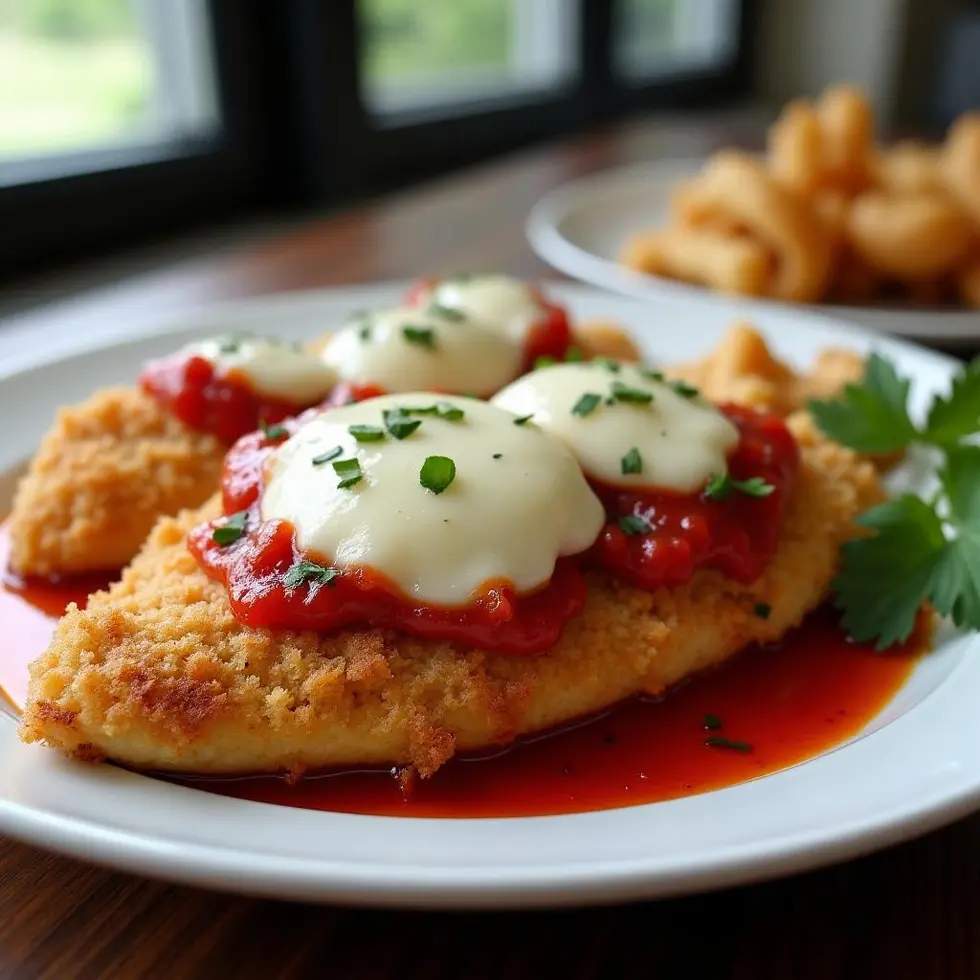
Spaghetti or fettuccine work well because the long strands catch the marinara that pools around the chicken. Toss the pasta with a little olive oil and garlic before plating to keep it from sticking. You can also use penne or rigatoni if you prefer a shorter shape that holds sauce inside the tubes.
Steamed broccoli, roasted zucchini, or a simple green salad balance the richness of the cheese and breading. A garlic bread side soaks up any extra marinara on the plate.
For a variation, swap the marinara for a creamy garlic sauce. The technique from Chique Home Living uses heavy cream and Parmesan to create a smooth sauce that pairs with the same crispy coating.
Storage and Reheating
Store leftover chicken in an airtight container in the refrigerator for up to three days. Reheat in a 350°F oven for 10 to 12 minutes to restore the crispy coating. Microwaving softens the breading, so the oven method is worth the extra time.
You can freeze the breaded, uncooked chicken on a parchment-lined baking sheet until solid, then transfer the pieces to a freezer bag. When you’re ready to cook, sear and bake from frozen, adding an extra 5 minutes to the oven time. The cheese will still melt evenly, and the chicken will reach 165°F without drying out.
If you want a lighter version, skip the skillet sear and bake the breaded chicken on a wire rack set over a baking sheet at 400°F for 20 minutes, then add the sauce and cheese and bake for another 10 minutes. The rack allows air to circulate, which keeps the bottom of the coating crisp without frying.
Golden Crust and Juicy Center
The coating stays crisp because you sear it before adding the sauce and cheese. Once the breadcrumbs set in the hot oil, they form a protective barrier that holds up in the oven. That initial sear also gives you the toasted Parmesan flavor that plain baked chicken cannot match.
Start with chicken breasts pounded to half an inch, coat them carefully through all three stations, and sear each side until golden. The rest happens in the oven while the cheese melts. Make it once, and next time you can adjust the marinara amount or swap in provolone if you prefer a milder cheese.
Frequently Asked Questions
Can I use panko instead of Italian breadcrumbs?
Panko creates a lighter, crunchier coating, but it lacks the seasoning that Italian breadcrumbs provide. If you use panko, add half a teaspoon of dried basil, half a teaspoon of garlic powder, and a quarter teaspoon of black pepper to the breadcrumb mixture. The texture will be crispier, but the flavor will be less herb-forward unless you season it yourself.
How do I know when the chicken is done without a thermometer?
Cut into the thickest part of one breast after the bake time. The meat should be opaque white with no pink, and the juices should run clear. A thermometer is more reliable, but the visual check works if you don’t have one. Undercooked chicken will look translucent and feel soft when pressed.
Can I make this without an oven-safe skillet?
Sear the chicken in a regular skillet, then transfer the breaded pieces to a baking dish before adding the sauce and cheese. The texture will be nearly identical, though you’ll lose the crispy bits that stick to the skillet. Lightly oil the baking dish to prevent sticking.
Why does the coating fall off during cooking?
The coating slips when the flour layer is skipped or when the chicken is too wet before breading. Pat the chicken dry with paper towels before you start, and make sure each piece goes through flour, egg, and breadcrumbs in that order. Pressing the breadcrumbs gently onto the surface helps them stick better during the sear.
Chicken Parmesan
Ingredients
Method
- Preheat the oven to 400°F / 200°C and set up three shallow dishes with flour, beaten eggs, and a mixture of breadcrumbs and half the Parmesan cheese.
- Dredge each chicken breast in flour, dip in egg, then coat thoroughly in the breadcrumb-Parmesan mixture.
- Heat olive oil in a large oven-safe skillet over medium-high heat and cook the chicken for 3 to 4 minutes per side until golden brown.
- Spoon marinara sauce over each chicken breast, then top with mozzarella and the remaining Parmesan cheese.
- Transfer the skillet to the oven and bake for 12 to 15 minutes until the cheese is melted and bubbly and the chicken reaches 165°F / 74°C.
- Rest for 3 minutes before serving to let the juices settle and the cheese set.
