
A wide skillet with a lid turns bone-in chicken thighs and long-grain rice into a complete meal without switching pans or juggling timing.
This method delivers four servings in 45 minutes from start to finish. The chicken sears first to build a golden-brown exterior, then the same pan toasts the rice and absorbs the browned bits left behind. When you nestle the seared thighs on top of the rice and broth, the covered skillet traps steam that cooks both components at the same time while keeping the chicken skin exposed to maintain texture.
Bone-in, skin-on thighs stay juicier than boneless cuts because the bone conducts heat more evenly and the skin protects the meat during the full simmer. The rice steams beneath the chicken, soaking up both the broth and the drippings that render from the thighs as they finish cooking.
The skillet needs to be large enough to hold four thighs in a single layer without crowding, typically 12 inches across. A tight-fitting lid is essential because it traps the moisture that the rice needs to cook through without drying out. If steam escapes, the rice on the edges turns hard and the chicken loses moisture before it reaches 165°F / 74°C at the thickest part.
Why Chicken and Rice Works for Dinner
The Pan Does Most of the Work
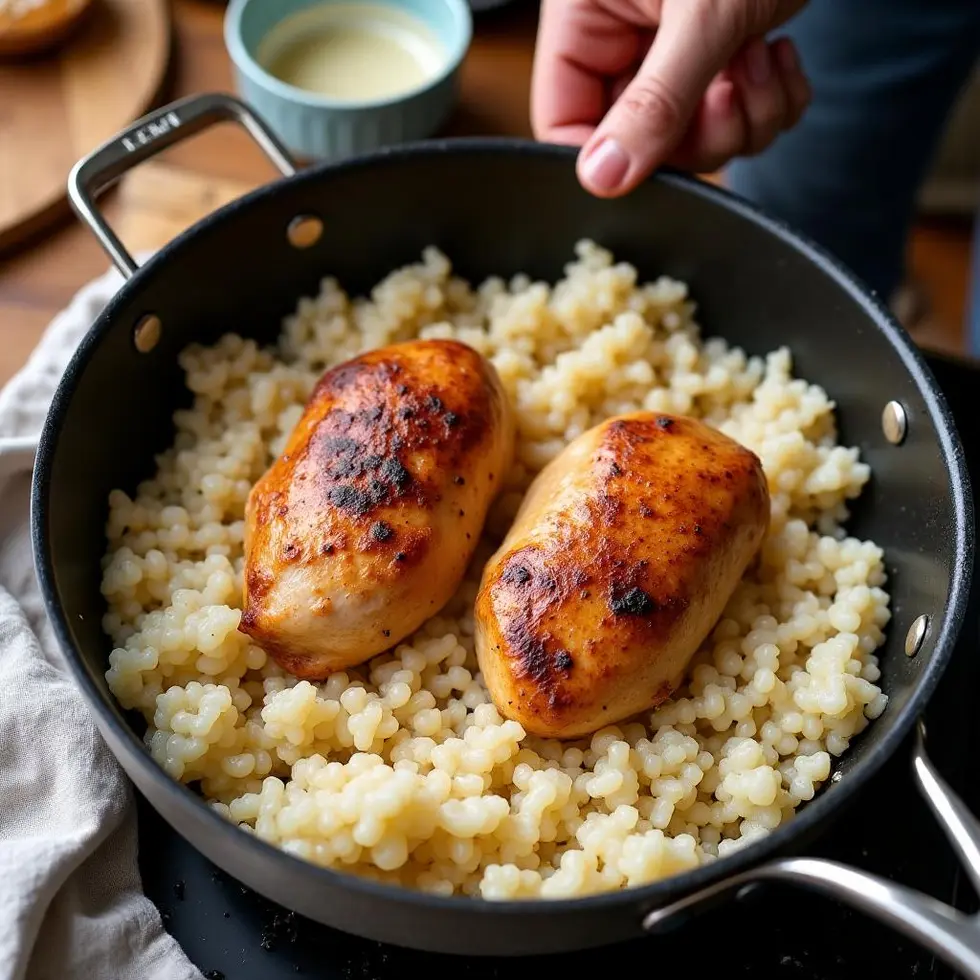
A single large skillet handles both searing and simmering, which means you build flavor in one layer and cook everything in the same vessel. The chicken sears skin-side down for five minutes over medium-high heat, then flips for three minutes more. That eight-minute sear creates a browned crust and leaves behind fond—the caramelized bits stuck to the pan—that dissolves into the rice when you add the broth.
Once you remove the chicken, the pan is already hot enough to soften diced onion in two minutes. The rice toasts for one minute in the same fat, which coats each grain and helps it stay separate as it steams. Pouring in the broth deglazes the pan, lifting all the browned bits into the liquid where they season the rice as it cooks.
Bone-In Thighs Stay Juicy
Bone-in, skin-on chicken thighs weigh about 150 grams each and contain more fat than breasts, which keeps the meat moist during the 20 to 22 minutes of covered simmering. The bone slows the heat transfer to the center of the thigh, so the outer meat doesn’t overcook while the interior reaches 165°F / 74°C. The skin renders fat that drips onto the rice below, adding richness and preventing the grains from sticking together.
Boneless thighs cook faster and can turn dry if you follow the same timing. If you prefer boneless cuts, reduce the simmer time to 15 minutes and check the internal temperature at that point.
The Rice Absorbs Everything
Long-grain white rice absorbs 1.67 times its volume in liquid, which is why 1.5 cups of rice needs 2.5 cups of broth. The rice sits directly in the skillet, so it soaks up the broth, the rendered chicken fat, and the dissolved fond. By the time the chicken reaches safe internal temperature, the rice has steamed to tenderness and carries the seasoning from the garlic powder, smoked paprika, and black pepper rubbed onto the thighs.
The five-minute rest after you remove the skillet from the heat allows the rice to finish absorbing any remaining liquid and gives the chicken time to reabsorb some of its juices, which makes each bite more flavorful. Once the skillet cools slightly, the chicken skin firms up again instead of staying soft.
Easy Chicken and Rice Dinner Ideas
How to Season the Chicken
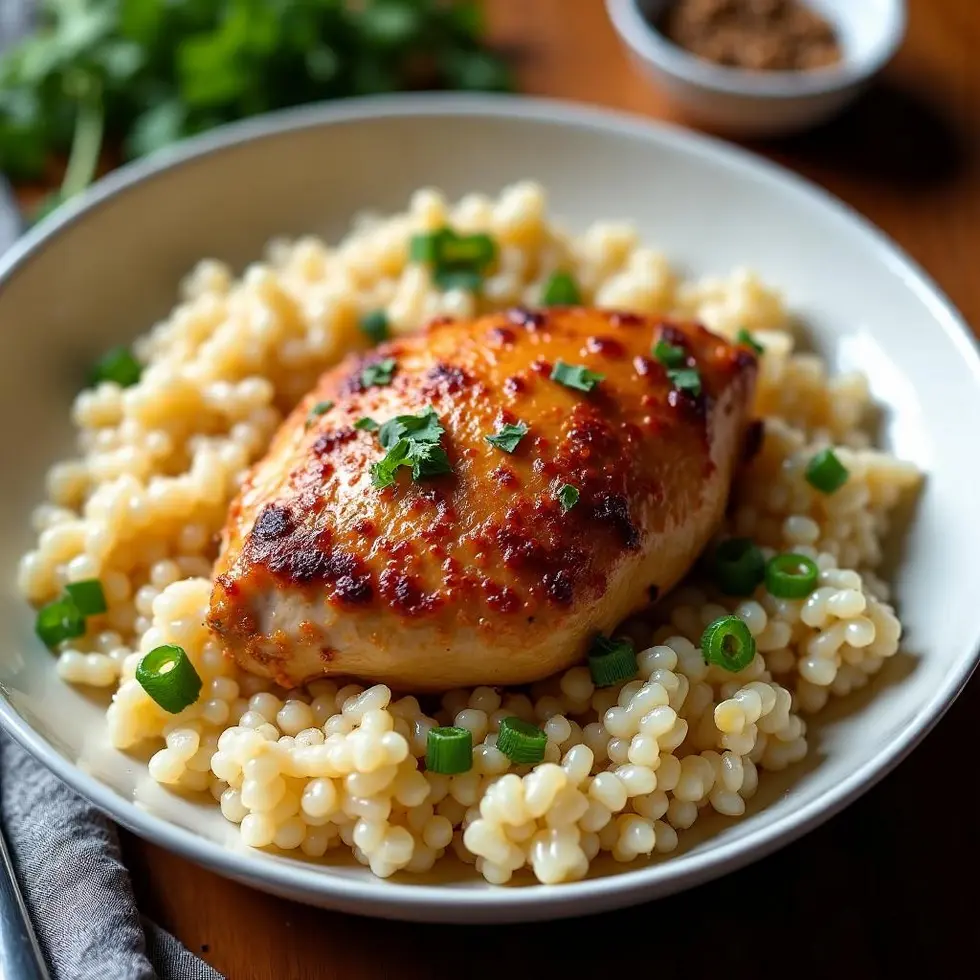
Rub one teaspoon of garlic powder, one teaspoon of smoked paprika, and half a teaspoon of black pepper onto both sides of each thigh before searing. The garlic powder disperses evenly across the surface and toasts during the sear, while the smoked paprika adds a mild smoky note without needing liquid smoke or additional ingredients. Black pepper sharpens the flavor and balances the richness of the rendered fat.
This dry rub works better than a wet marinade for this method because it adheres to the skin and forms a crust during the sear. A wet marinade would steam off the surface in the covered skillet and prevent browning. If you want deeper seasoning, apply the rub 30 minutes before cooking and refrigerate the thighs uncovered so the surface dries slightly, which improves the sear.
Searing the Chicken Properly
Heat one tablespoon of olive oil in the skillet over medium-high heat until it shimmers but does not smoke. Place the thighs skin-side down without moving them for the full five minutes. Moving the chicken too early tears the skin and prevents even browning. The skin should release from the pan on its own once it has formed a crust.
Flip the thighs and cook for three minutes on the second side, then remove them and set them aside. You do not need to cook the chicken all the way through at this stage because it finishes in the broth. The goal is to build color and render some of the fat, which flavors the rice and creates the fond that dissolves during the simmer.
Building the Rice Base
Add the diced onion to the same skillet without wiping it clean. The onion softens in two minutes and picks up the browned bits left behind by the chicken. Stir in the rice and cook for one minute, stirring constantly so each grain is coated in the fat and toasted lightly. This step prevents the rice from clumping and helps it absorb the broth evenly.
Pour in the chicken broth and bring it to a boil, scraping the bottom of the pan to release any remaining fond. Once the liquid boils, nestle the seared thighs on top of the rice, skin-side up, then reduce the heat to low and cover the skillet. The steam trapped under the lid cooks the rice and the chicken at the same time, and the chicken fat drips down into the grains as it renders. Similar approaches work well for dishes that rely on layered flavors built in one vessel, as demonstrated in the Chipotle steak bowl recipe where ingredients cook together to develop depth.
One-Pot Tips and Flavor Variations
Temperature and Timing
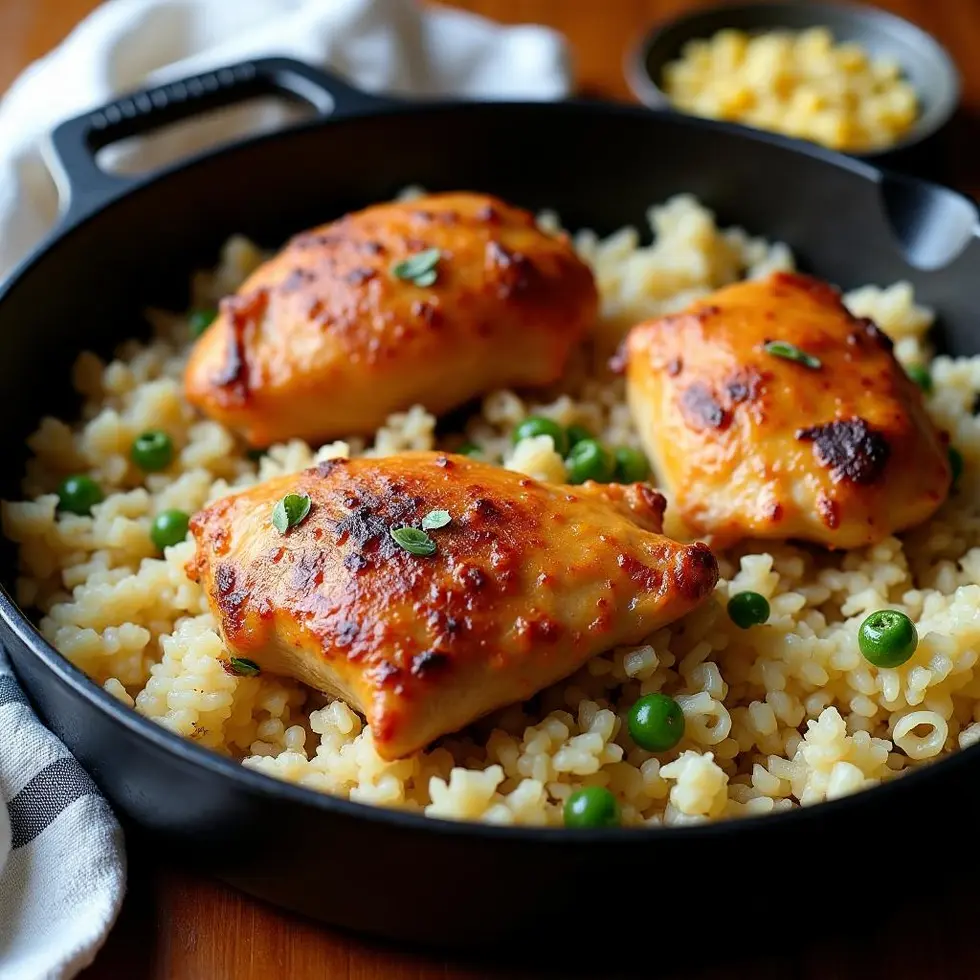
The chicken must reach 165°F / 74°C at the thickest part of the thigh, measured with an instant-read thermometer inserted near the bone without touching it. After 20 minutes of covered simmering, check the temperature. If the chicken has not reached 165°F / 74°C, cover the skillet again and simmer for two more minutes, then check again.
The rice should be tender and have absorbed all the broth by the time the chicken reaches safe temperature. If the rice is still firm and liquid remains in the pan, cover and simmer for another two to three minutes. If the rice is tender but excess liquid remains, remove the lid and simmer uncovered for one to two minutes to evaporate the extra broth.
Resting Before Serving
Remove the skillet from the heat and let it rest covered for five minutes. During this time, the chicken reabsorbs some of its juices, which makes the meat more moist when you cut into it. The rice also finishes steaming and firms up slightly, so it does not stick to the bottom of the pan when you serve it.
If you skip the rest, the chicken releases more liquid onto the plate and the rice can turn mushy because it has not had time to finish absorbing the remaining moisture. The five-minute rest is short enough that the food stays hot but long enough to improve the final texture.
Flavor Variations
Add one bay leaf and a pinch of saffron to the broth before bringing it to a boil for a Mediterranean variation. For a Southeast Asian angle, replace the smoked paprika with one teaspoon of turmeric and add one stalk of bruised lemongrass to the rice. Remove the bay leaf or lemongrass before serving.
If you prefer a spicier version, stir half a teaspoon of cayenne pepper into the dry rub or add one diced jalapeño to the onion before stirring in the rice. For extra richness, stir two tablespoons of butter into the rice after the skillet has rested and before serving. These chicken and rice recipes for dinner adapt well to different flavor profiles because the base method stays the same while the seasoning changes the final result. Resources like Dinner, then Dessert offer casserole variations that bake in the oven instead of simmering on the stovetop.
The Skillet Makes It Work
A 12-inch skillet with a tight lid controls every stage of this recipe. The wide surface area sears four thighs at once without crowding, and the same pan toasts the rice, dissolves the fond, and traps the steam needed to cook both components evenly. If you use a smaller pan, the chicken sits too close together and steams instead of searing, and the rice cooks unevenly because the thighs block the heat.
Choose a skillet with a heavy bottom, preferably cast iron or stainless steel with an aluminum core, because it holds heat steadily during the sear and distributes it evenly during the simmer. A thin pan develops hot spots that burn the rice on the bottom before the chicken reaches 165°F / 74°C.
Frequently Asked Questions
Can I use chicken breasts instead of thighs?
Yes, but boneless, skinless breasts cook faster and dry out more easily. Reduce the simmer time to 15 minutes and check the internal temperature at that point. Bone-in breasts require the full 20 to 22 minutes but stay moister than boneless cuts.
What type of rice works best?
Long-grain white rice absorbs the broth without turning sticky. Jasmine or basmati rice also work well. Avoid short-grain or arborio rice because they release too much starch and turn the dish gummy.
Can I make this dish ahead?
Yes, but the chicken skin loses its texture when refrigerated and reheated. Cool the cooked chicken and rice to room temperature within two hours, then store in an airtight container in the refrigerator for up to three days. Reheat in a covered skillet over low heat with two tablespoons of broth to prevent drying.
Why is my rice still hard after 22 minutes?
The skillet may not have a tight seal, which allows steam to escape. Check the lid fit and reduce the heat to the lowest setting. If liquid has evaporated, add a quarter cup of hot broth, cover tightly, and simmer for another three minutes.
Can I add vegetables to this recipe?
Yes, but add quick-cooking vegetables like peas or spinach during the five-minute rest so they do not overcook. For longer-cooking vegetables like carrots or bell peppers, dice them small and add them with the onion so they soften during the two-minute sauté before the rice goes in.
One-Pot Chicken and Rice
Ingredients
Method
- Rub the chicken thighs with garlic powder, smoked paprika, and black pepper on both sides.
- Heat olive oil in a large skillet over medium-high heat, then sear the chicken skin-side down for 5 minutes until golden brown, flip, and cook for 3 minutes more, then remove and set aside.
- Add the diced onion to the same skillet and cook for 2 minutes until softened, then stir in the rice and cook for 1 minute.
- Pour in the chicken broth, bring to a boil, then nestle the chicken thighs on top, reduce heat to low, cover, and simmer for 20 to 22 minutes until the rice is tender and the chicken reaches 165°F / 74°C at the thickest part.
- Remove from heat, let rest covered for 5 minutes, then serve the chicken over the rice.
