
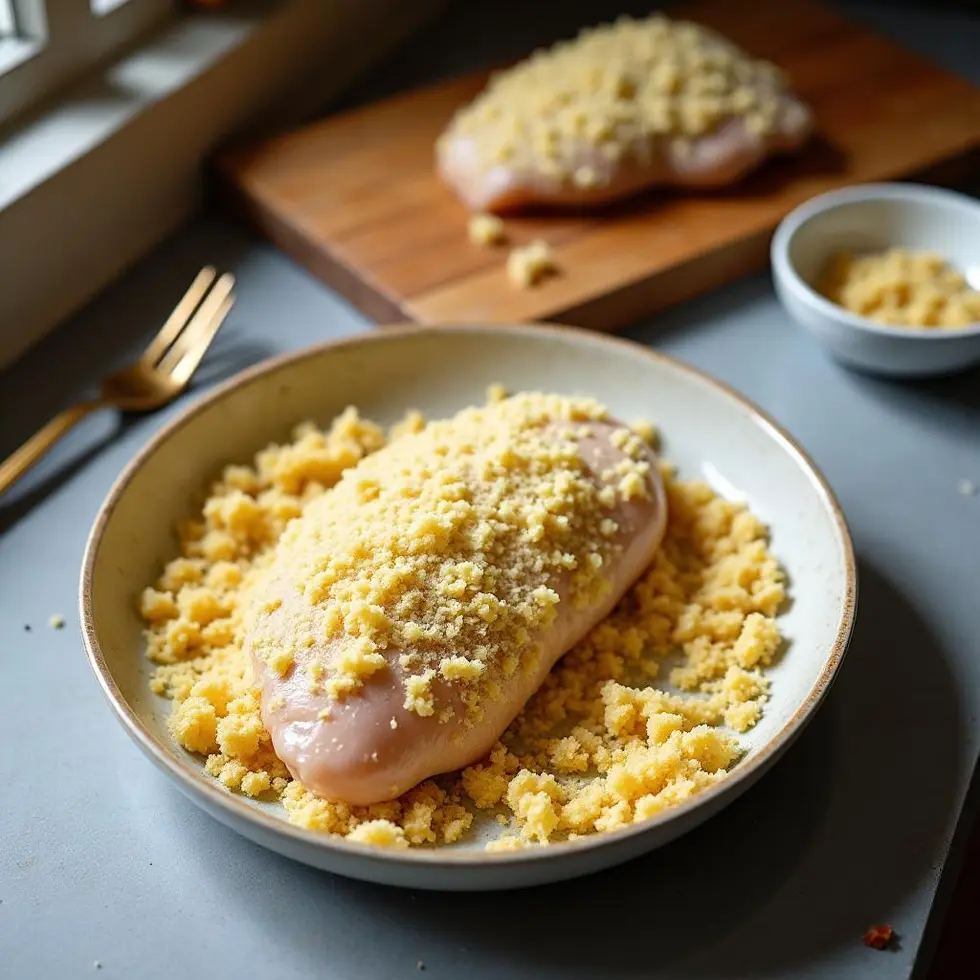
When I pressed the chicken into the parmesan breadcrumb mixture, the coating stuck evenly to every corner without gaps or clumps.
The reason this olive garden parmesan chicken recipe delivers that recognizable golden crust is the dual-coating technique: egg wash first, then a dry mixture that combines breadcrumbs with grated parmesan. The egg proteins coagulate during the initial skillet sear, creating a binding layer that holds the breadcrumb-parmesan mixture firmly against the chicken surface even as moisture escapes during baking. Most home versions skip the sear and go straight to the oven, which leaves the coating pale and soft instead of deeply browned and crisp.
The whole recipe takes 40 minutes from start to finish, including a 3-minute rest after baking. The sear locks in surface moisture while the oven finish brings the internal temperature to 165°F without overcooking the exterior. You can prep the breaded chicken up to 4 hours ahead and refrigerate it uncovered on a wire rack, which helps the coating dry slightly and brown more evenly when you cook it.
Why This Parmesan Chicken Works
The Coating Creates Surface Crispness
The breadcrumb-parmesan mixture browns through the Maillard reaction, which requires both protein and reducing sugars exposed to dry heat above 300°F. Parmesan contributes aged proteins and glutamates that deepen the savory flavor, while Italian breadcrumbs provide surface area for browning. The skillet sear reaches approximately 375°F at the contact points, high enough to start the reaction before the oven takes over.
Pressing the chicken firmly into the coating ensures even coverage. Light pressure leaves gaps that expose bare chicken, which releases moisture during cooking and softens the surrounding breadcrumbs. A consistent layer browns uniformly and stays crisp even after the marinara and mozzarella go on top.
Dual Heat Builds Texture and Doneness
Searing at medium-high heat for 3 to 4 minutes per side sets the crust and seals the chicken surface, reducing moisture loss during the slower oven phase. The oven finish at 400°F cooks the chicken through to 165°F internal temperature while the indirect heat melts the mozzarella and bubbles the marinara without scorching the breadcrumbs.
Skipping the stovetop sear and baking from raw leaves the coating soft and pale. The homemade version controls both heat stages, giving you a crisper crust and juicier interior than most restaurant kitchens deliver during peak service hours.
The combination of grated parmesan in the coating and melted mozzarella on top creates two distinct cheese textures in every bite.
How to Make Olive Garden Parmesan Chicken
Prep the Chicken and Coating
Pound 4 chicken breasts to an even thickness of about ¾ inch. Uneven thickness causes the thin parts to overcook while the thick parts reach doneness. Use a meat mallet or the bottom of a heavy pan, working from the center outward.
Combine 1 cup Italian breadcrumbs, 1 cup grated parmesan cheese, 1 teaspoon garlic powder, and 1 teaspoon Italian seasoning in a shallow dish. Mix thoroughly so the parmesan distributes evenly. Beat 2 eggs in a separate shallow dish until the yolks and whites blend completely.
Dip each chicken breast in the beaten eggs, letting excess drip off, then press both sides into the breadcrumb mixture. Apply firm pressure to pack the coating onto the surface. Place the breaded chicken on a wire rack set over a baking sheet if you’re not cooking immediately.
Sear and Finish in the Oven
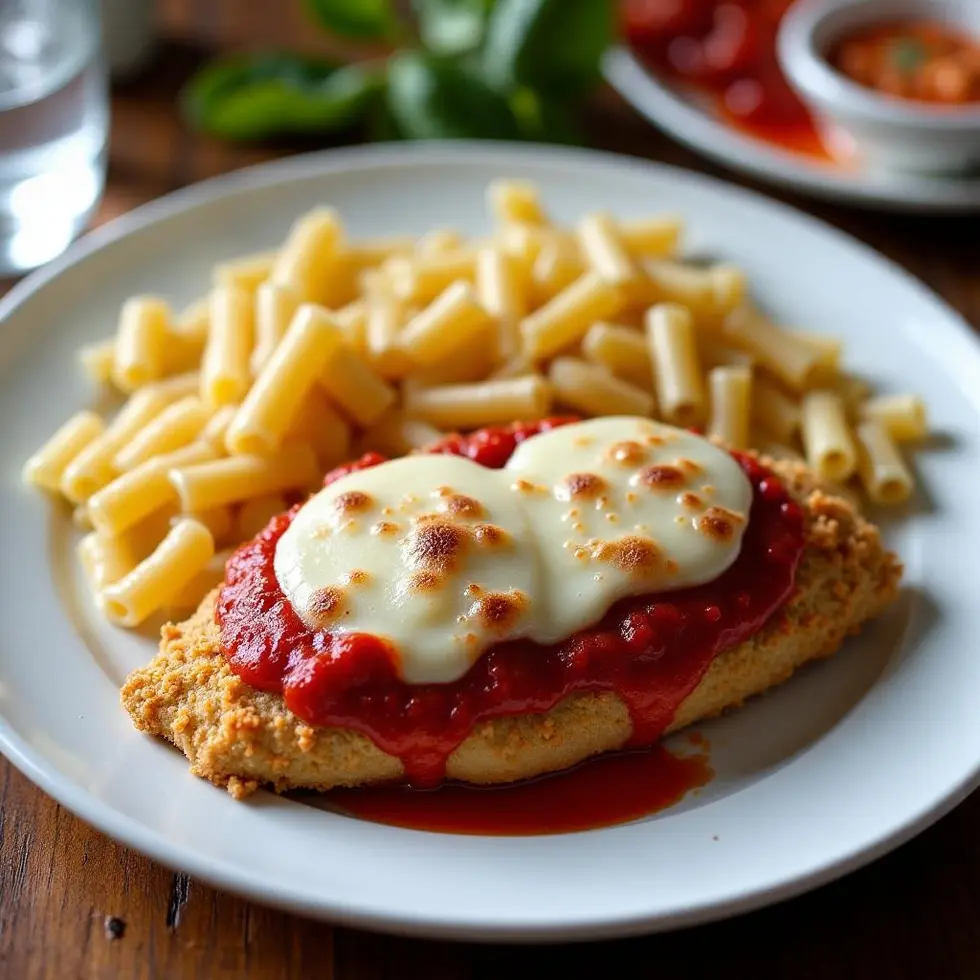
Heat 3 tablespoons olive oil in a large oven-safe skillet over medium-high heat until the oil shimmers. Add the breaded chicken breasts without crowding and sear for 3 to 4 minutes per side until the coating turns golden brown. You’re not cooking the chicken through at this stage, just building the crust.
Spoon 1 cup marinara sauce over the seared chicken, dividing it evenly among the 4 pieces. Top each breast with ¼ cup shredded mozzarella cheese. Transfer the skillet directly to a preheated 400°F oven and bake for 12 to 15 minutes until the cheese melts and bubbles and the chicken reaches 165°F internal temperature measured at the thickest part.
Rest the chicken for 3 minutes before serving. This short rest allows the internal juices to redistribute and the cheese to set slightly, which keeps the topping intact when you cut into it. The resting step also prevents the first bite from releasing a flood of moisture that softens the crust.
Pasta Pairings, Tips and Leftovers
What to Serve Alongside
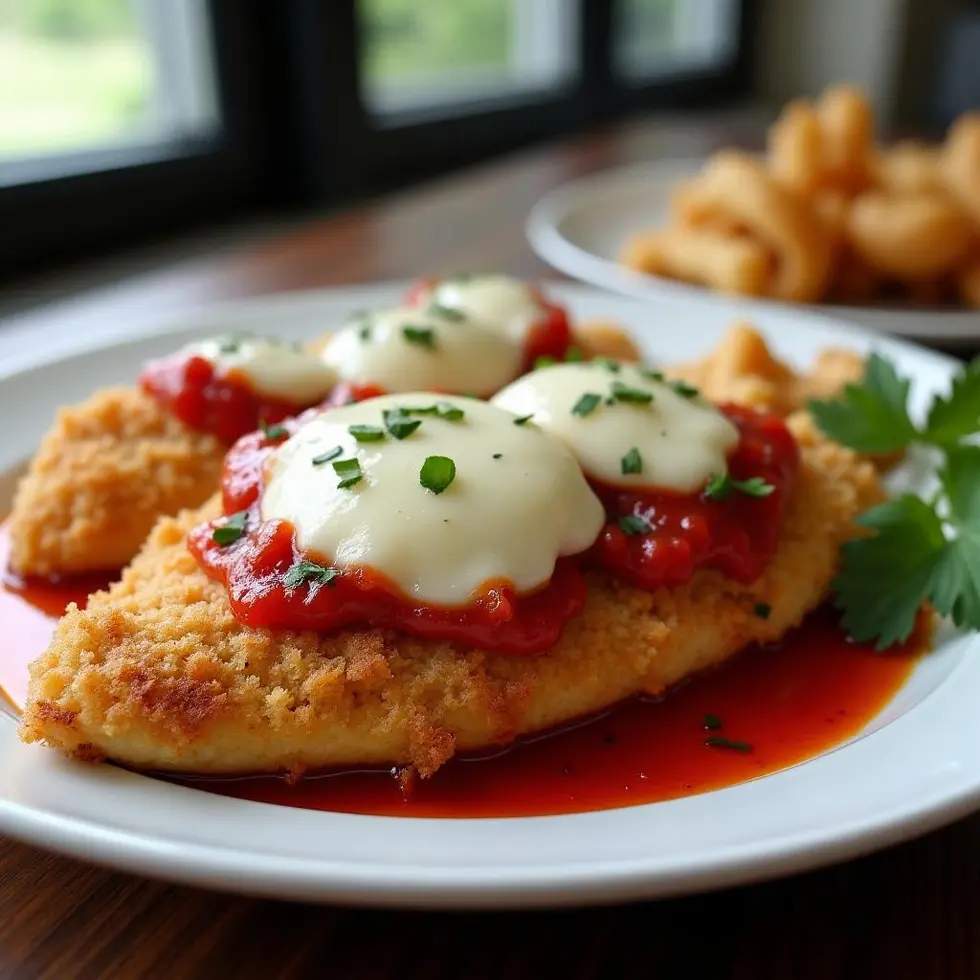
Serve this copycat parmesan chicken over fettuccine, linguine, or spaghetti tossed with olive oil and garlic. The pasta absorbs the marinara that runs off the chicken, and the starchy base balances the richness of the cheese. For a lighter pairing, use angel hair or a simple green salad with lemon vinaigrette.
If you’re already making a creamy pasta, consider the Olive Garden chicken and gnocchi soup as a starter course that keeps the Italian-American theme consistent without repeating the same cheese-and-tomato combination on the same plate. You can also serve the chicken with roasted vegetables like zucchini, bell peppers, or asparagus that won’t compete with the marinara.
Storage and Reheating
Store leftover olive garden parmesan chicken in an airtight container in the refrigerator for up to 3 days. The coating softens slightly during storage because the moisture from the chicken and sauce penetrates the breadcrumbs. To restore some crispness, reheat individual portions in a 375°F oven for 10 to 12 minutes rather than microwaving, which steams the coating.
For meal prep, assemble the breaded chicken but hold off on adding the marinara and mozzarella. Refrigerate the breaded pieces uncovered on a wire rack for up to 4 hours, then sear and bake when ready. The coating dries slightly in the fridge, which improves browning. You can also freeze the breaded uncooked chicken for up to 1 month; bake from frozen at 375°F for 25 to 30 minutes, adding the marinara and cheese halfway through.
The parmesan-breadcrumb ratio in the coating determines how much savory depth you get versus neutral crunch, and adjusting it even slightly shifts the final flavor.
Watch the Sear Temperature
The skillet sear controls whether the coating browns or burns. Medium-high heat around 375°F at the pan surface gives you 3 to 4 minutes per side to develop color without scorching the breadcrumbs. If the oil smokes or the coating darkens in under 2 minutes, lower the heat immediately.
The oven finish at 400°F cooks the chicken through without drying it out. Temperatures above 425°F can brown the cheese topping too quickly, leaving the interior undercooked. Always verify doneness with an instant-read thermometer inserted into the thickest part of the breast; 165°F is the safe minimum, and pulling the chicken at exactly that temperature keeps it juicy.
Frequently Asked Questions
Can I use panko breadcrumbs instead of Italian breadcrumbs?
Yes, panko creates a lighter, crunchier texture. Mix 1 cup panko with 1 teaspoon Italian seasoning, 1 teaspoon garlic powder, and ½ teaspoon salt to replace the Italian breadcrumbs. Panko flakes are larger and absorb less moisture, so the coating stays crisp longer after baking.
How do I keep the coating from falling off during cooking?
Press the breadcrumb mixture firmly onto the chicken after the egg wash and let the breaded pieces rest for 5 to 10 minutes before searing. This short rest allows the egg proteins to begin binding the coating to the meat. Avoid moving the chicken during the first 2 minutes of searing, which gives the crust time to set.
Can I make this without searing the chicken first?
You can bake the breaded chicken directly at 400°F for 20 to 25 minutes, flipping halfway through, then add the marinara and mozzarella for the final 5 minutes. The coating will be less crisp and lighter in color because you skip the high-heat browning step, but the chicken will still cook through safely.
What marinara sauce works best for this recipe?
Use a thick marinara with low water content so it clings to the chicken rather than pooling in the skillet. Look for sauces with visible tomato chunks and minimal added sugar. If your marinara is thin, simmer it over medium heat for 5 to 7 minutes to reduce the liquid before spooning it over the chicken.
Parmesan Chicken
Ingredients
Method
- Preheat the oven to 400°F / 200°C and combine breadcrumbs, parmesan, garlic powder, and Italian seasoning in a shallow dish.
- Dip each chicken breast in beaten eggs, then press into the breadcrumb mixture to coat both sides evenly.
- Heat olive oil in a large oven-safe skillet over medium-high heat and sear the chicken for 3 to 4 minutes per side until golden.
- Spoon marinara sauce over each chicken breast and top with shredded mozzarella cheese.
- Transfer the skillet to the oven and bake for 12 to 15 minutes until the cheese is melted and bubbly and the chicken reaches 165°F / 74°C.
- Rest for 3 minutes before serving to let the juices settle and the cheese set.
