
When the barbecue sauce hit the already-cooked thighs at 12 minutes, the caramelization happened fast, forming a glossy shell that stayed sticky instead of burning.
Six hundred grams of boneless skinless chicken thighs cost about five dollars at most grocery stores, and that amount feeds three people easily. Add a tablespoon of olive oil, a few everyday spices, and a third of a cup of store-bought barbecue sauce, and the entire batch runs under eight dollars. Compare that to a restaurant serving of sticky bbq chicken, which often starts at twelve dollars per plate before tax, and the savings stack up quickly when you make this twice a month.
The real advantage shows up in texture: rapid circulating heat dries the surface of the meat before the sauce goes on, so when you brush on barbecue sauce in the final minutes, it clings tightly and caramelizes into a sticky coating instead of sliding off or pooling in the basket. That dry surface also means less smoke and cleaner results than oven broiling.
Total hands-on time is eight minutes of prep plus two flips and one brushing step. The air fryer runs for 18 minutes, which leaves you free to put together a side or set the table. There is no grill to preheat, no coals to manage, and no need to watch the chicken constantly.
The method depends on exposing as much surface area as possible to hot air, which means single-layer spacing and a mid-cook flip. When air fryer barbecue chicken sits too close together, steam builds up underneath and the sauce never sets properly. Understanding that spacing rule is what separates a glossy finish from a soggy one.
Why the Sauce Goes On Last
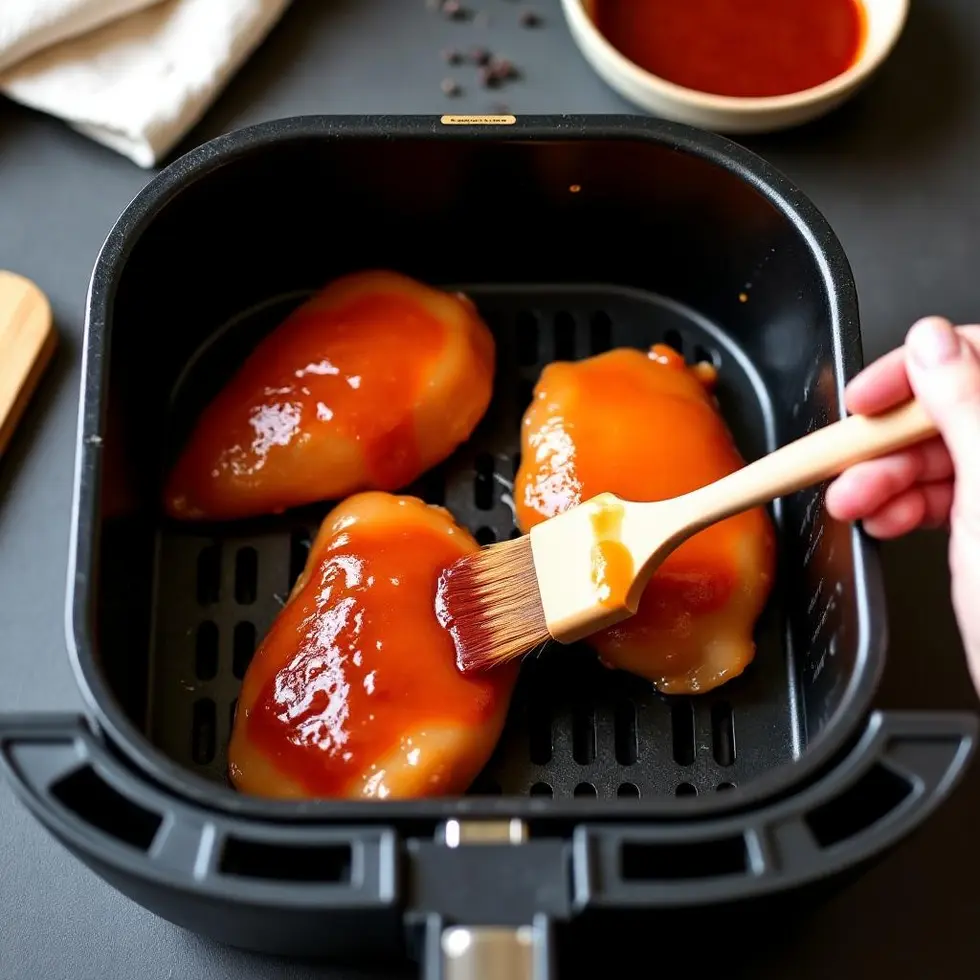
Sauce Burns Before Meat Cooks
Most barbecue sauces contain sugar, either from molasses, brown sugar, honey, or corn syrup. At 380°F (193°C), those sugars start to blacken within five minutes, long before chicken thighs reach the safe internal temperature of 165°F (74°C). Brushing sauce on at the start guarantees a charred exterior and undercooked interior.
By cooking the chicken naked for the first 12 minutes, you give the meat enough time to cook through while the surface dries and browns. Once the thighs are nearly done, adding sauce in the final four to six minutes allows the sugars to caramelize into a sticky glaze without crossing into burnt territory.
Dry Surface Holds Sauce Better
Raw chicken thighs release moisture as they cook. If you coat them with sauce immediately, that moisture dilutes the barbecue sauce and prevents it from adhering properly. The result is a watery mess at the bottom of the basket and pale, under-glazed chicken on top.
Cooking the meat first evaporates surface moisture, creating a slightly tacky texture that grabs onto sauce. When you brush barbecue sauce onto this dry surface, it stays put and forms a cohesive coating. The circulating air in the fryer then drives off excess liquid from the sauce itself, leaving behind concentrated flavor and a glossy finish.
Caramelization Needs High, Short Heat
Caramelization is a rapid chemical reaction that happens when sugars hit the right temperature for a short window of time. Too long at high heat and the sugars burn; too low and they stay syrupy. Four to six minutes at 380°F (193°C) sits right in that sweet spot for bbq chicken without a grill.
Applying sauce late in the cook also means you can watch the color shift from wet to glossy to caramelized. If you see it darkening too fast, you can pull the basket a minute early. That level of control is harder to achieve when sauce sits on the chicken from the start.
When the sauce sets properly in those final minutes, each thigh develops a sticky shell that holds together when you plate it, instead of sliding off onto the serving dish.
How to Make Barbecue Chicken in the Air Fryer
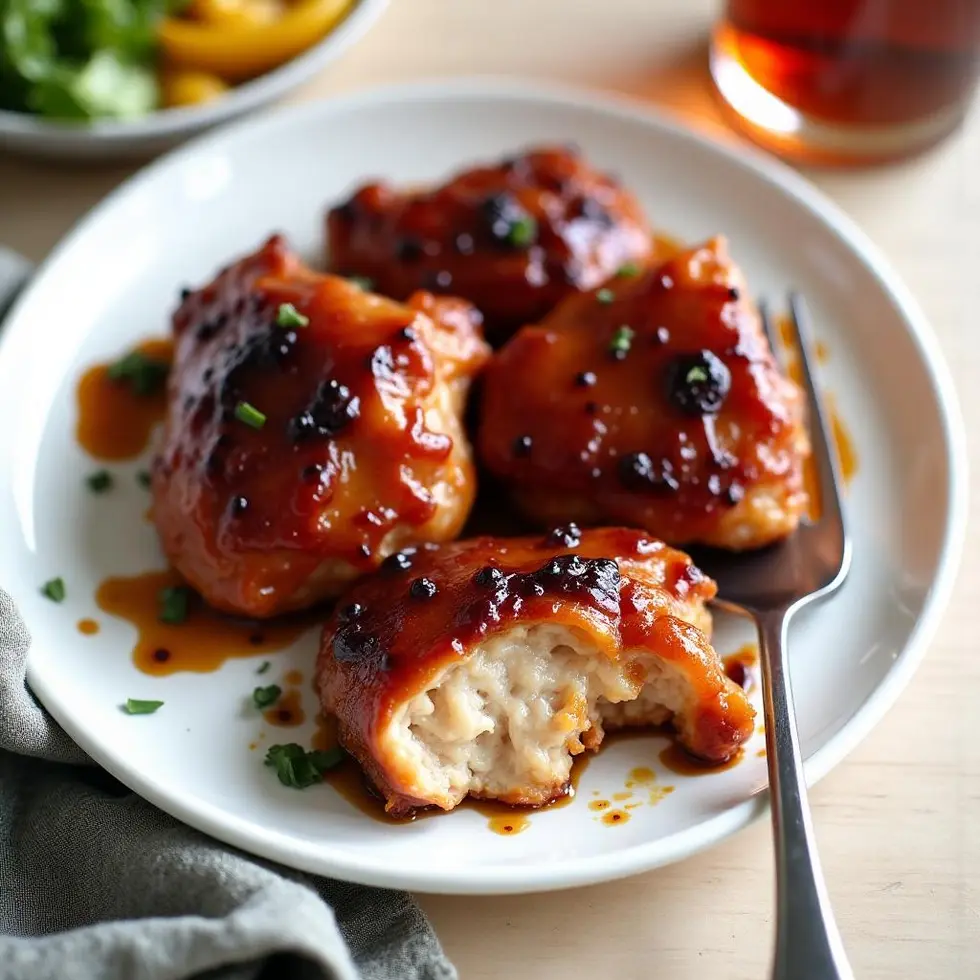
Preheat and Prep the Chicken
Set the air fryer to 380°F (193°C) and let it preheat for three minutes. Preheating ensures the basket is already hot when the chicken goes in, which starts the Maillard browning immediately instead of letting the meat steam in its own moisture first.
While the machine heats, rub 600 grams of boneless skinless chicken thighs with one tablespoon of olive oil, one teaspoon of smoked paprika, half a teaspoon of garlic powder, and half a teaspoon of black pepper. Use your hands to coat every surface evenly. The oil helps the spices stick and encourages browning, while the smoked paprika adds a grilled flavor that compensates for the lack of an actual grill.
Arrange the thighs in a single layer in the basket, leaving at least half an inch of space between each piece. Overlapping or stacking traps steam and prevents the surface from drying, which compromises the final sauce adhesion. If your basket is small, cook in two batches rather than crowding.
Cook, Flip, Then Sauce
Air fry the chicken for 12 minutes, flipping once at the six-minute mark. Flipping exposes both sides to direct heat, which speeds up cooking and ensures even browning. At 12 minutes, the thighs should look golden and feel firm when you press the center with tongs.
Check at eight minutes if you notice the edges darkening quickly—some air fryer models run hotter than their dial suggests. If the chicken looks pale at 12 minutes, add two more minutes before moving to the sauce step.
Brush barbecue sauce generously on both sides of each thigh. Use about a third of a cup total, which works out to roughly one tablespoon per side per thigh. Return the basket to the air fryer and cook for four to six more minutes, checking at four. The sauce should look glossy and slightly darkened, with a few caramelized edges. When a meat thermometer inserted into the thickest part reads 165°F (74°C), the chicken is done.
Rest Before Serving
Let the chicken rest on a plate for three minutes after pulling it from the air fryer. Resting allows the juices to redistribute throughout the meat instead of running out when you cut into it. The sauce also firms up slightly during this time, which makes it less likely to smear when you transfer the chicken to a serving platter.
If you skip the rest and slice immediately, you will see clear juices pool on the cutting board and the meat will look drier than it actually is. Three minutes is enough to avoid this without letting the chicken cool to room temperature. For a recipe that uses the same dry-then-sauce method on bone-in chicken, air fryer drumsticks follow a similar timing structure but need a longer first cook to account for the bone.
Many home cooks brush on extra sauce after resting, which adds a fresh sweet note on top of the caramelized layer.
Cuts, Sauces and Sides That Work
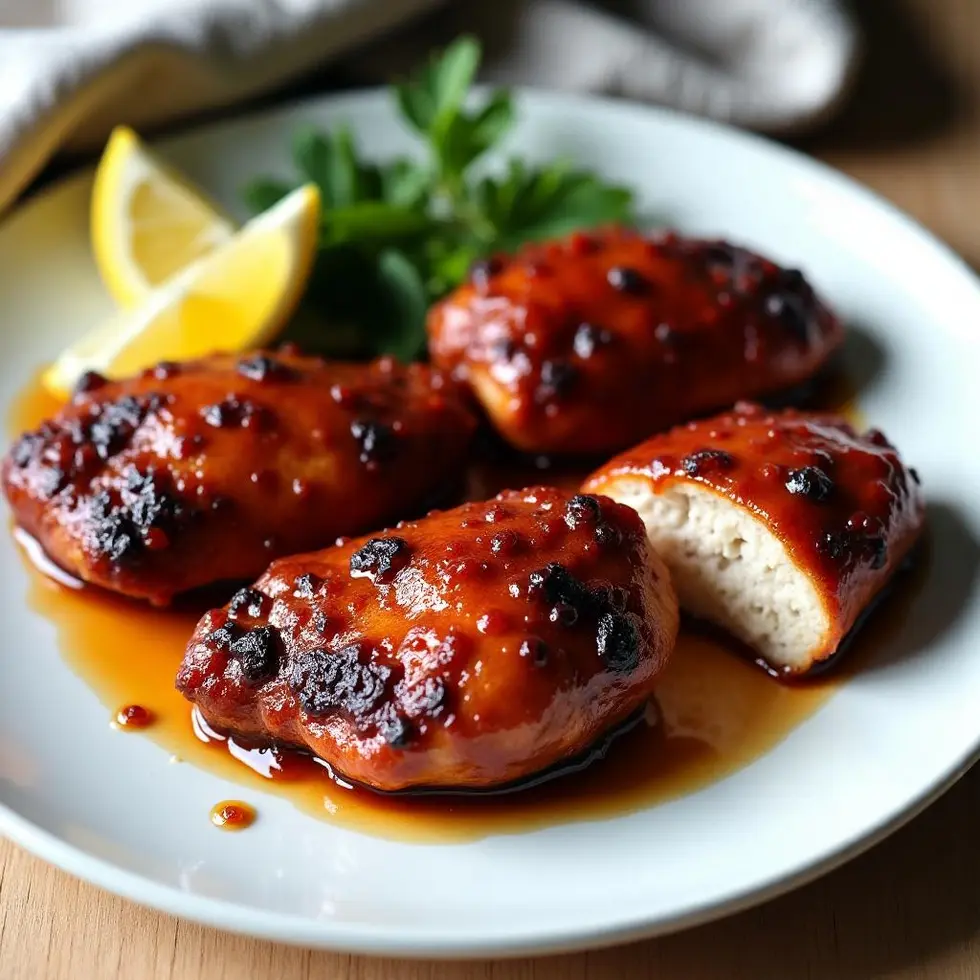
Other Cuts That Hold Up
Boneless skinless chicken breasts work, but they dry out faster than thighs, so reduce the first cook to 10 minutes and check internal temperature at 160°F (71°C) before saucing. Chicken tenders cook even faster—seven minutes naked, then three minutes with sauce. Adjust your timing based on thickness, not just cut name.
Bone-in thighs take about five minutes longer than boneless, and drumsticks need closer to 20 minutes before the sauce step. If you prefer dark meat with skin, pat the skin completely dry before rubbing on oil and spices, then add an extra two minutes to the naked cook time to crisp the skin.
Avoid mixing cuts in the same batch, because cook times vary too much and you will end up with some pieces overdone while others are still underdone.
Sauce Styles and Sugar Content
Tomato-based barbecue sauces with moderate sugar content—like Kansas City or Carolina-style—caramelize well without burning. Mustard-based sauces work but brown less visibly, so watch for texture changes instead of color. Vinegar-heavy sauces stay wet longer and may not form a true glaze, though they still taste good.
If you use a very sweet sauce, such as honey barbecue, reduce the final cook time to three or four minutes and check every minute to avoid blackening. Sticky bbq chicken depends on balanced sugar: too little and the sauce stays thin, too much and it burns before it sets.
Homemade bbq sauce gives you control over sweetness and salt, and sites like AllRecipes offer dozens of variations you can adjust to your preference. Store-bought works just as well and keeps the total cost under eight dollars per batch.
Sides That Balance Richness
Because air fryer bbq chicken thighs carry a sweet, smoky coating, pair them with sides that add crunch or acid. Coleslaw made with a vinegar dressing cuts through the richness without adding more sugar. Steamed green beans or roasted broccoli add a neutral base that soaks up any extra sauce on the plate.
Cornbread works if you keep the portion small, since it is also slightly sweet. Mashed potatoes or rice absorb sauce well and stretch the meal if you are feeding more than three people with one batch. A simple green salad with lemon vinaigrette adds freshness without competing for attention.
Skip starchy, sweet sides like baked beans or candied yams unless you want a very rich plate. The chicken already delivers plenty of sweetness, so balance is what makes the meal feel complete instead of cloying.
Timing That Fits Your Schedule
Eight minutes of prep covers trimming any excess fat, rubbing on the spice mixture, and arranging the chicken in the basket. The air fryer runs for 18 minutes total, split into two phases: 12 minutes for the initial cook, then four to six minutes with sauce. Add three minutes of resting time, and the entire process takes 26 minutes from start to finish.
Because the machine does the work, you can use those 18 minutes to prepare a side dish, set the table, or clean up the prep area. There is no need to stand over the basket except to flip at six minutes and brush on sauce at 12 minutes. That makes this method faster and less hands-on than grilling, where you typically monitor the chicken continuously to avoid flare-ups.
If you need to make a larger batch, cook in two rounds rather than crowding the basket. The second batch takes the same 18 minutes, so total time for six servings is about 45 minutes, still faster than firing up an outdoor grill and waiting for coals to reach temperature. The cost per serving stays consistent whether you make three or six pieces, since the main expense is the chicken and the sauce, both of which scale linearly.
Frequently Asked Questions
Can I Use Frozen Chicken Thighs?
Thaw the chicken completely before cooking. Frozen thighs release too much moisture in the air fryer, which prevents the surface from drying and ruins the sauce adhesion. Thaw overnight in the refrigerator or use the defrost setting on your microwave, then pat the thighs dry with paper towels before rubbing on the spice mixture.
Do I Need to Spray the Basket?
No, the olive oil on the chicken is enough to prevent sticking. Spraying the basket adds unnecessary fat and can interfere with the caramelization of the sauce. If your air fryer has a nonstick coating, avoid metal tongs that can scratch it—use silicone-tipped tongs instead.
Why Is My Sauce Watery?
You likely applied the sauce too early, before the chicken surface dried, or you used too much sauce. Stick to one tablespoon per side per thigh and brush it on only after the first 12 minutes. If the sauce still looks thin, add one or two extra minutes to the final cook time to drive off more moisture.
Can I Make This Without Smoked Paprika?
Yes, substitute regular paprika or skip it entirely. Smoked paprika adds a grilled flavor that compensates for the lack of charcoal, but the dish still tastes good without it. Avoid using cayenne as a substitute unless you want heat, because it changes the flavor profile significantly.
Air Fryer Barbecue Chicken
Ingredients
Method
- Preheat the air fryer to 380°F / 193°C for 3 minutes.
- Rub the chicken thighs with olive oil, smoked paprika, garlic powder, and black pepper until evenly coated.
- Arrange the chicken in a single layer in the air fryer basket and air fry for 12 minutes, flipping halfway.
- Brush the barbecue sauce generously on both sides of the chicken and air fry for 4 to 6 more minutes until sticky, caramelized, and the internal temperature reaches 165°F / 74°C.
- Rest for 3 minutes before serving to let the juices redistribute and the sauce set.
