
Cornstarch on the surface of potatoes draws out just enough moisture to let the air fryer create a crisp shell without drying out the fluffy inside.
The circulating heat in an air fryer works differently than oil immersion or oven baking. Hot air moves rapidly around each piece, evaporating surface moisture while the Maillard reaction builds golden color and flavor. Spacing the chips in a single layer without overlap keeps the air moving freely, which is what creates that restaurant-style crispness with only a tablespoon of oil.
Russet potatoes hold the ideal starch-to-moisture ratio for this method. Their high starch content supports a crisp exterior, while the dense flesh stays tender inside. Coating each chip with cornstarch before seasoning pulls a thin layer of moisture to the surface, where it evaporates quickly under the circulating heat, leaving behind a delicate crunch. Making air fryer chips at home takes 23 minutes from prep to plate, including an 8-minute prep and a 15-minute cook window. The method fits easily into weeknight dinners and lets you control the seasoning, the oil amount, and the final texture without standing over a deep fryer or heating a full oven.
What Kind of Potatoes Make the Best Chips
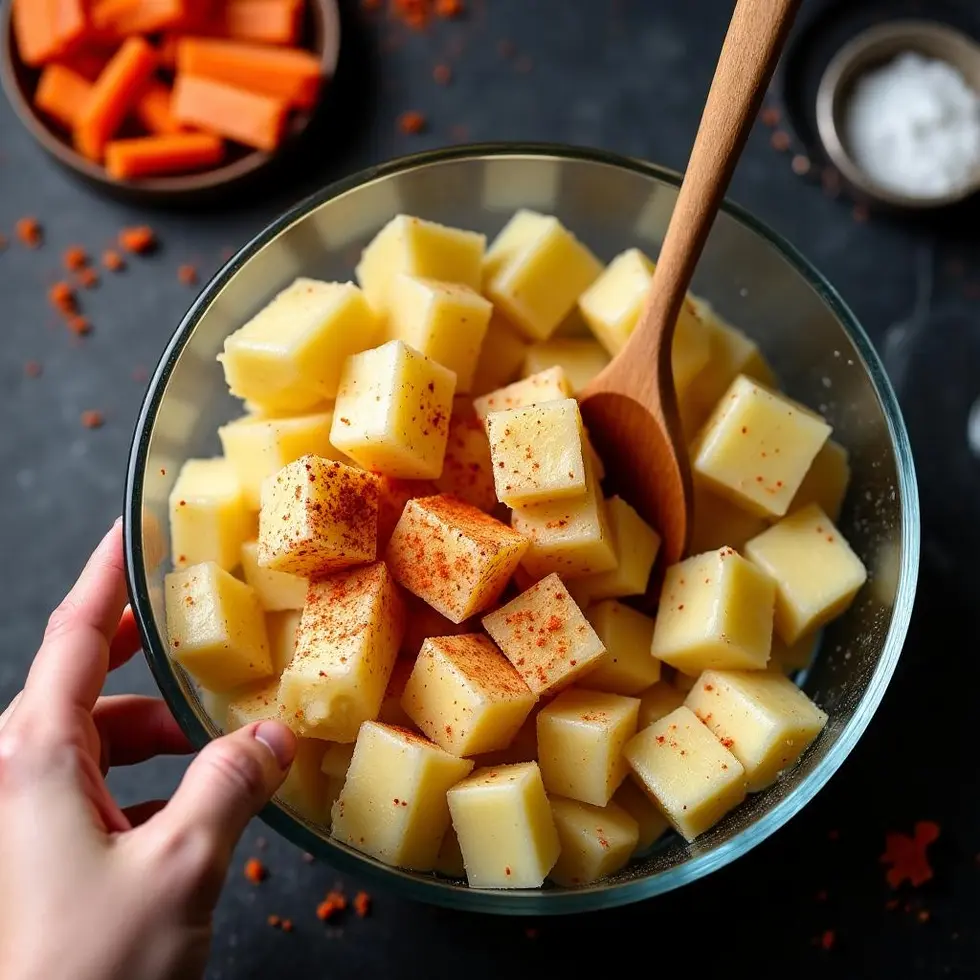
Why Russet Potatoes Work Better Than Waxy Varieties
Russet potatoes contain more starch and less water than waxy varieties like red or Yukon Gold. The higher starch content allows the exterior to crisp under dry heat, while the interior cooks through to a soft, fluffy texture. Waxy potatoes hold more moisture, which slows down the crisping process and often results in a limp chip even after extended air frying.
The dense flesh of a Russet also holds its shape better when cut into thick chips. Each piece maintains clean edges during cooking, which helps the hot air reach every surface evenly. When you bite into a properly cooked Russet chip, the contrast between the crisp shell and the tender center is immediate.
How to Cut Uniform Chips for Even Cooking
Cut each potato into thick strips about half an inch wide. Uniform size matters because smaller chips cook faster and can burn before larger pieces finish, while oversized chips stay undercooked in the center. A consistent thickness ensures every piece reaches the same level of doneness at the same time.
After cutting, pat each chip dry with a clean towel. Surface moisture interferes with crisping because the air fryer must first evaporate that water before browning can begin. Removing excess moisture up front shortens the cooking window and delivers a crispier result.
What Cornstarch Does to the Surface Texture
Tossing the chips with cornstarch before adding oil creates a thin coating that absorbs surface moisture and forms a delicate crust when exposed to heat. The cornstarch granules bond with the potato starch on the surface, creating a rougher texture that crisps faster than smooth potato skin alone.
Only one teaspoon is needed for 450 grams of potatoes. Too much cornstarch creates a powdery coating that tastes chalky, while too little leaves the surface too smooth to crisp properly. The light dusting you apply before the oil ensures every chip develops a golden, crunchy edge.
How to Cook Crispy Chips in the Air Fryer
Preheating, Temperature, and Timing
Preheat the air fryer to 380°F (193°C) for three minutes. Starting with a hot basket helps the chips begin crisping immediately rather than steaming in the initial heat-up phase. The consistent starting temperature also reduces variation between batches.
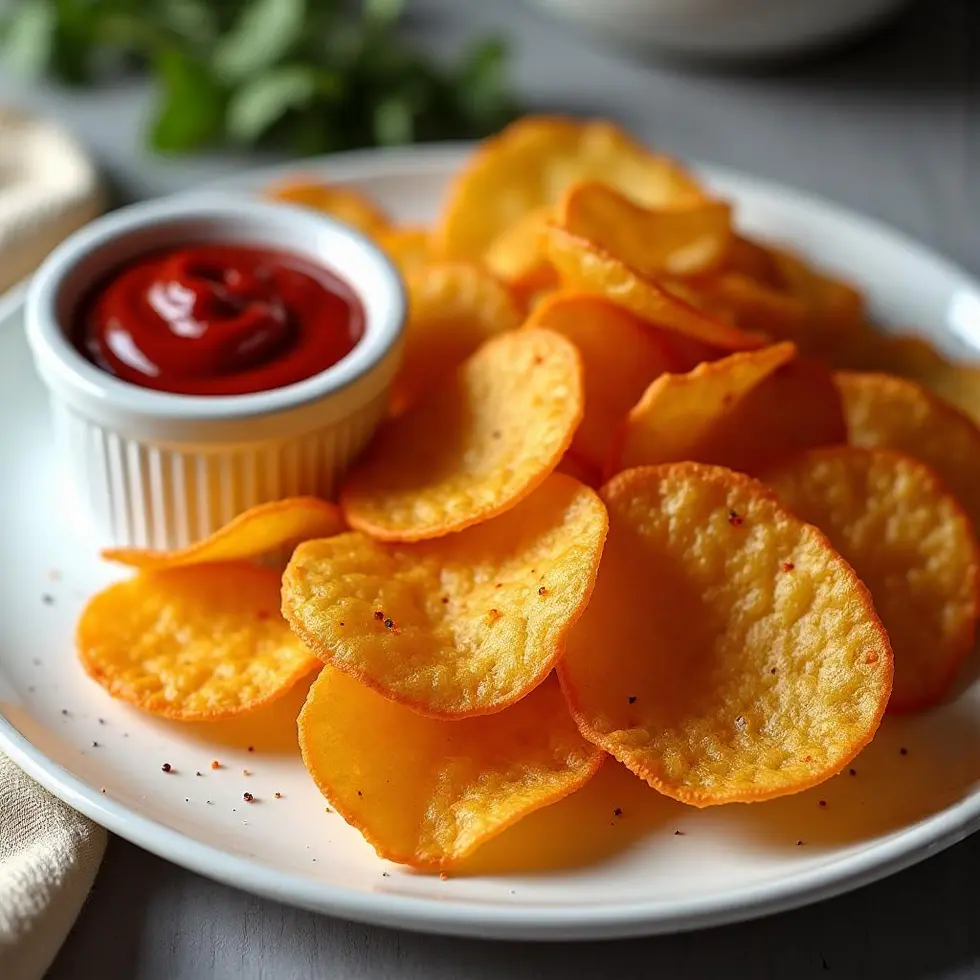
Air fry the chips for 15 minutes total, checking at 12 minutes for color and firmness. The chips should turn golden with crisp edges by the 12-minute mark. If they still look pale or feel soft, add two to three more minutes. Different air fryer models vary slightly in heat distribution, so the visual cue—golden color and firm edges—matters more than the exact timer.
Compared to oven baking, the air fryer cuts cooking time by nearly half and uses a fraction of the oil. Oven-baked chips often require 30 minutes at 425°F and need flipping halfway through, while the circulating air in the fryer eliminates the need to turn each chip manually.
Why Spacing and Shaking Matter
Arrange the chips in a single layer without overlapping. When chips sit on top of each other, the blocked surfaces stay moist and pale while the exposed sides brown unevenly. Proper spacing allows the hot air to reach every surface, creating uniform color and crispness.
Shake the basket every five minutes. This redistributes the chips and exposes different surfaces to the direct airflow, preventing one side from overcooking while the other stays undercooked. The shaking motion also breaks up any chips that might stick together during the early stages of cooking.
Overcrowding the basket is the most common mistake beginners make. A packed basket traps steam around the chips, turning what should be crispy into soft and greasy. If you have more potatoes than fit in a single layer, cook them in two batches rather than compromising the texture.
What to Look for When the Timer Goes Off
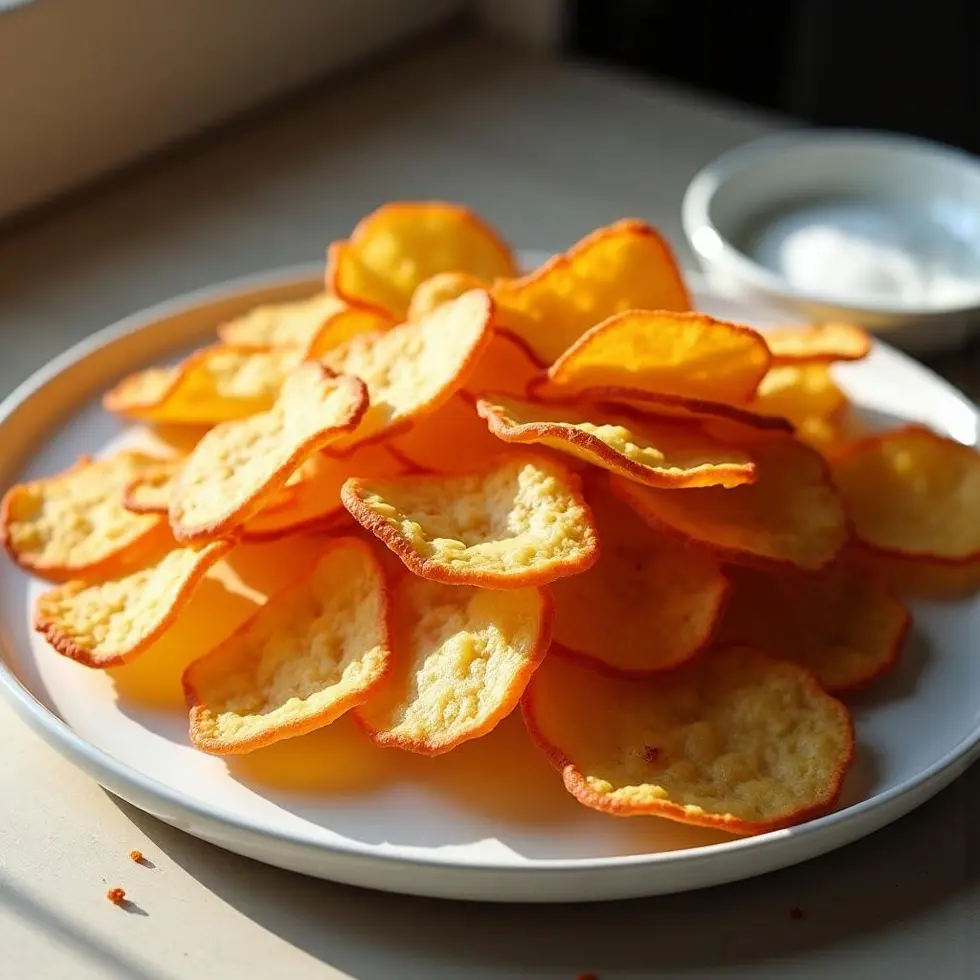
The chips should feel firm when you press them gently with a spatula and show golden-brown edges with darker spots where the seasoning caramelized. The color should look like a well-toasted piece of bread, not pale yellow or deep brown.
Listen for a faint crackling sound when you shake the basket near the end of cooking. That sound indicates moisture evaporating from the surface and the exterior crisping into a thin shell. If the chips still look soft or sound damp when moved, add another two minutes and check again.
Serve immediately while the chips are still hot. The crisp texture begins to soften within 10 to 15 minutes as the chips cool and absorb ambient moisture from the air.
Seasoning Ideas and Storage Tips
Classic Seasoning Mix and Variations
The base seasoning combines olive oil, garlic powder, paprika, and salt. The garlic powder adds a mild savory note without overpowering the potato, while the paprika contributes a subtle sweetness and a warm red color. Salt enhances every other flavor and draws out the natural sweetness of the potato.
For a smoky variation, replace the paprika with smoked paprika. For a spicier version, add a quarter teaspoon of cayenne pepper or chili powder to the mix. If you prefer a simpler flavor, use only salt and a pinch of black pepper, letting the potato flavor stand on its own.
Apply the seasoning before cooking, not after. The heat bonds the spices to the surface and toasts them slightly, which deepens the flavor. Seasoning after cooking leaves the spices sitting loosely on the surface, where they can fall off or taste raw.
How to Store Leftovers and Reheat Properly
Store leftover chips in an airtight container in the refrigerator for up to two days. The texture will soften as the chips cool and absorb moisture, but you can restore most of the crispness by reheating.
Reheat the chips in the air fryer at 350°F (177°C) for three to four minutes. The circulating heat evaporates the absorbed moisture and re-crisps the exterior. Do not microwave the chips, as microwaving steams them and makes them soggy.
Freezing is not recommended. Frozen potatoes release too much moisture when reheated, and the texture turns mealy rather than crisp. For best results, cook only what you plan to eat in one sitting or within the next day.
Serving Suggestions and Dipping Sauces
Serve the chips alongside grilled proteins, roasted vegetables, or sandwiches. They work especially well as a side for burgers, where their crisp texture contrasts with the soft bun and juicy patty.
Pair the chips with ketchup, garlic aioli, or a simple yogurt-based dip seasoned with dill and lemon. The mild potato flavor complements bold sauces without getting lost. If you want to explore other air fryer snack ideas, The Foodies’ Kitchen offers creative takes on air-fried textures.
Hot chips lose their appeal quickly once they cool, so plate them just before serving and encourage everyone to eat them while they’re still warm.
Rapid Air Equals Rapid Browning
The air fryer method shortens the cooking window and reduces oil without sacrificing the crisp texture most people expect from fried potatoes. The combination of high heat, constant airflow, and light seasoning turns a simple Russet into a snack that rivals anything from a commercial fryer.
Once you understand the spacing, the timing, and the visual cues, you can adjust the seasoning and the thickness to match your preference. Make a batch tonight and notice how quickly the edges turn golden and how clean the cleanup feels compared to deep frying.
Frequently Asked Questions
Can I use sweet potatoes instead of Russet potatoes?
Yes, sweet potatoes work well in the air fryer, though they cook slightly faster due to their higher sugar content. Cut them to the same thickness and check at 10 minutes to avoid burning. The natural sweetness pairs well with smoked paprika or a pinch of cinnamon.
Do I need to soak the potatoes before air frying?
Soaking removes excess surface starch and can improve crispness, but it is not required if you pat the chips dry and coat them with cornstarch. If you choose to soak, rinse the chips in cold water for 10 minutes, then dry them completely before seasoning.
Why are my chips still soft after 15 minutes?
Soft chips usually result from overcrowding the basket or cutting the potatoes too thick. Make sure the chips sit in a single layer without overlapping, and keep the thickness around half an inch. If they are still soft, add another two to three minutes and check again.
Can I cook frozen chips in the air fryer using this method?
Frozen chips cook differently because they are already par-cooked and contain added oil or coatings. Follow the package instructions and increase the temperature to 400°F (204°C) for best results. Express offers additional tips on improving frozen chip texture in the air fryer.
How do I prevent the seasoning from burning?
Mix the seasoning with the oil before tossing the chips, which helps the spices coat evenly and reduces direct exposure to the hottest airflow. Avoid using very fine spices like ground cinnamon or turmeric in large amounts, as they can scorch more easily than coarse granules.
Air Fryer Chips
Ingredients
Method
- Preheat the air fryer to 380°F / 193°C for 3 minutes.
- Pat the potato chips dry with a clean towel, then toss with olive oil, cornstarch, garlic powder, paprika, and salt until evenly coated.
- Arrange the chips in a single layer in the air fryer basket without overlapping.
- Air fry for 15 minutes, shaking the basket every 5 minutes, until the chips are golden brown with crisp edges.
- Check at 12 minutes — the chips should be golden and firm, add 2 to 3 more minutes if needed for extra crispness.
- Serve immediately while hot and crispy for the best texture.
