
I once poured the pumpkin filling straight onto the crust without beating the cream cheese first, and the final texture was grainy instead of smooth.
Most restaurant-style pumpkin cheesecakes rely on a specific technique that’s easy to overlook: beating the cream cheese until completely lump-free before adding any other ingredient. That step determines whether the final slice cuts cleanly or crumbles at the edges. The texture you recognize from the dining room depends on that five-minute mixing stage, not just the ingredient list.
This cheesecake factory pumpkin cheesecake copycat takes about 20 minutes of active work, then the oven handles the rest. You’ll need a 9-inch springform pan, a hand mixer or stand mixer, and one hour of cooling time inside the turned-off oven to prevent surface cracks. The recipe yields eight generous slices, and the finished cheesecake holds in the refrigerator for up to five days without losing its creamy structure.
The homemade version delivers a richer pumpkin flavor because you control the pumpkin pie spice ratio directly. Restaurant kitchens often use pre-mixed spice blends that balance cost and consistency, but measuring your own spice blend at home lets you adjust the warmth and sweetness to match what you actually taste in each bite. The filling also sets firmer at home because you’re baking it fresh, not holding it in a display case.
What separates a dense, cracked cheesecake from a smooth, restaurant-style slice is the cooling method. Turning off the oven and leaving the door cracked for one hour allows the internal temperature to drop gradually, which prevents the rapid contraction that causes surface fissures.
Why Pumpkin Cheesecake Trends
What Makes the Restaurant Version Distinctive
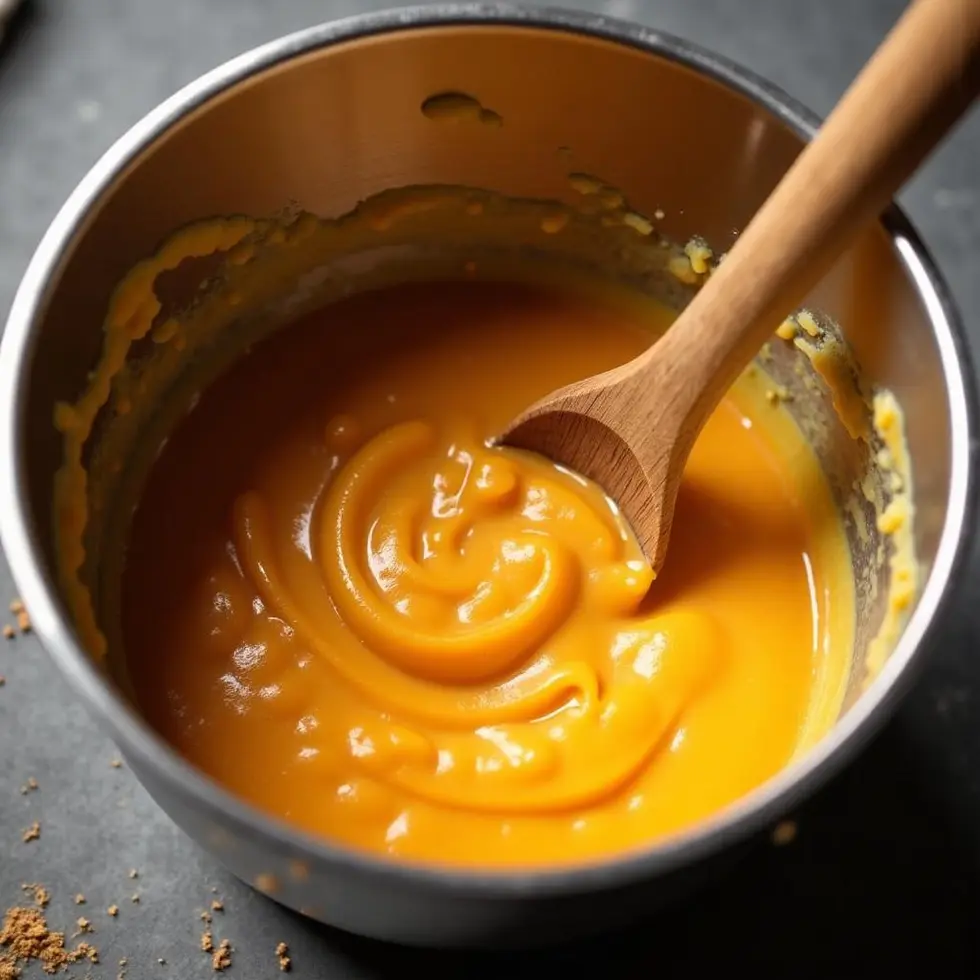
The signature smooth texture comes from two factors: fully softened cream cheese and the order in which you add ingredients. Most home bakers add the pumpkin puree too early, which makes the mixture harder to incorporate evenly. Restaurants typically beat the cream cheese and sugar together first until no lumps remain, then add the pumpkin as a separate layer. That sequence creates a batter that pours smoothly and bakes evenly without pockets of dense filling.
Pumpkin pie spice is the second defining element. The blend usually contains cinnamon, ginger, nutmeg, and cloves in ratios that emphasize warmth without overwhelming the pumpkin itself. Using 1.5 teaspoons for this recipe balances the spice against 1 cup of pumpkin puree and 680 grams of cream cheese, so you taste the spice in the finish rather than up front.
Restaurants often bake cheesecakes in water baths to maintain even heat, but this recipe skips that step and relies instead on a lower oven temperature of 325°F and a controlled cooling period. The result is a filling that sets firm at the edges while the center remains slightly soft, which firms up completely during the four-hour refrigeration.
Graham cracker crust adds a buttery, slightly sweet base that contrasts with the tangy cream cheese. Mixing 1.5 cups of graham cracker crumbs with 5 tablespoons of melted butter creates a crust that holds its shape when you press it into the pan and doesn’t crumble when you slice the finished cheesecake.
Why the Homemade Version Works Better
Making this fall cheesecake at home gives you control over the spice intensity and sweetness level. You can taste the batter before baking and adjust the pumpkin pie spice by a quarter teaspoon if you prefer a bolder or milder flavor. Restaurants pre-batch their filling in large quantities, so individual adjustments aren’t possible.
The homemade version also tastes fresher because you’re using room-temperature cream cheese and fresh pumpkin puree, not ingredients that have been held in a walk-in cooler for days. The eggs blend more smoothly when the cream cheese is fully softened, which reduces the risk of lumps and creates a silkier final texture.
Baking at 325°F for 60 to 65 minutes allows the filling to set without overbaking the edges. You’ll know it’s ready when the outer two inches are firm and the center still jiggles slightly when you gently shake the pan. That jiggle disappears completely during the cooling and chilling stages, so don’t be tempted to bake it longer or the texture will turn dense instead of creamy.
How to Make the Copycat Cheesecake
Building the Crust and Filling
Preheat your oven to 325°F and combine 1.5 cups of graham cracker crumbs with 5 tablespoons of melted butter in a medium bowl. Stir until the mixture looks like wet sand and holds together when you press it between your fingers. Press the mixture evenly into the bottom of a 9-inch springform pan, using the bottom of a measuring cup to flatten it firmly. A compact crust prevents crumbling when you slice the finished cheesecake.
In a large mixing bowl, beat 680 grams of softened cream cheese with 3/4 cup of granulated sugar using a hand mixer or stand mixer on medium speed. Continue beating for about three minutes, scraping down the sides of the bowl twice, until the mixture is completely smooth and no lumps remain. This step is crucial for achieving the restaurant-style texture.
Add 1 cup of pumpkin puree and beat until fully incorporated, then add the eggs one at a time, beating on low speed after each addition just until combined. Overbeating after adding the eggs can incorporate too much air, which may cause cracks during baking. Stir in 1.5 teaspoons of pumpkin pie spice and 1 teaspoon of vanilla extract, mixing just until the spices are evenly distributed throughout the batter.
Pour the filling over the prepared crust and smooth the top with a spatula. Tap the pan gently on the counter twice to release any large air bubbles trapped in the batter. Bake for 60 to 65 minutes, checking at the 60-minute mark. The edges should be set and slightly puffed, while the center still moves slightly when you gently shake the pan.
Preventing Cracks and Achieving Smooth Texture
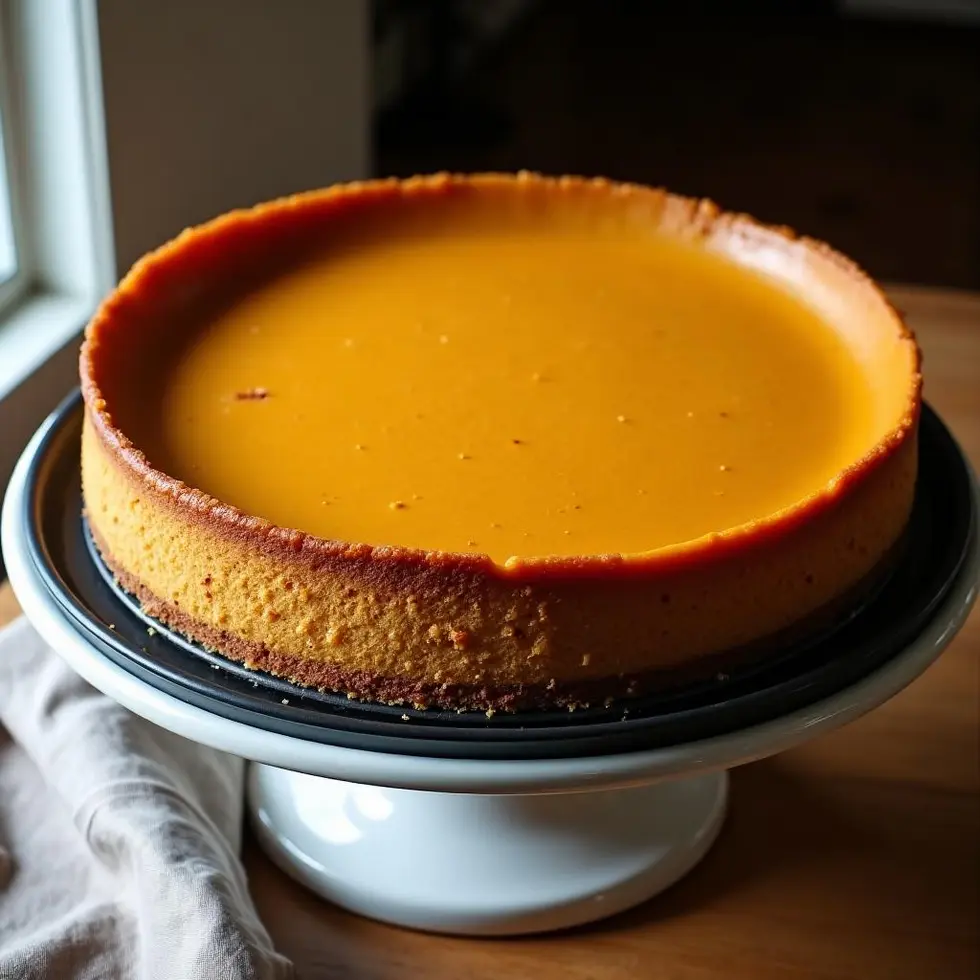
When the baking time is complete, turn off the oven but do not remove the cheesecake. Crack the oven door open about two inches and let the cheesecake cool inside for one full hour. This gradual temperature drop is what prevents the surface from cracking as the filling contracts. Removing the cheesecake too quickly exposes it to a sharp temperature change that causes the top layer to pull apart.
After the oven cooling period, remove the cheesecake and run a thin knife around the edge of the pan to loosen it from the sides. This prevents the cheesecake from pulling inward as it cools further, which can also cause cracks. Let it cool on the counter for another 30 minutes, then cover loosely with plastic wrap and refrigerate for at least four hours or overnight.
The chilling time is essential for the texture. The filling needs to drop to 40°F or lower to firm up completely, and rushing this step by slicing too early will result in a filling that’s too soft to hold its shape. Overnight chilling gives you the cleanest slices and the best texture when you serve it.
The Cheesecake Factory menu features several pumpkin desserts during fall, and this copycat dessert recreates that smooth, spiced filling without requiring specialized equipment or hard-to-find ingredients.
Chilling and Serving Tips
How Long to Chill and Store
Refrigerate the cheesecake for a minimum of four hours before slicing, but overnight chilling produces the best texture. The filling continues to firm up as it sits, and the flavors meld together more fully after 12 hours. If you’re planning to serve it for a specific event, make it the day before and store it covered in the refrigerator.
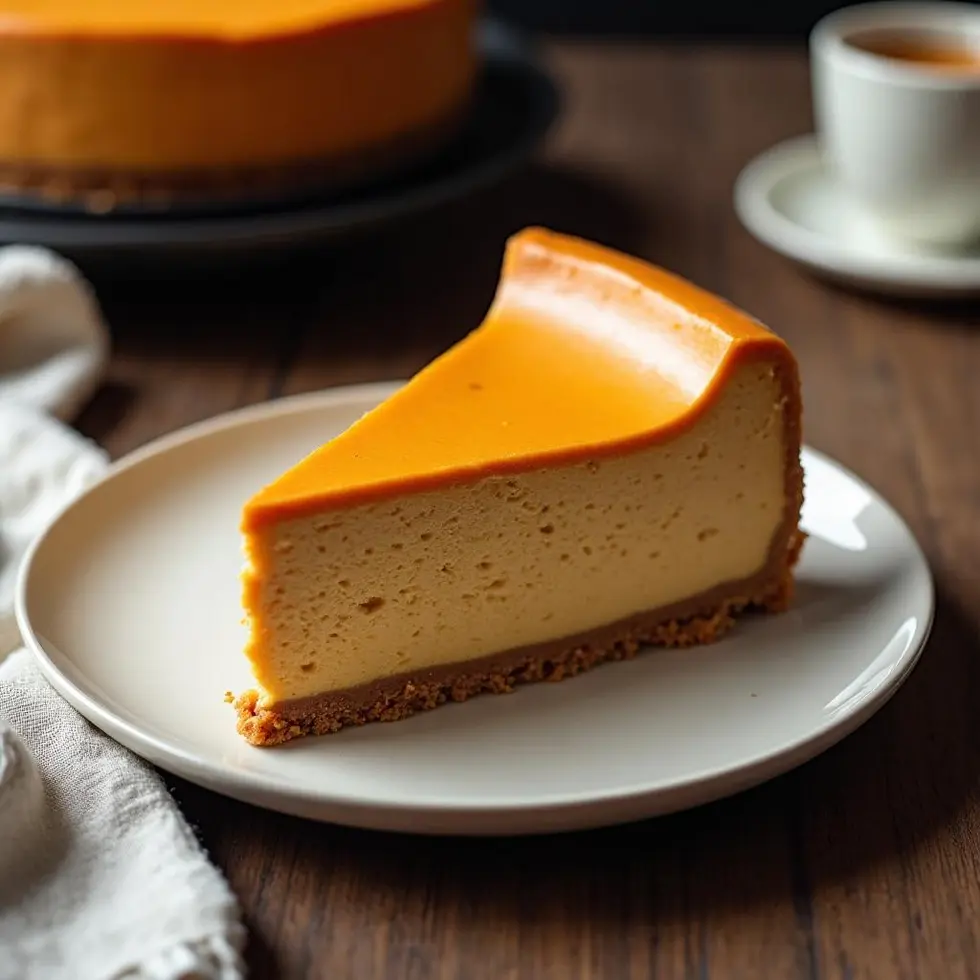
To slice cleanly, dip a sharp knife in hot water, wipe it dry, and make one smooth cut. Wipe the knife clean and dip it again before each slice. This prevents the filling from sticking to the blade and dragging as you cut. Each slice should show distinct layers: the graham cracker crust on the bottom and the smooth spiced filling on top.
Store leftovers covered in the refrigerator for up to five days. The texture remains creamy throughout that time, though the crust may soften slightly after the third day. You can also freeze individual slices wrapped tightly in plastic wrap and aluminum foil for up to two months. Thaw frozen slices in the refrigerator overnight before serving.
Serving Variations and Toppings
Serve slices plain to let the pumpkin and spice flavor come through, or add a dollop of whipped cream just before serving. A light dusting of cinnamon or a drizzle of caramel sauce adds visual appeal without overwhelming the filling. Avoid heavy toppings that compete with the spiced pumpkin flavor.
If you prefer a sweeter finish, increase the granulated sugar to 1 cup instead of 3/4 cup, but keep in mind that this will make the filling slightly denser. For a stronger spice profile, add an extra 1/2 teaspoon of pumpkin pie spice or a pinch of ground cloves. Taste adjustments like these are easier to make at home than in a restaurant setting.
This spiced cheesecake pairs well with hot coffee, black tea, or a glass of cold milk. The richness of the cream cheese balances against the warmth of the spices, making each bite satisfying without feeling too heavy. Cake Babe Bakery offers another creative take on pumpkin cheesecake with a caramel layer, showing how versatile this flavor combination can be.
Cutting the first slice cleanly sets the tone for the rest of the servings, so take your time with that initial cut and the remaining slices will follow easily.
Watch the Jiggle, Not the Clock
The center wobble at 60 minutes tells you more than any timer. A cheesecake that still moves slightly in the middle will firm up perfectly during the cooling and chilling stages, while one that’s baked until completely set will turn dense and dry. Trust the visual cue and remove it from the oven when the edges are firm and the center has a gentle, uniform jiggle.
Once you’ve made this cheesecake factory pumpkin cheesecake copycat once, the technique becomes repeatable. The same mixing order, baking temperature, and cooling method work every time, and you’ll start to recognize the exact texture the filling should have when it’s ready to pour. That consistency is what makes this pumpkin cheesecake recipe practical for fall gatherings or holiday meals when you need a dessert that looks polished and tastes intentional.
Frequently Asked Questions
Can I use a different crust for this cheesecake?
Yes, you can substitute gingersnap cookies or vanilla wafers for the graham crackers. Use the same quantity of crumbs and butter, and press the mixture firmly into the pan. Gingersnaps add extra spice that complements the pumpkin filling, while vanilla wafers create a milder base that lets the pumpkin flavor stand out more.
Why did my cheesecake crack on top?
Cracks usually form when the cheesecake cools too quickly or when the filling is overbaked. Leaving the cheesecake in the turned-off oven with the door cracked for one hour prevents rapid temperature changes. Running a knife around the edge of the pan immediately after removing it from the oven also helps, as it allows the filling to contract without pulling against the sides.
How do I know when the cheesecake is fully set?
The cheesecake is ready when the edges are firm and slightly puffed, and the center still jiggles gently when you shake the pan. It should not look wet or liquid in the middle, but it also should not be completely solid. The filling will continue to firm up during the cooling and refrigeration stages, so removing it when the center still moves slightly ensures a creamy final texture.
Can I make this cheesecake without a springform pan?
A springform pan makes it much easier to remove the cheesecake cleanly, but you can use a regular 9-inch round cake pan if you line it with parchment paper, leaving enough overhang to lift the cheesecake out. The crust may be harder to press evenly in a standard pan, and you’ll need to be careful when lifting it out after chilling.
How far in advance can I make this cheesecake?
You can make this cheesecake up to two days in advance and store it covered in the refrigerator. The texture and flavor improve after the first night of chilling, so making it a day ahead actually works in your favor. If you need to make it earlier, freeze the whole cheesecake wrapped tightly in plastic wrap and foil, then thaw it in the refrigerator for 24 hours before serving.
Pumpkin Cheesecake
Ingredients
Method
- Preheat the oven to 325°F / 163°C and mix graham cracker crumbs with melted butter, then press into the bottom of a 9-inch springform pan.
- Beat cream cheese and sugar until smooth, then add pumpkin puree, eggs one at a time, pumpkin pie spice, and vanilla extract until fully combined.
- Pour the filling over the crust and bake for 60 to 65 minutes until the edges are set but the center still jiggles slightly.
- Turn off the oven, crack the door open, and let the cheesecake cool inside for 1 hour to prevent cracking.
- Refrigerate for at least 4 hours or overnight until completely chilled and firm before slicing.
