
The moment you whisk flour into melted butter and watch the roux turn deep golden brown, the kitchen fills with a toasted, nutty aroma that signals rich gravy ahead.
You need gravy for a weeknight dinner, and you need it fast. The kids are asking what’s for dinner, the chicken is already done, and you don’t have drippings saved in the fridge. This homemade brown gravy from scratch delivers familiar peppery richness in 15 minutes using pantry staples and two kinds of broth.
The dual broth base gives you savory depth without waiting for meat drippings. Chicken broth brings body, beef broth adds color and a subtle meaty note, and the dark roux provides the toasted backbone that makes this copycat kfc gravy taste fuller than most quick gravies. Black pepper stands out more than you’d expect because the simple ingredient list doesn’t hide it behind complex spices.
This version holds up well when you make it ahead and rewarm it gently on the stove. It thickens as it cools, so you can thin it with a splash of broth if needed when serving later in the week.
What Makes KFC Gravy So Distinctive
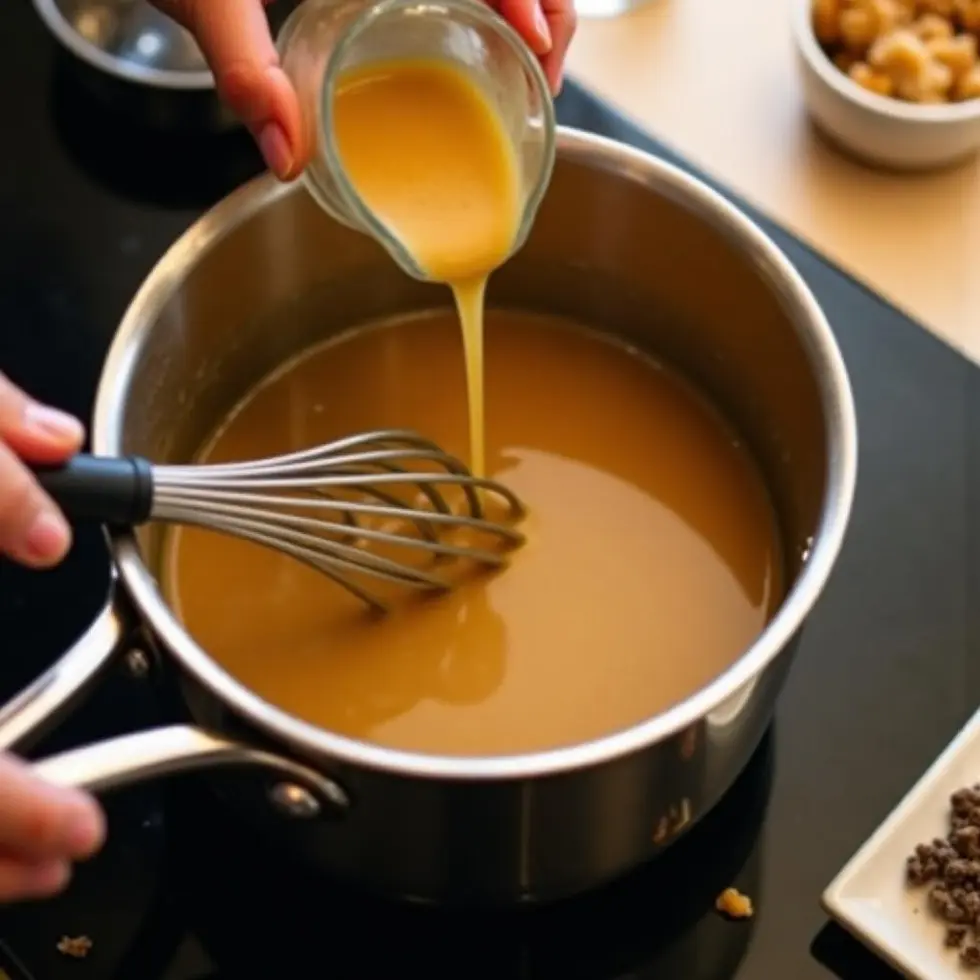
The Dark Roux Foundation
The restaurant-style gravy relies on a roux cooked longer than most home cooks expect. Whisking flour into butter over medium heat and stirring constantly for 3 to 4 minutes turns the mixture a deep golden brown, which creates a toasted, almost nutty flavor that lighter roux can’t match. That extra minute of cooking makes the difference between pale gravy and the rich brown color you recognize.
The color change happens fast once the roux starts to darken, so keep whisking. If you stop, the flour scorches in spots and adds bitterness instead of depth.
Chicken and Beef Broth Combination
Using two broths instead of one gives you layered savory flavor without needing pan drippings or roasted bones. Chicken broth provides clean body and a mild base, while beef broth deepens the color and adds a subtle meaty undertone. The ratio here is 2 cups chicken to half a cup beef, which keeps the gravy balanced rather than too heavy.
This is the technique restaurants often rely on when they need consistent gravy without access to fresh drippings every time. The homemade version tastes richer because you control the broth quality and the seasoning balance from the start.
Heavy Black Pepper Seasoning
Black pepper stands out more in this gravy than in most other brown sauces. One full teaspoon of freshly ground pepper gives you visible flecks and a mild bite that cuts through the richness of the butter and broth. Garlic powder and onion powder add savory background notes without competing for attention.
Many home cooks under-season gravy and then add salt at the table, but starting with a quarter teaspoon of salt along with the other spices builds flavor into every spoonful. You can adjust after tasting, but the base seasoning should be noticeable before you serve.
Once the roux is ready and the broth goes in, the gravy thickens quickly during the final simmer.
How to Make the Gravy From Scratch
Building the Roux Without Lumps
Melt three tablespoons of unsalted butter in a medium saucepan over medium heat until it starts to foam. The foaming signals that the water in the butter has evaporated, which means the temperature is high enough to cook the flour properly. Whisk in three tablespoons of all-purpose flour and stir constantly for 3 to 4 minutes, scraping the bottom and edges of the pan so the mixture cooks evenly.
The roux will smell toasted and look like peanut butter when it’s ready. If it turns darker than that, it’s heading toward burnt, so pull it off the heat and whisk in the broth immediately to stop the cooking.
Adding Broth Gradually
Pour in the two cups of chicken broth and half cup of beef broth slowly while whisking continuously. Adding the liquid all at once can create lumps because the hot roux seizes when it meets cold broth too quickly. A steady stream gives you smooth gravy every time.
The mixture will bubble and thicken as soon as the broth hits the roux, so keep whisking until everything is blended. Any small lumps will dissolve during the simmer, but starting smooth makes the final texture better.
Simmering to the Right Thickness
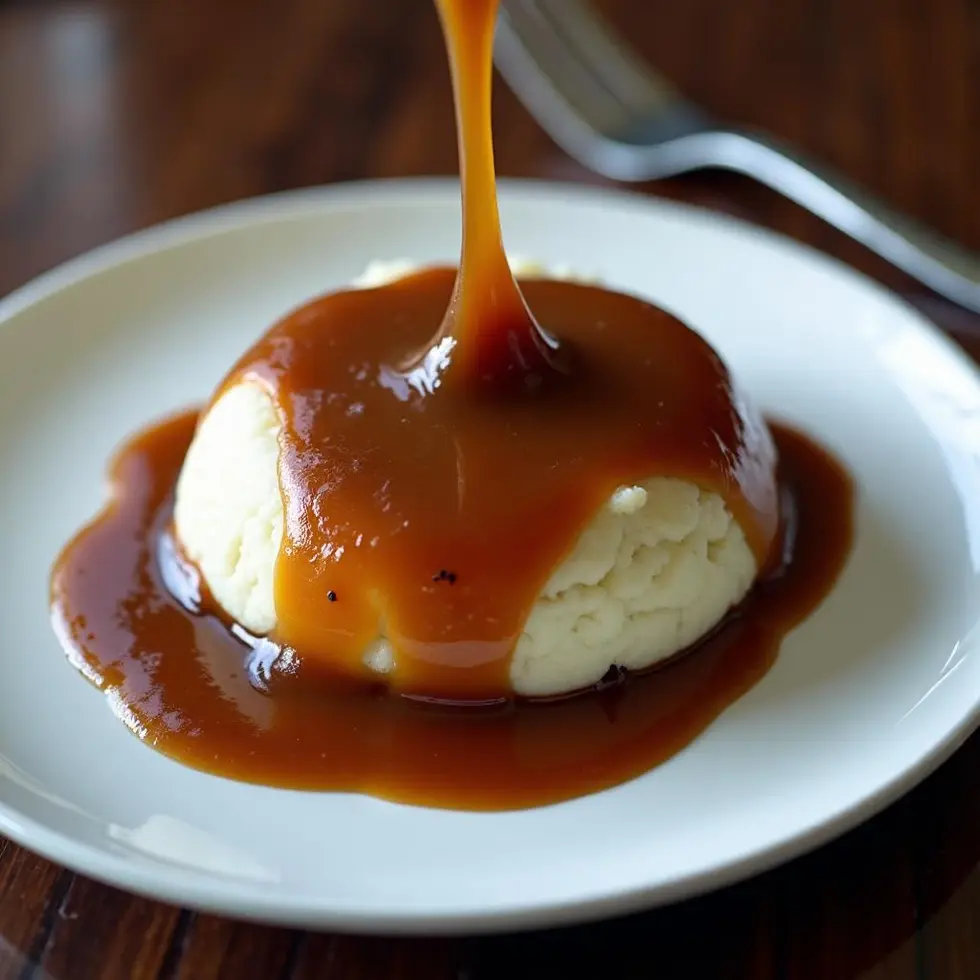
Add the black pepper, garlic powder, onion powder, and salt, then bring the gravy to a simmer. Let it bubble gently for 5 to 6 minutes, whisking occasionally to prevent the bottom from scorching. The gravy is ready when it coats the back of a spoon and leaves a clear line when you run your finger through it.
If it thickens too much, whisk in a tablespoon or two of broth to loosen it. If it’s too thin, let it simmer another minute. The consistency should be pourable but not watery, close to the texture of heavy cream. According to I’m Hungry For That, this consistency holds up well whether you pour it fresh or rewarm it later in the week.
The gravy is now ready to serve over mashed potatoes, fried chicken, or biscuits, and it stays smooth even after sitting for a few minutes.
Famous Bowl, Thickness Fixes and Storage
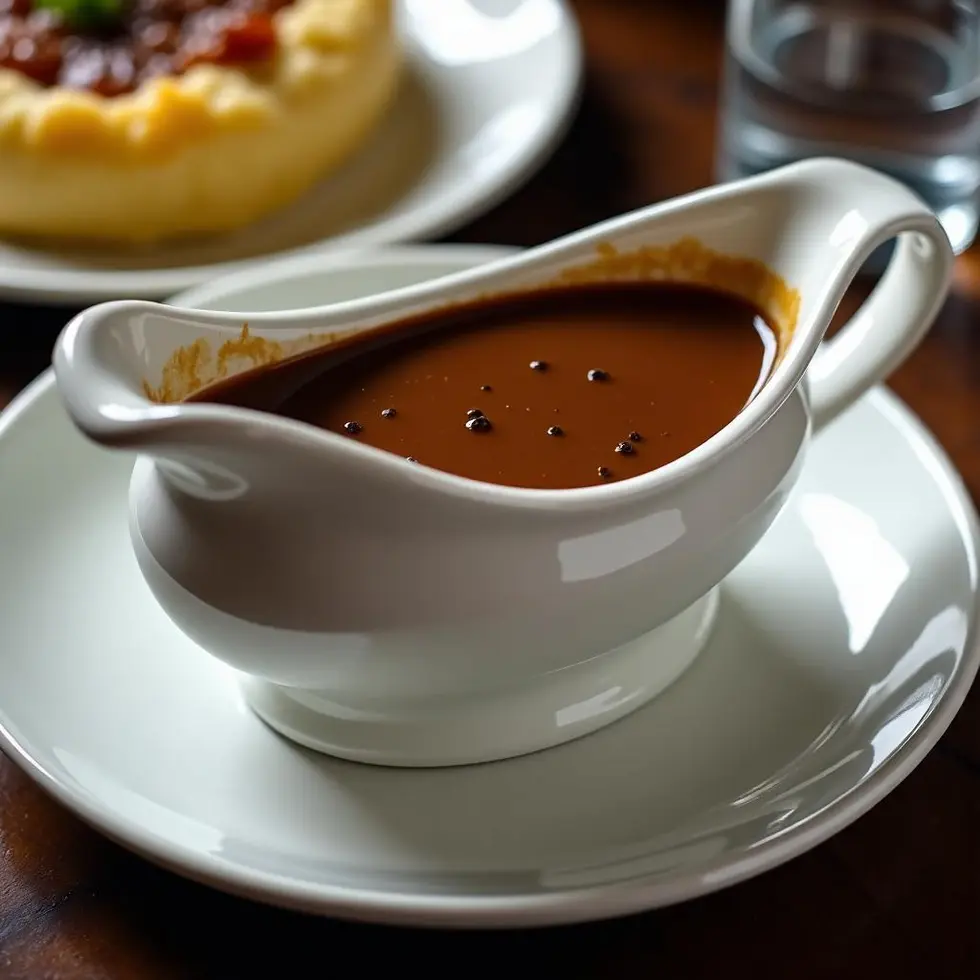
Layering It Into a Copycat Bowl
This gravy works perfectly when you build a copycat famous bowl at home. Start with mashed potatoes, add corn, then fried chicken pieces, shredded cheese, and pour the hot gravy over the top. The gravy soaks into the potatoes and keeps the chicken moist without making the coating soggy if you pour it just before serving.
You can also spoon it over homemade fried chicken and buttermilk biscuits for a full comfort meal. The peppery flavor complements crispy coatings without overpowering them.
Fixing Thickness Issues
If the gravy thickens too much after it cools, rewarm it gently over low heat and whisk in chicken broth one tablespoon at a time until it reaches the consistency you want. Gravy continues to thicken as it sits because the starch in the roux absorbs more liquid, so expect to adjust it when reheating.
If it’s too thin, return it to a simmer and cook uncovered for another 2 to 3 minutes, whisking occasionally. The extra time evaporates liquid and concentrates the flavor. Never add more flour directly to hot gravy because it clumps; instead, mix a teaspoon of flour with a tablespoon of cold broth in a small bowl, whisk it smooth, then stir it into the simmering gravy.
Storage and Reheating
Store leftover gravy in an airtight container in the refrigerator for up to four days. It will set into a thick gel when cold, but that’s normal. Rewarm it in a small saucepan over low heat, whisking frequently and adding broth as needed to restore the pourable texture.
You can also freeze it in portions for up to three months. Thaw it overnight in the fridge, then reheat gently on the stove. The texture may separate slightly after freezing, but whisking it as it warms brings it back together. For more ideas on using this gravy in other dishes, visit Allrecipes copycat section.
Pour It Fresh or Save It
The roux step is what makes this kfc gravy recipe copycat version work consistently. Three minutes of constant whisking turns simple ingredients into rich, peppery gravy that tastes better than anything from a packet. You can make it on a busy weeknight, pour it over whatever needs sauce, and store the rest for later in the week.
Try it once, and you’ll have a reliable gravy method that doesn’t depend on drippings or long simmering. It’s faster than waiting for takeout and gives you full control over the seasoning and thickness.
Frequently Asked Questions
Can I use only chicken broth instead of mixing it with beef broth?
You can use only chicken broth if that’s what you have on hand, but the gravy will be lighter in color and milder in flavor. The beef broth adds depth and the darker brown color that makes this copycat version taste closer to the restaurant-style gravy. If you want richer flavor without beef broth, use a low-sodium chicken bone broth instead.
Why does my roux turn lumpy when I add the broth?
Lumps form when you pour all the broth in at once or add it too quickly. The hot roux seizes when it meets cold liquid suddenly, which creates clumps of cooked flour. Pour the broth in a slow, steady stream while whisking constantly, and the gravy will stay smooth from the start.
How do I know when the roux is dark enough?
The roux should turn a deep golden brown, close to the color of peanut butter, after 3 to 4 minutes of constant whisking over medium heat. You’ll notice a toasted, nutty aroma when it’s ready. If it starts to smell burnt or turns darker than caramel, it’s overcooked and will taste bitter.
Can I make this gravy ahead of time?
Yes, you can make it up to four days ahead and store it in an airtight container in the refrigerator. The gravy will thicken into a gel when cold, so reheat it gently over low heat and whisk in a few tablespoons of chicken broth to bring it back to a pourable consistency. It also freezes well for up to three months.
What can I serve with this gravy besides mashed potatoes?
This gravy works well over fried chicken, biscuits, roasted turkey, meatloaf, or rice. You can also use it to build a homemade famous bowl by layering mashed potatoes, corn, fried chicken, cheese, and gravy in a bowl. It pairs with anything that needs rich, peppery sauce.
Copycat KFC Gravy
Ingredients
Method
- Melt the butter in a medium saucepan over medium heat until it begins to foam.
- Whisk in the flour and cook for 3 to 4 minutes, stirring constantly, until the roux turns a deep golden brown.
- Slowly pour in the chicken broth and beef broth while whisking to prevent lumps.
- Add the black pepper, garlic powder, onion powder, and salt, then bring to a simmer.
- Simmer for 5 to 6 minutes, whisking occasionally, until the gravy thickens enough to coat the back of a spoon.
- Serve hot over mashed potatoes, chicken, or biscuits.
