
The sauce emulsified in exactly two minutes, transforming heavy cream and grated Parmesan into a glossy coating that clung to every strand without breaking.
Emulsion drives this dish. When hot cream meets finely grated Parmesan, the milk proteins and cheese fats disperse into a stable suspension that coats pasta without splitting. The process happens fast because shrimp cook in four minutes total and the sauce requires no roux, no whisking over low heat, and no temperature babysitting. You pour, you stir, you toss.
The method relies on parallel motion. While fettuccine boils for eight minutes, you sear shrimp in butter, bloom garlic in the same skillet, then build the sauce in the residual heat. At the ten-minute mark, everything meets in one pan. Because shrimp are already peeled and deveined, and because this simple shrimp alfredo recipe uses pantry staples like butter, cream, and Parmesan, no advance prep or grocery run is required.
Each serving delivers 520 calories, enough protein and richness to anchor a weeknight dinner without requiring sides or extended cooking. The sauce holds its texture through tossing, and the pasta stays silky because you finish it in the skillet rather than plating it cold.
Why Shrimp Alfredo Feels Special but Cooks Fast
Shrimp turn opaque in two minutes per side because their muscle fibers are thin and their connective tissue is minimal. Unlike chicken or steak, which require internal temperature monitoring and resting, shrimp signal doneness visually: they curl into a loose C shape and lose their gray translucence. This makes them one of the fastest proteins you can cook on a weeknight.
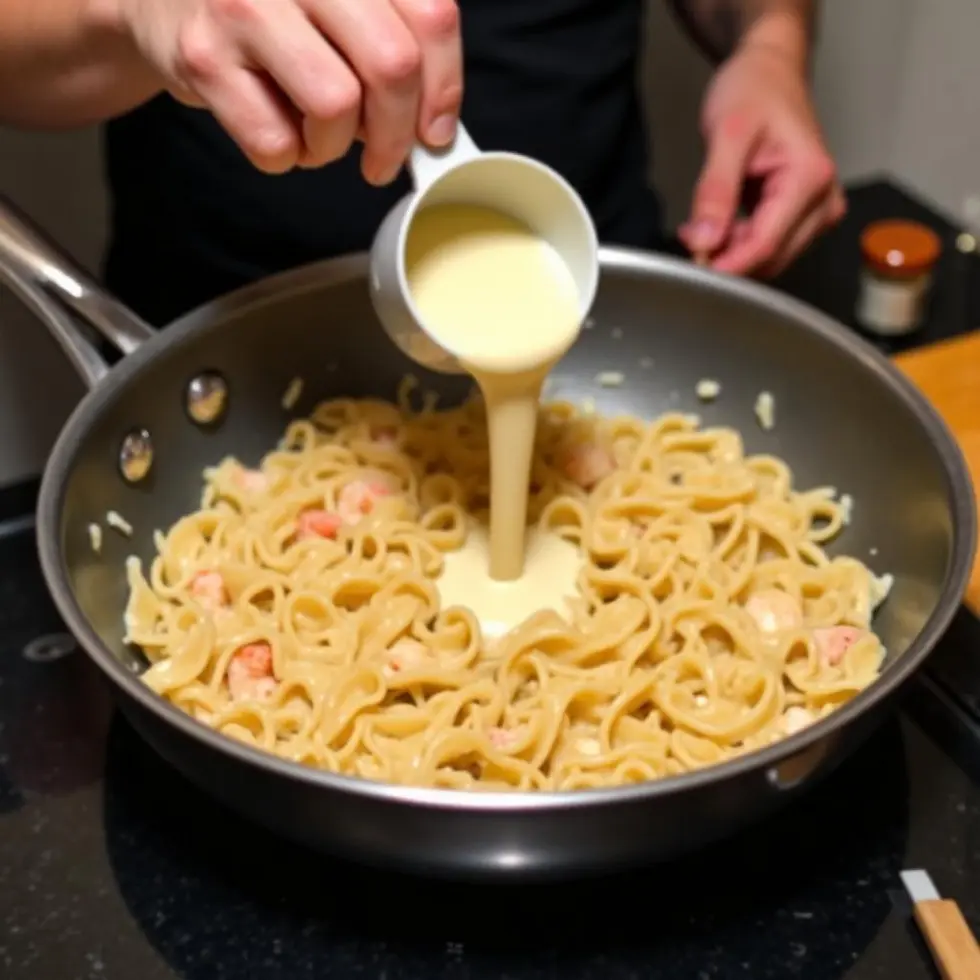
The cream sauce skips the traditional flour-butter roux because Parmesan contains enough casein to thicken the liquid on its own. When you simmer heavy cream for two minutes, water evaporates slightly, concentrating the fat. Stirring in grated Parmesan introduces proteins that bind the fat molecules into a cohesive emulsion. No whisk, no constant stirring, no fear of lumps.
Parallel Cooking Cuts Ten Minutes
While the pasta water heats and the fettuccine boils, you sear the shrimp and build the sauce in a single skillet. This overlap is the difference between a 15-minute meal and a 25-minute one. The stove does two jobs at once, and you move from one task to the next without waiting.
The ingredient list contains no items that require chopping beyond mincing three garlic cloves. Peeled and deveined shrimp eliminate the single most time-consuming step in seafood cooking. Grated Parmesan melts instantly, unlike block cheese, which needs grating and takes longer to incorporate.
Because the shrimp cook so quickly, you can swap them for scallops, canned crab, or even cooked rotisserie chicken without changing the method or extending the cook time.
How to Make Simple Shrimp Alfredo
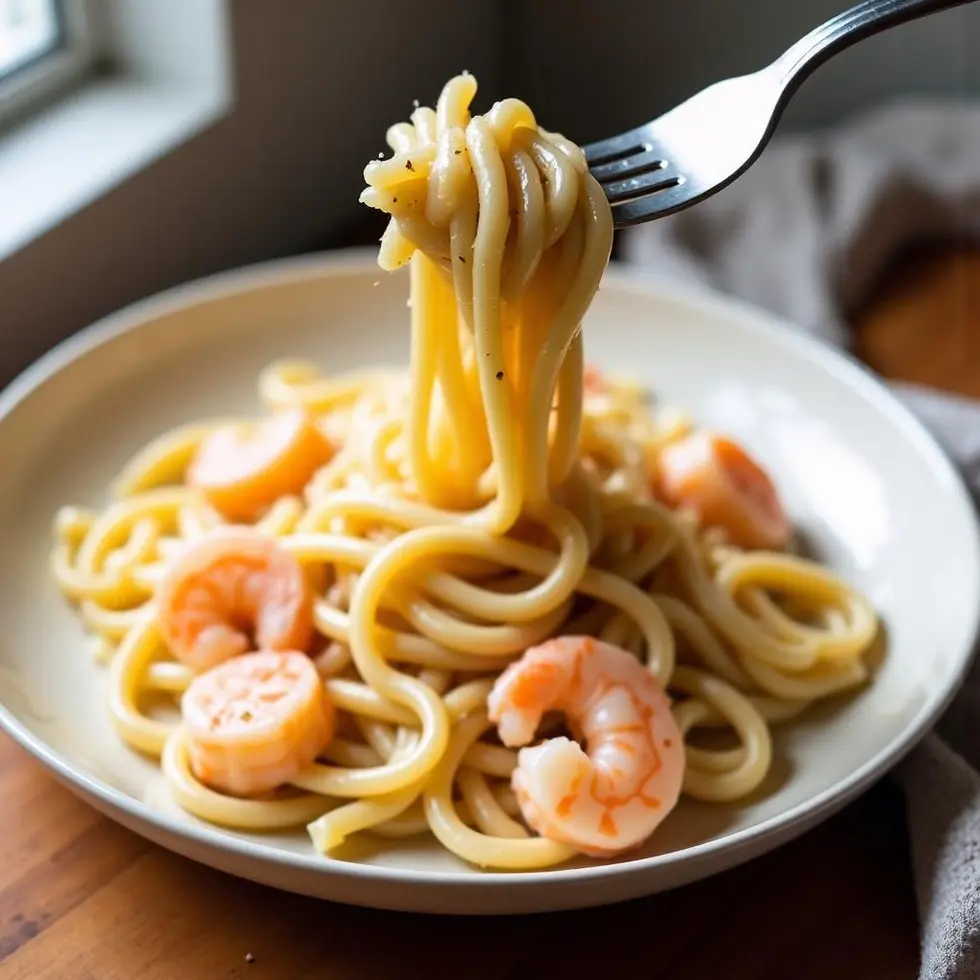
Start by bringing a large pot of salted water to a boil. Add 340 grams of fettuccine and cook for 8 to 10 minutes until al dente, then drain and set aside. The salt seasons the pasta from the inside, which matters because the sauce itself contains only Parmesan and a small amount of black pepper.
While the pasta cooks, melt 2 tablespoons of butter in a large skillet over medium-high heat. Add 450 grams of large shrimp and cook for 2 minutes per side until they turn pink and opaque. Remove the shrimp and set them aside on a plate. The residual butter in the skillet carries shrimp flavor into the sauce.
Building the Emulsion in Under Three Minutes
Add 3 minced garlic cloves to the same skillet and cook for 30 seconds until fragrant. Garlic burns quickly, so keep it moving and watch for the moment it releases its aroma. Pour in 1 cup of heavy cream and bring it to a gentle simmer for 2 minutes. The cream will reduce slightly and thicken enough to coat the back of a spoon.
Stir in 1 cup of grated Parmesan cheese and ½ teaspoon of black pepper. The cheese melts into the cream, forming a smooth, glossy sauce. If the sauce looks thin, let it simmer for another 30 seconds. If it looks too thick, add a tablespoon of the reserved pasta water to loosen it.
Add the cooked fettuccine and shrimp to the sauce, then toss for 1 minute until everything is well coated. Season with salt to taste, starting with ¼ teaspoon and adding more if needed. Serve immediately while the sauce is still creamy and the shrimp are warm.
This technique works for easy fettuccine recipe variations when you want to keep the same base method but change the protein or add vegetables.
Sauce Tips, Pasta Swaps and Reheating
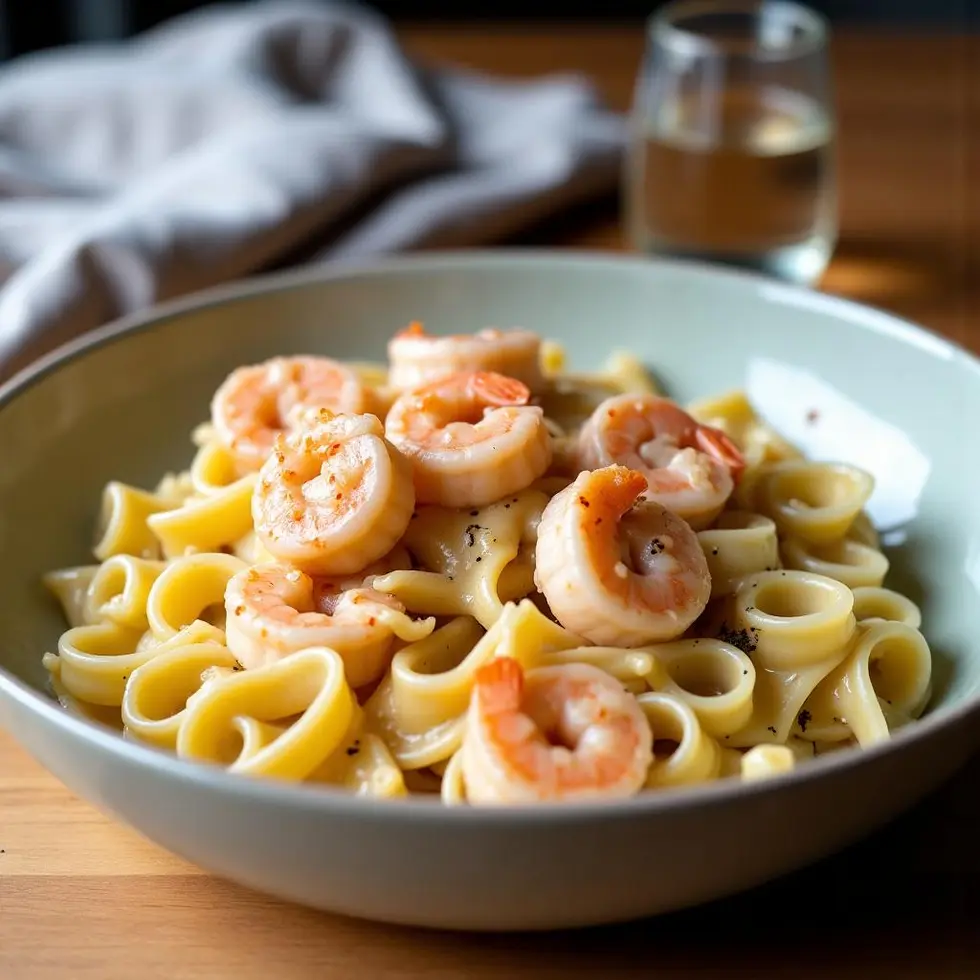
The sauce stays smooth as long as you use freshly grated Parmesan rather than pre-grated cheese. Pre-grated varieties contain cellulose or potato starch to prevent clumping, which interferes with emulsion and creates a grainy texture. Grate the cheese from a block just before you add it to the skillet.
If the sauce breaks or looks oily, it means the fat separated from the liquid. To fix it, add a tablespoon of pasta water and whisk vigorously off the heat. The starch in the pasta water acts as a binder and brings the emulsion back together.
Pasta and Protein Variations That Keep the Same Timing
You can replace fettuccine with linguine, penne, or rigatoni without changing the cook time. Shorter pasta shapes like penne take 8 to 10 minutes, the same as fettuccine, so the parallel cooking method still works. If you prefer a lighter option, use zucchini noodles, but add them directly to the sauce without boiling and toss for only 1 minute to avoid releasing too much water.
Swap shrimp for scallops, cooked crab, or rotisserie chicken. Scallops cook in the same 2 minutes per side. If you use cooked chicken, skip the searing step and add it directly to the sauce to warm through. For more ideas on quick seafood pasta, Foodess offers additional cream-based variations.
Leftovers reheat better on the stovetop than in the microwave. Add a splash of cream or milk to the skillet, heat over low, and stir gently until the sauce loosens. The microwave tends to split the emulsion and leave the pasta dry.
For a thicker sauce, reduce the cream by an extra minute before adding the cheese, or use a 4-ingredient alfredo sauce method that includes a touch of cream cheese for added body.
Control the Heat Under the Sauce
The sauce thickens through gentle evaporation, not aggressive boiling. Medium heat keeps the cream at a simmer without causing it to break or scorch. If the heat is too high, the milk proteins clump and the fat separates, leaving you with a grainy, oily sauce instead of a smooth emulsion.
Watch the skillet during the two-minute simmer. Small bubbles should rise steadily around the edges, not across the entire surface. If the cream boils hard, reduce the heat immediately and stir to redistribute the temperature. This single adjustment determines whether the sauce coats the pasta evenly or slides off in clumps.
Frequently Asked Questions
Can I use frozen shrimp for this recipe?
Yes, but thaw them completely first. Rinse the shrimp under cold water, pat them dry with paper towels, and proceed with the recipe. Excess moisture will cause the shrimp to steam rather than sear, which prevents browning.
How do I keep the sauce from separating?
Use freshly grated Parmesan, simmer the cream gently rather than boiling it hard, and add the cheese off the heat while stirring constantly. If the sauce does separate, whisk in a tablespoon of pasta water to re-emulsify it.
Can I make this ahead of time?
The sauce is best made fresh because cream-based emulsions break when refrigerated and reheated. If you must make it ahead, store the pasta, shrimp, and sauce separately, then reheat the sauce gently on the stovetop with a splash of cream before tossing.
What if I do not have heavy cream?
You can use half-and-half, but the sauce will be thinner. Simmer it for an extra minute to reduce the liquid, or stir in an additional ¼ cup of Parmesan to thicken it. Do not use milk alone; it lacks the fat needed to form a stable emulsion.
How do I know when the shrimp are done?
Shrimp are done when they turn pink, curl into a loose C shape, and feel firm to the touch. Overcooking makes them rubbery, so pull them from the heat as soon as they lose their translucence.
Can I add vegetables to this dish?
Yes. Spinach, peas, or blanched broccoli work well. Add them to the sauce during the final toss so they warm through without overcooking. Avoid watery vegetables like tomatoes, which can thin the sauce and break the emulsion.
Shrimp Alfredo
Ingredients
Method
- Bring a large pot of salted water to a boil, add the fettuccine, and cook for 8 to 10 minutes until al dente, then drain and set aside.
- While the pasta cooks, melt the butter in a large skillet over medium-high heat, add the shrimp, and cook for 2 minutes per side until pink and opaque, then remove and set aside.
- Add the minced garlic to the same skillet and cook for 30 seconds until fragrant.
- Pour in the heavy cream, bring to a gentle simmer for 2 minutes, then stir in the Parmesan cheese and black pepper until smooth and creamy.
- Add the cooked pasta and shrimp to the sauce, toss for 1 minute until well coated, season with salt to taste, and serve immediately.
