
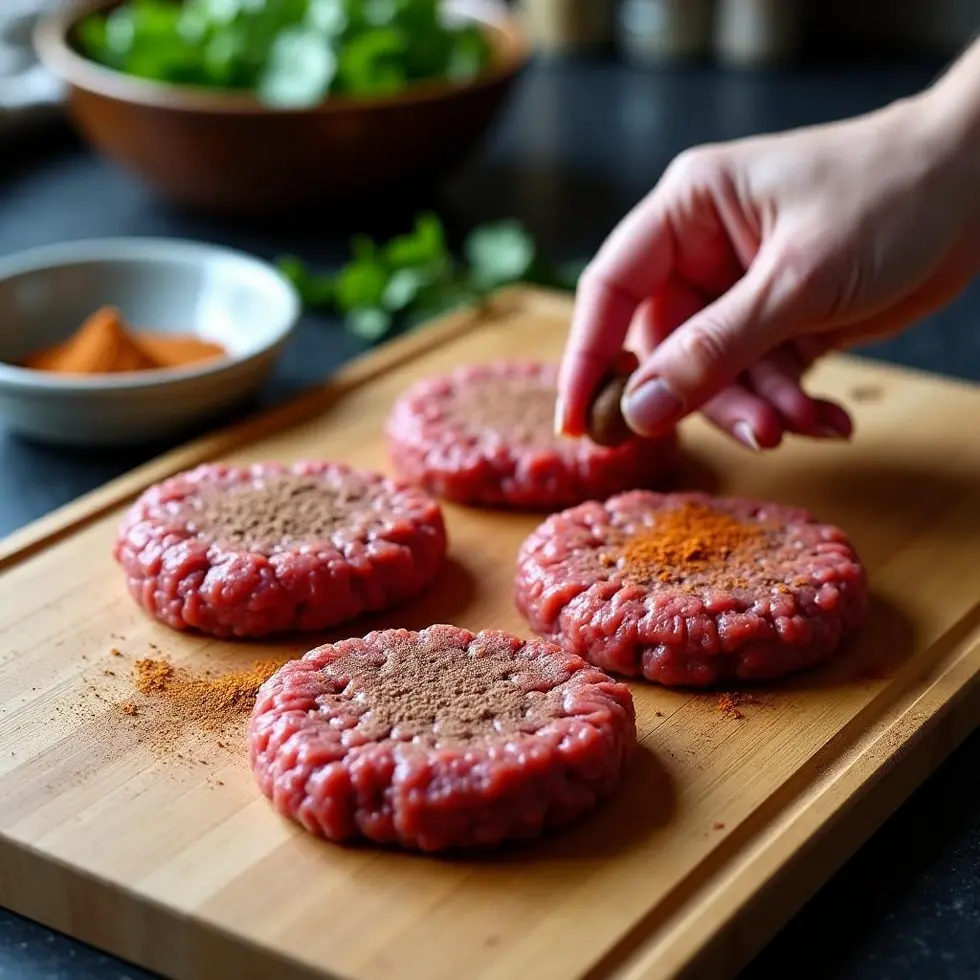
The moment garlic powder and smoked paprika hit the beef, the aroma promises exactly what this burger delivers.
Not every home cook keeps cheddar cheese on hand, and that shouldn’t stop you from making this juicy bbq hamburger recipe. Monterey Jack, provolone, or even a sharp American cheese slice all melt cleanly and carry the smoky barbecue sauce without overpowering it. The bun matters more than most people expect — a standard hamburger bun works perfectly, but if you have brioche or potato rolls, the slight sweetness balances the tangy sauce even better.
The reason this burger holds together through every bite comes down to fat percentage. Ground beef labeled 80/20 contains enough fat to stay moist on the grill while forming a proper crust. Leaner ground beef dries out before the surface browns, and fattier blends can shrink unpredictably. The shallow indent you press into the center of each patty keeps it flat as the edges contract during cooking, so the finished burger sits level on the bun instead of puffing into a dome.
The smoky aroma hits first, then the crust gives way to tender beef, followed by the creamy tang of the barbecue-mayo blend. Red onion adds sharpness without the raw bite of white onion, and the lettuce provides crunch that contrasts with the melted cheese.
Most recipes skip the step of mixing barbecue sauce with mayonnaise, but that combination creates a spread that clings to the bun and doesn’t drip off the sides. Plain barbecue sauce slides around, especially on a grilled patty with uneven texture, while the mayo thickens it just enough to stay put.
What Makes a BBQ Burger Juicy
Why 80/20 Ground Beef Works Best
Fat content determines texture more than any other ingredient in this juicy bbq hamburger recipe. Ground beef labeled 80/20 means 80 percent lean meat and 20 percent fat, which translates to enough moisture to keep the patty tender while providing the richness that makes each bite satisfying. Leaner blends dry out before reaching 160°F / 71°C, the safe internal temperature for ground beef, while blends with more fat can shrink dramatically and release excess grease onto the grill.
The fat also carries flavor. Garlic powder and smoked paprika don’t just sit on the surface — they mix into the juices as the patty cooks, spreading the seasoning throughout. If you only have 85/15 ground beef, brush each patty lightly with olive oil before seasoning to add a bit of moisture back.
How Handling Affects Texture
Overworking ground beef creates a dense, tight patty that chews more like meatloaf than a burger. When you shape the beef, press just enough to hold the portions together, then stop. The protein strands in ground beef bind when handled, and the more you knead or press, the tighter those strands become. A loosely formed patty cooks into a tender texture with visible grain, while an overmixed one turns firm and compact.
The thumb-press indent in the center compensates for the way patties puff during cooking. Heat causes the edges to contract and the center to rise, so a flat patty becomes a dome. Pressing a shallow dip into the raw patty leaves room for that rise, and the finished burger comes off the grill level. This technique keeps the bun from tilting and the toppings from sliding off.
Smoked paprika adds a subtle char flavor without needing a smoker, which makes grilled bbq burgers taste more complex than plain seasoned beef.
How to Grill BBQ Hamburgers
Building a Crust Without Burning
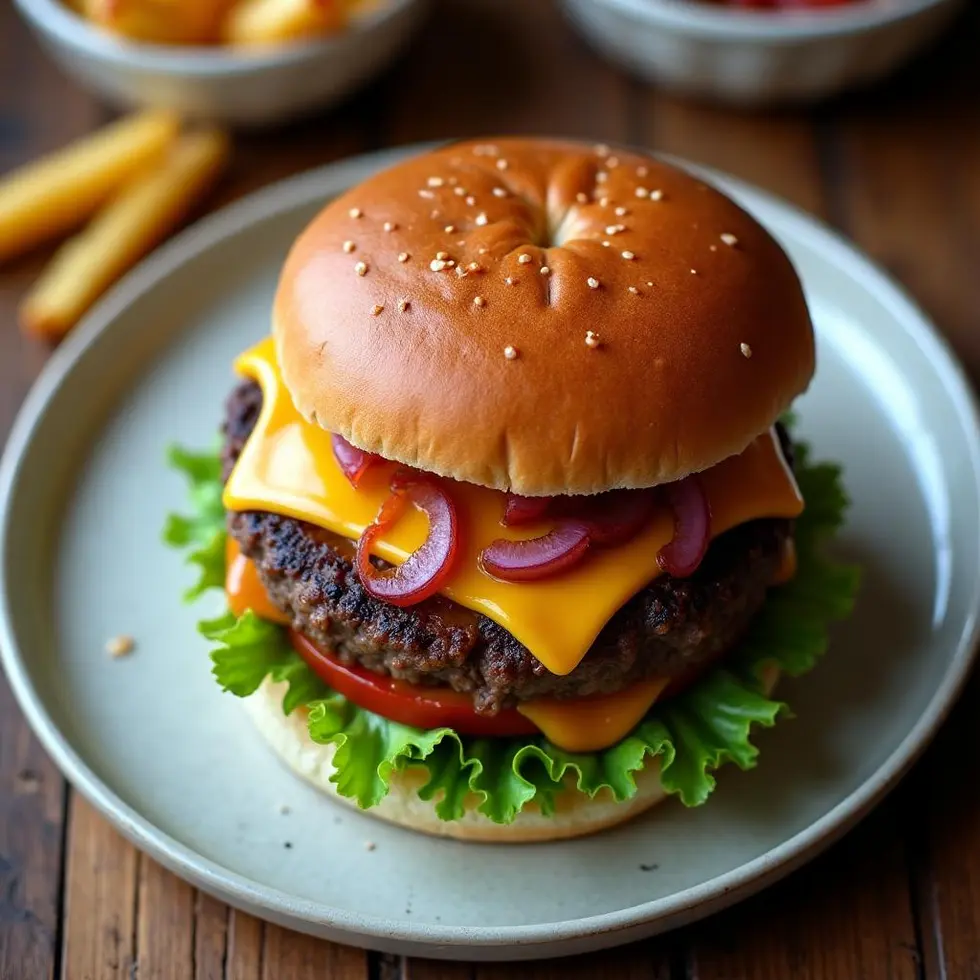
Medium-high heat on a grill creates the surface temperature needed for a deep brown crust without charring the outside before the inside reaches 160°F / 71°C. If the grill runs too hot, the patty blackens in spots and stays raw in the center. If the heat is too low, the beef steams instead of searing, and the texture turns gray and soft. Most gas grills reach the right zone when the thermometer reads around 375°F to 400°F, while charcoal grills need coals spread in an even layer with a few inches of space above the grate.
Flip each patty only once. Moving the beef too often disrupts crust formation and releases moisture that would otherwise stay inside. Place the patty on the grill, leave it untouched for four to five minutes, then flip and cook the second side for another four to five minutes. The single-flip rule gives the Maillard reaction enough uninterrupted time to develop the browned, savory layer that defines a grilled hamburger recipe.
When to Add Cheese and Toast the Buns
Cheddar cheese melts cleanly when added during the last 60 seconds of cooking. If you place the slice too early, the cheese overcooks and separates into oil and solids. If you add it after removing the patty from the heat, it barely softens. Covering the grill traps heat around the cheese and encourages even melting without extending the cook time for the beef.
Toast the buns cut-side down on the grill for one to two minutes, just until the edges turn golden. A toasted bun holds up to the sauce and stays firm under the weight of the toppings, while an untoasted bun absorbs moisture and falls apart. According to Burnt Pellet BBQ, controlling the sear and timing on grilled beef patties directly affects how well the final burger holds together.
The patty hits 160°F / 71°C right as the crust finishes browning, which means timing and temperature align naturally when the heat level is correct.
Toppings, Sauces and Serving Ideas
Why the BBQ-Mayo Blend Works
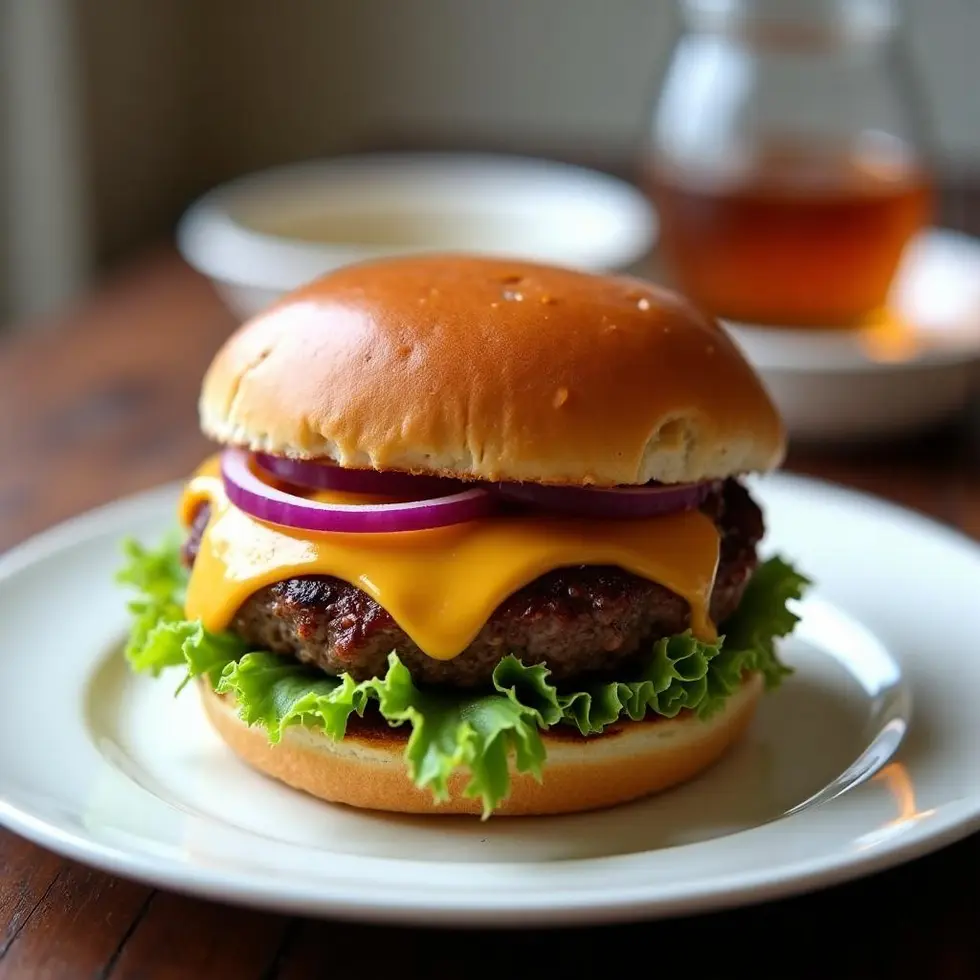
Mixing barbecue sauce with mayonnaise creates a spread that clings to the bun and doesn’t run off the patty. Plain barbecue sauce is thin and slides around, especially on a hot burger with an uneven surface. The mayo thickens the sauce just enough to stay in place, and the richness balances the vinegar tang in most barbecue blends. Use two tablespoons of mayo for every quarter cup of barbecue sauce to keep the flavor focused on the barbecue without turning the spread heavy.
If you prefer a tangier sauce, add a teaspoon of yellow mustard to the mix. If you want more heat, stir in a pinch of cayenne pepper or a few drops of hot sauce. The base ratio stays the same, so the spread still holds its structure.
How to Layer for Structure
Start with the bottom bun, spread the barbecue-mayo blend on it, then add shredded lettuce. The lettuce creates a barrier between the sauce and the beef, which keeps the bun from soaking through. Place the patty with melted cheddar on top of the lettuce, then layer the red onion slices over the cheese. The onion sits above the beef so its sharpness hits first in each bite, and the top bun presses everything together without crushing the lettuce.
This layering order also works if you swap the toppings. Tomato slices, pickles, or grilled onions all follow the same logic — wet ingredients go on the lettuce, firmer ingredients go on top of the cheese. If you enjoy burgers with extra toppings, you might also like this cheeseburger mac and cheese recipe, which combines similar flavors in a comforting pasta form.
The sauce placement on the bottom bun ensures the first bite delivers the full barbecue flavor before the beef and cheese take over.
Rest the Patty Before Assembling
Let each patty rest for two minutes after removing it from the grill. The juices inside the beef need time to redistribute from the center back toward the edges, and cutting or biting into the burger too soon releases those juices onto the plate instead of into your mouth. Resting doesn’t cool the patty noticeably, but it does keep the texture moist and prevent the bun from turning soggy.
If you need to prepare multiple burgers at once, rest the patties on a clean plate tented loosely with foil while you toast the buns. The foil holds heat without trapping steam, so the crust stays crisp.
Frequently Asked Questions
Can I use a different type of cheese?
Yes, Monterey Jack, provolone, pepper jack, or sharp American cheese all melt well and pair with barbecue sauce. Avoid pre-shredded cheese, which contains anti-caking agents that prevent smooth melting. Slice your own from a block for the best texture.
What if I don’t have a grill?
Use a cast iron skillet over medium-high heat instead. Preheat the skillet for three to four minutes, then cook the patties for four to five minutes per side, flipping once. The crust will be slightly different but still flavorful. Toast the buns in the same skillet after removing the beef.
How do I keep the patties from sticking to the grill?
Clean the grill grates thoroughly and preheat them until they’re very hot before placing the beef. The high heat sears the surface almost instantly, which reduces sticking. Avoid moving the patties before the crust forms, and use a thin metal spatula to flip them.
Can I make the BBQ sauce ahead?
Yes, mix the barbecue sauce and mayonnaise up to two days in advance and store it in an airtight container in the refrigerator. Stir it again before using, as the ingredients may separate slightly during storage.
BBQ Hamburger
Ingredients
Method
- Divide the ground beef into 4 equal portions, gently shape into patties without overworking, and press a shallow indent in the center of each patty with your thumb.
- Season both sides of each patty with garlic powder and smoked paprika.
- Grill the patties over medium-high heat for 4 to 5 minutes per side, flipping once, until they reach 160°F / 71°C internal temperature.
- Place one cheese slice on each patty during the last 60 seconds of cooking and cover the grill to melt.
- Toast the buns cut-side down on the grill for 1 to 2 minutes until golden.
- Mix the barbecue sauce and mayonnaise together to make the BBQ sauce.
- Assemble each burger with bottom bun, BBQ sauce, lettuce, patty with cheese, red onion, and top bun.
