
Instant rice absorbs liquid off the heat, which is why removing the skillet from the burner at precisely the right moment determines whether you end up with fluffy grains or a mushy bottom layer.
Most people assume rice requires careful monitoring on the stove, but instant rice behaves differently from regular long-grain varieties. The grains are pre-cooked and dehydrated during manufacturing, so they rehydrate in hot liquid rather than requiring extended simmering. Once you stir the rice into boiling broth and cover the pan, residual heat finishes the job without any risk of scorching.
This chicken and rice skillet uses that principle to deliver dinner in 15 minutes flat. You heat the liquid until it boils, add the rice and pre-cooked chicken, then pull the entire pan off the heat and let it stand covered for five minutes. The rice absorbs the seasoned broth while you set the table, and you skip the usual pot-watching entirely.
The method relies on three shortcuts: rotisserie chicken that needs no cooking, instant rice that hydrates in minutes, and frozen vegetables that thaw directly in the hot skillet. Each ingredient enters the pan at a specific moment, and because they all finish simultaneously, you avoid the usual juggling of multiple pots and timers. This recipe is one of several easy rice recipes for dinner that prioritize speed without sacrificing texture or flavor.
Why Rice Dinners Work for Busy Nights
Instant Rice Cuts Cooking Time in Half
Instant white rice rehydrates in five minutes because the grains have already been fully cooked and then dried. Regular rice requires 15 to 20 minutes of simmering to break down starches and absorb water, but instant rice only needs to soak up hot liquid. You save the active cooking time and avoid the risk of burning the bottom layer while waiting for the top grains to soften.
The two-cup measure of instant rice used here yields four generous servings when combined with chicken and vegetables. Each grain swells as it absorbs the seasoned broth, turning what looks like a small amount of dry rice into a full dinner portion.
Rotisserie Chicken Eliminates Prep Work
Pre-cooked rotisserie chicken arrives already seasoned and ready to shred. You skip the steps of trimming, pounding, seasoning, and searing raw chicken breasts, which typically add 15 minutes to any weeknight recipe. Two cups of shredded meat provide enough protein for four servings, and because the chicken is already cooked, it only needs to warm through in the residual heat of the covered skillet.
Shredding the chicken by hand takes about two minutes. Pull the meat off the bones while the skillet heats, and you’ll have it ready before the vegetables finish cooking.
Frozen Vegetables Cook Straight from the Bag
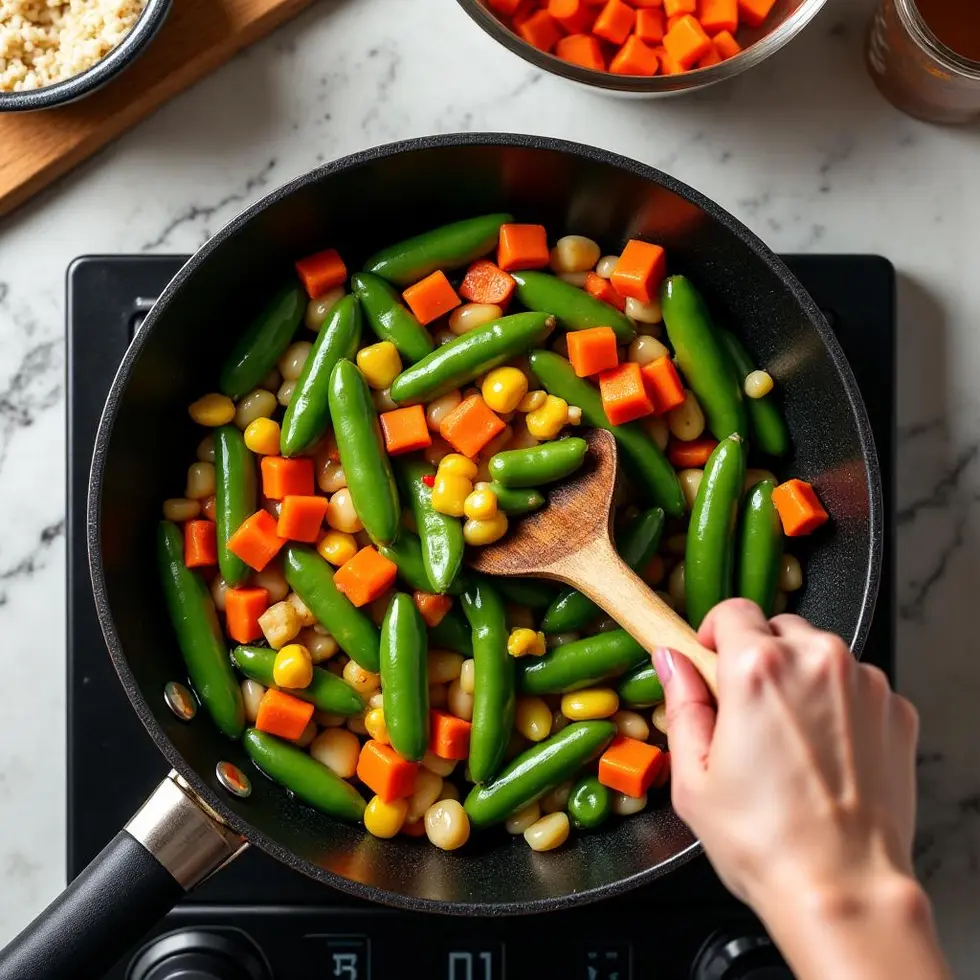
Frozen mixed vegetables thaw and soften in three minutes when stirred in a hot skillet. You skip the washing, peeling, and chopping required for fresh produce, and because the vegetables are flash-frozen at peak ripeness, they retain good color and texture. The one-cup measure adds green beans, carrots, peas, and corn without requiring a trip to the produce section.
Cooking the vegetables first ensures they release any ice crystals before you add the broth. This prevents excess water from diluting the seasoning and keeps the final dish from turning soupy.
The entire recipe happens in one skillet, which means you clean only one pan after dinner instead of a cutting board, sauté pan, and saucepan.
Easy Rice Recipes You Can Make Fast
Parallel Cooking Keeps You on Schedule
The recipe uses overlapping steps to compress the timeline. While the olive oil heats for one minute, you shred the rotisserie chicken and measure the frozen vegetables. At the three-minute mark, when the vegetables are nearly tender, you add the broth and seasonings, bringing everything to a boil within two minutes. The instant rice and chicken go in at the same time, and then the skillet comes off the heat.
This parallel workflow prevents idle time. You never wait for one ingredient to finish before starting the next, and because the rice cooks off the burner, you can use those five standing minutes to clear the counter or pour drinks.
Each step has a specific duration. Heat the oil for one minute, cook the vegetables for three minutes, boil the broth for two minutes, then let the covered skillet stand for five minutes. Following these intervals ensures the rice absorbs exactly the right amount of liquid without becoming sticky or dry.
Seasoning Dissolves Directly in the Broth
Garlic powder, onion powder, black pepper, and soy sauce dissolve into the chicken broth as it comes to a boil. This distributes flavor evenly throughout the dish instead of concentrating seasoning on the surface of the chicken or vegetables. The soy sauce adds umami depth and a subtle saltiness that balances the mild flavor of instant rice.
Two tablespoons of soy sauce season two cups of broth without making the final dish taste overtly salty. The rice absorbs the seasoned liquid as it rehydrates, so every grain carries flavor. If you prefer a lighter sodium level, reduce the soy sauce to one tablespoon and add a pinch of salt to the broth instead.
Stir the seasonings into the broth before adding the rice. This ensures the garlic and onion powder dissolve completely rather than clumping on top of dry grains.
Off-Heat Absorption Prevents Scorching
Removing the skillet from the burner after adding the rice prevents the bottom layer from sticking or burning. Instant rice rehydrates in hot liquid, not from direct heat, so the residual temperature in the covered pan is sufficient to finish the job. The five-minute standing time allows the grains to absorb the broth evenly without any risk of forming a crusty layer at the bottom.
Covering the skillet traps steam, which keeps the rice moist as it rehydrates. If you lift the lid during the standing time, steam escapes and the top layer may turn out dry or undercooked. Wait the full five minutes, then fluff with a fork to separate the grains and release any remaining steam.
The technique is similar to the method used in Joyous Apron‘s skillet fried rice, where precise heat control and timing determine the final texture. Removing the pan from the burner gives you consistent results without constant monitoring.
Toppings, Proteins and Storage Tips
Protein Swaps That Work in the Same Timeline
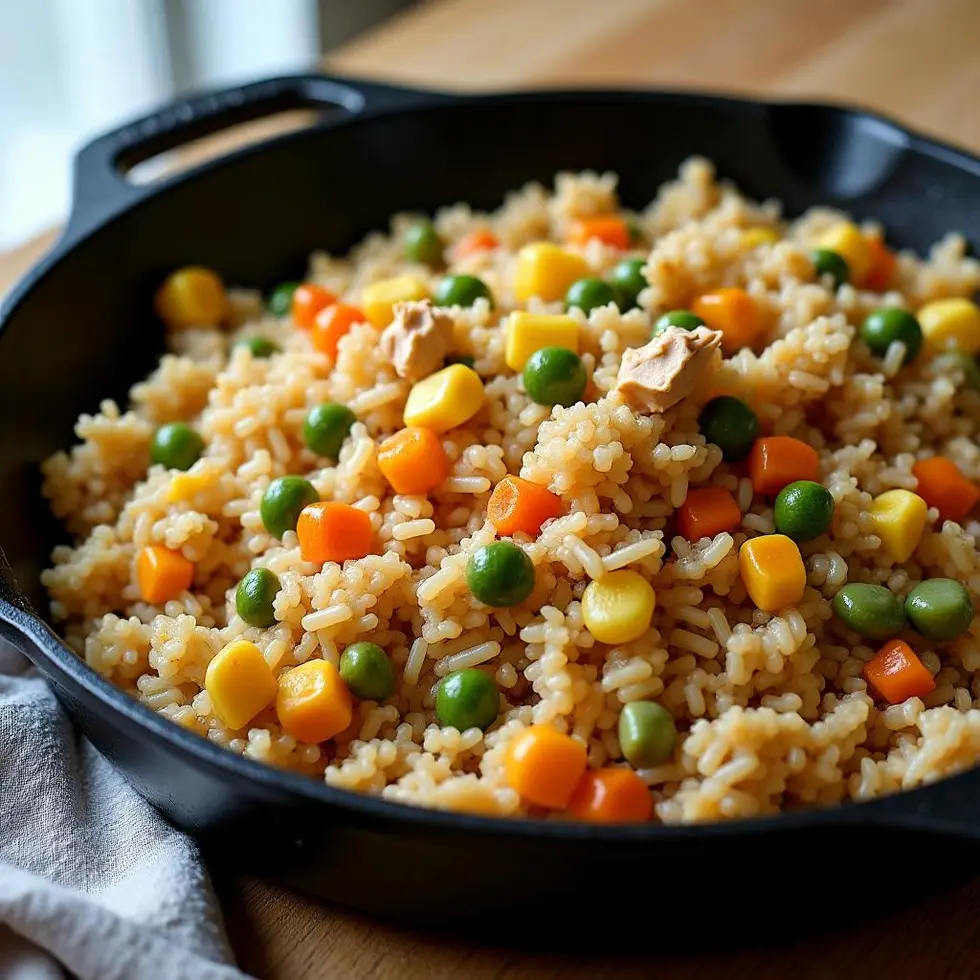
Rotisserie chicken is the fastest option, but pre-cooked shrimp, canned tuna, or leftover steak all work within the same 15-minute window. Add two cups of any cooked protein at the same point in the recipe, right when the rice goes into the skillet. Raw protein would require additional cooking time and a separate pan, which defeats the purpose of a one-pan meal.
If you have leftover grilled steak from earlier in the week, slice it thin and stir it in with the rice. The beef warms through in the covered standing time without overcooking. Pre-cooked shrimp needs even less time and stays tender as long as you add it off the heat.
Tofu is another quick-cooking option. Use firm tofu, drain it well, and cut it into half-inch cubes. Stir it in with the rice and let it warm through during the five-minute standing period.
Simple Toppings That Add Texture
Sliced green onions, toasted sesame seeds, or a drizzle of sesame oil brighten the finished dish without adding cooking time. Sprinkle them on just before serving to preserve their fresh flavor and crunchy texture. A handful of chopped cilantro or a squeeze of lime juice adds a citrusy note that balances the savory broth.
For a richer finish, stir in a tablespoon of butter just before fluffing the rice. The butter melts into the hot grains and adds a silky mouthfeel. You can also top each serving with a fried egg for extra protein and a creamy yolk that coats the rice when broken.
Hot sauce or chili crisp works well if you prefer spice. Add a small spoonful to individual bowls so everyone can adjust the heat level to their preference.
Storage and Reheating Without Drying Out
Leftover rice and chicken keep in an airtight container in the refrigerator for up to three days. The rice continues to absorb moisture as it sits, so the texture becomes slightly drier after the first day. Add a tablespoon of water or broth per serving when reheating to restore some of the original moisture.
Reheat in a covered skillet over medium-low heat for three to four minutes, stirring occasionally, or microwave in a covered bowl for one to two minutes. Stir halfway through to distribute the heat evenly and prevent the edges from drying out.
If you plan to meal prep, undercook the rice slightly by letting it stand for only four minutes instead of five. The grains will finish absorbing liquid when reheated, and this prevents them from turning mushy the next day. Pair it with fresh guacamole or a quick salsa for a complete meal.
Cover the Skillet at the Right Moment
The five-minute standing time only works if the skillet is tightly covered the moment you remove it from the heat. Steam builds inside the pan and finishes rehydrating the rice, so any gap in the lid allows moisture to escape and leaves the grains undercooked. Use a lid that fits snugly, or cover the skillet with a baking sheet if your lid is loose.
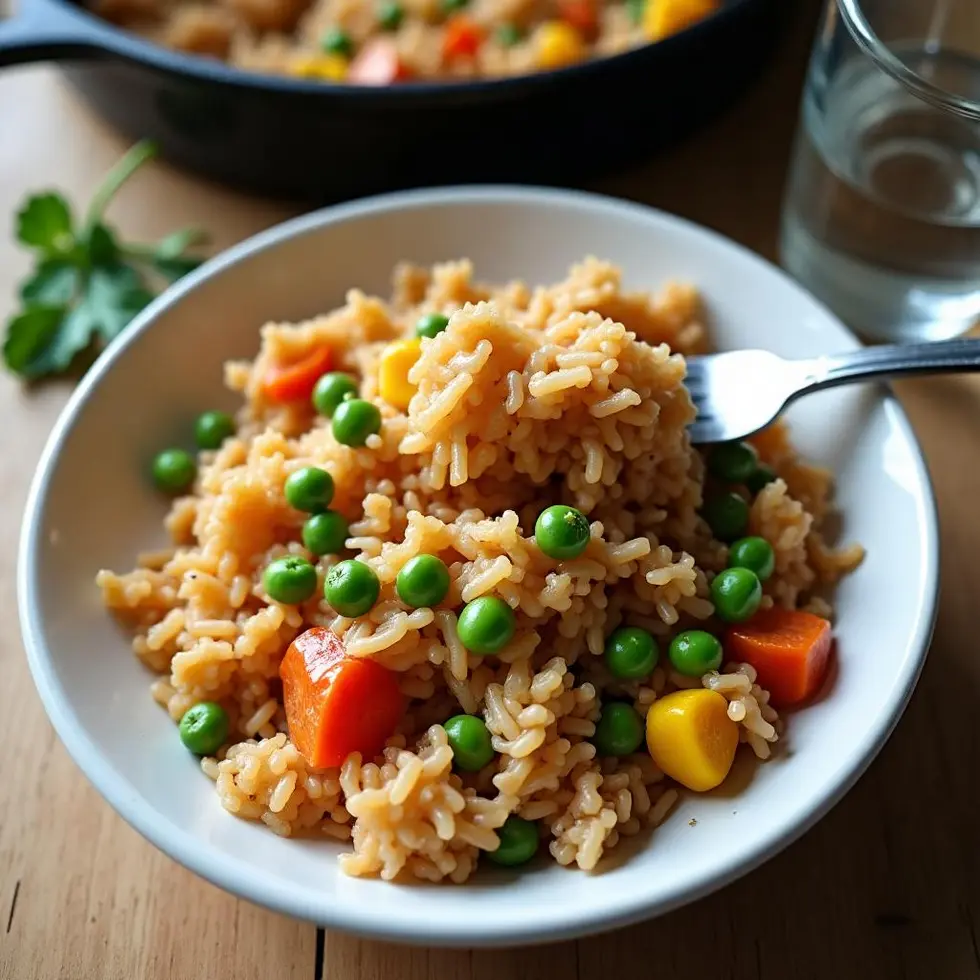
When you return to the skillet after five minutes, condensation will have collected on the underside of the lid. This is the sign that enough steam was trapped to fully cook the rice. Fluff the grains with a fork to release the steam and separate any clumps, then taste a small spoonful to confirm the texture.
Notice how the rice absorbs the soy sauce and broth evenly, and how the chicken warms through without drying out.
Frequently Asked Questions
Can I use regular rice instead of instant rice?
Regular white rice requires 15 to 20 minutes of simmering, which extends the total cooking time beyond the 15-minute target. If you prefer regular rice, increase the broth to 2.5 cups, add the rice with the vegetables, and simmer covered for 18 minutes before stirring in the chicken.
Do I need to thaw the frozen vegetables first?
No, the vegetables cook directly from frozen in the hot skillet. Thawing them in advance adds unnecessary prep time and can make them soggy. Stir them occasionally during the three-minute cooking window to ensure even heating.
Can I double the recipe in the same skillet?
Doubling the recipe works as long as your skillet is large enough to hold four cups of cooked rice plus the chicken and vegetables without crowding. Use a 12-inch skillet for eight servings, and add one extra minute to the boiling time to ensure the larger volume of broth reaches a full boil.
What if the rice is still crunchy after five minutes?
If the rice is undercooked after the standing time, add two tablespoons of water, cover the skillet again, and let it stand for another two minutes. This usually happens if the broth didn’t reach a full boil before you added the rice, or if the lid didn’t seal tightly during the standing period.
Can I make this recipe ahead and freeze it?
Cooked rice and chicken freeze well for up to two months in an airtight container. Portion the dish into individual servings before freezing so you can reheat only what you need. Thaw overnight in the refrigerator, then reheat in a covered skillet with a tablespoon of broth to restore moisture.
Chicken and Rice Skillet
Ingredients
Method
- Heat olive oil in a large skillet over medium-high heat for 1 minute.
- Add frozen vegetables and cook for 3 minutes, stirring occasionally, until thawed and slightly tender.
- Stir in chicken broth, soy sauce, garlic powder, onion powder, and black pepper, then bring to a boil for 2 minutes.
- Add instant rice and shredded chicken, stir well, cover, and remove from heat.
- Let stand covered for 5 minutes until rice absorbs the liquid and becomes fluffy.
- Fluff with a fork and serve immediately while hot.
