
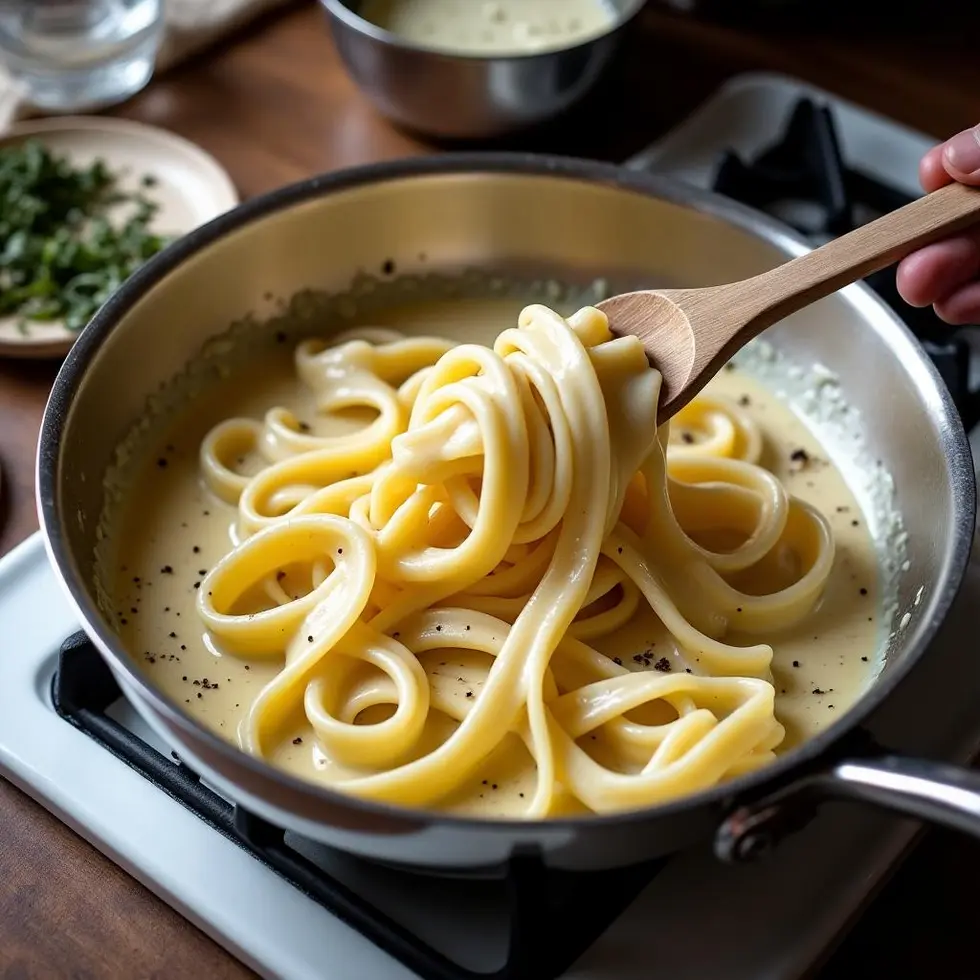
The sauce thickened just enough in three minutes, coating the back of my wooden spoon with a glossy sheen before I added the cheese.
Silky strands that cling to a rich, velvety sauce without turning gummy or greasy — that’s the texture a fettuccine recipe easy delivers when the timing and technique align. The coat should glide smoothly around each noodle, thick enough to carry flavor but loose enough to pool slightly at the bottom of the bowl.
Heavy cream and Parmesan form the base, but the real control comes from the reserved pasta water. Just two tablespoons loosens the sauce into a glossy finish without diluting the richness. The entire process takes 15 minutes total, with the sauce building while the pasta cooks in a separate pot. No waiting, no marinating, and every ingredient sits ready in most pantries.
Starch from the pasta water binds the fat and protein in the cream and cheese, creating an emulsion that stays smooth instead of breaking into greasy pools. Removing the skillet from heat before adding Parmesan prevents the cheese from seizing into clumps.
Why This Fettuccine Is Perfect for Busy Nights
Parallel Cooking Keeps the Clock Under 15 Minutes
Water boils in one pot while the sauce builds in a skillet on the next burner. By the time the fettuccine reaches al dente — 8 to 10 minutes — the cream has thickened and the butter has melted. You never stand idle.
At the 5-minute mark, the cream should simmer gently with small bubbles appearing around the edge. Garlic powder and black pepper bloom in the warm fat, releasing flavor without requiring fresh garlic to be minced or monitored. The sauce thickens just enough to coat a spoon before the pasta finishes draining.
Pantry Staples Mean No Last-Minute Shopping
Heavy cream, grated Parmesan, butter, and garlic powder sit ready in most refrigerators and spice racks. Dried fettuccine stores for months and cooks faster than fresh pasta. Salt and black pepper complete the ingredient list without specialty items or hard-to-find produce.
If Parmesan runs low, Pecorino Romano offers a sharper, saltier swap that melts just as smoothly. Garlic powder can be replaced with one teaspoon of granulated garlic or two cloves of fresh garlic, minced and added to the butter before the cream. The sauce holds its texture across each variation.
The richness builds from just a few components, which means the dish comes together even on nights when the fridge looks bare.
How to Make Easy Fettuccine Step by Step
Boil the Pasta and Build the Sauce Simultaneously
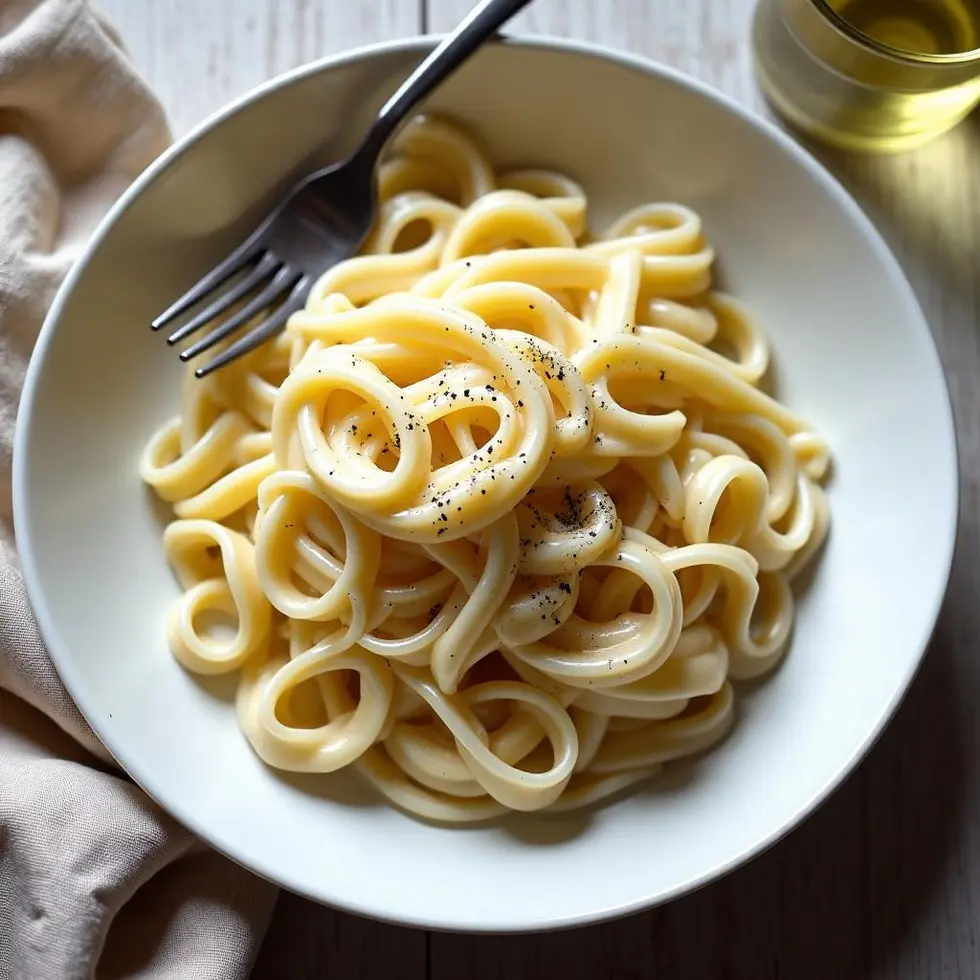
Fill a large pot with water, add 1 tablespoon of salt, and bring it to a rolling boil. Drop in 340 grams of fettuccine and stir once to prevent sticking. Set a timer for 8 minutes and place a measuring cup nearby to reserve pasta water before draining.
While the pasta cooks, melt 3 tablespoons of butter in a large skillet over medium heat for about one minute. Add 1 cup of heavy cream, 2 teaspoons of garlic powder, and 1/4 teaspoon of black pepper. Let the mixture simmer for 2 to 3 minutes, stirring occasionally, until it coats the back of a spoon with a thin, glossy layer.
Remove the skillet from heat once the cream thickens slightly. Stir in 1 cup of grated Parmesan cheese until it melts completely and the sauce turns smooth. The residual heat is enough to melt the cheese without causing it to clump or turn grainy.
Toss the Pasta and Adjust the Consistency
Drain the fettuccine once it reaches al dente — tender but still firm in the center when you bite into a strand. Reserve 1/2 cup of the starchy pasta water before pouring the rest down the sink.
Add the drained fettuccine directly to the skillet and toss for about one minute, using tongs to lift and turn the strands until every piece is coated. If the sauce feels too thick or starts to cling heavily, add reserved pasta water 1 tablespoon at a time, tossing after each addition, until the texture loosens into a silky glide.
The starch in the pasta water binds the fat and cheese, creating a cohesive coat that clings without turning sticky. Serve immediately while the sauce is still hot and flowing.
Sauce Tips, Add-Ins and Leftovers
How to Keep the Sauce from Breaking or Clumping
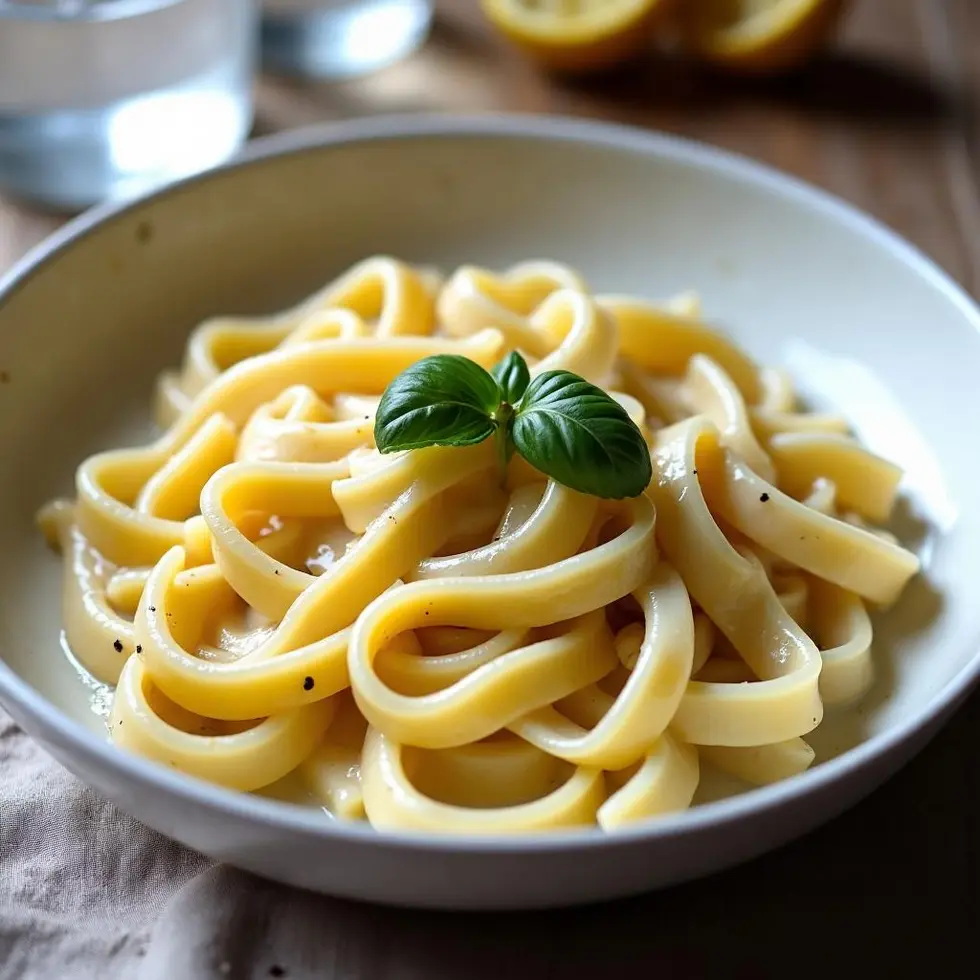
Heat control matters most. Adding Parmesan over direct heat causes the proteins to seize into rubbery clumps instead of melting smoothly. Pull the skillet off the burner first, then stir in the cheese gradually, allowing the residual warmth to do the work.
If the sauce looks greasy or separated after tossing, add 1 tablespoon of reserved pasta water and toss vigorously. The starch acts as an emulsifier, pulling the fat and liquid back together into a unified coat. Fettuccine Alfredo relies on this emulsion technique to maintain its signature creaminess.
Add-Ins and Leftover Storage
Grilled chicken, sautéed shrimp, or steamed broccoli can be stirred in during the final toss without changing the sauce texture. For a complete 15-minute meal, pair this fettuccine recipe easy with one of the quick chicken options that finish in the same time window.
Leftovers thicken in the refrigerator as the sauce cools and the starch absorbs moisture. Store in an airtight container for up to three days. Reheat gently in a skillet over low heat, adding 2 to 3 tablespoons of milk or cream to restore the original glossy flow. Microwaving tends to separate the sauce, so stovetop reheating works better.
Red pepper flakes, fresh parsley, or a squeeze of lemon juice brighten the richness if you want a sharper finish.
The Heat-Off Cheese Moment
Pulling the skillet from the burner before adding Parmesan is the single move that keeps the sauce smooth instead of grainy. Direct heat tightens the cheese proteins too fast, turning them into rubbery bits that refuse to melt. Off-heat, the residual warmth melts the cheese gently, creating a unified, glossy coat that clings evenly to every strand.
Once the cheese is stirred in and the pasta is tossed, the dish is ready. The sauce should pool slightly at the bottom of the bowl, coating each strand without forming a thick paste. That silky, flowing texture holds only as long as the fettuccine stays warm.
Frequently Asked Questions
Can I use pre-grated Parmesan from a bag?
Pre-grated Parmesan contains cellulose to prevent clumping, which can make the sauce grainy instead of smooth. Freshly grated Parmesan melts more evenly and creates a silkier texture. If you only have pre-grated, add it off heat and stir slowly to help it integrate.
What if the sauce is too thick after tossing?
Add reserved pasta water 1 tablespoon at a time while tossing the fettuccine. The starch in the water loosens the sauce and helps it cling smoothly. Stop adding once the sauce flows easily and coats the strands without pooling heavily.
Can I make this ahead for meal prep?
The sauce thickens significantly when refrigerated and does not reheat as smoothly as it tastes fresh. If you need to prep ahead, cook the pasta and store it separately from the sauce, then combine and warm them together gently in a skillet with a splash of milk or cream.
Why does my sauce separate or look oily?
Adding cheese over direct heat or using pre-grated cheese with additives can cause the fat to separate. Always remove the skillet from heat before stirring in Parmesan, and use freshly grated cheese for the best emulsion. A tablespoon of pasta water can help bind the sauce back together if it starts to break.
Can I use milk instead of heavy cream?
Whole milk produces a thinner, less rich sauce that may not coat the pasta as evenly. If you prefer a lighter version, use half-and-half or add 1 tablespoon of flour to the milk while it simmers to help it thicken slightly. The texture will be different but still smooth.
Creamy Fettuccine
Ingredients
Method
- Bring a large pot of salted water to a boil and cook the fettuccine for 8 to 10 minutes until al dente, then drain and reserve 1/2 cup pasta water.
- While the pasta cooks, melt the butter in a large skillet over medium heat for 1 minute.
- Add the heavy cream, garlic powder, and black pepper to the skillet and simmer for 2 to 3 minutes, stirring occasionally, until slightly thickened.
- Remove the skillet from heat and stir in the Parmesan cheese until melted and smooth, about 1 minute.
- Add the drained fettuccine to the sauce and toss for 1 minute, adding reserved pasta water 1 tablespoon at a time if needed to reach desired consistency.
- Serve immediately while hot and creamy.
