Frying chicken at 375°F creates a crust that stays crisp even under warm gravy because the oil temperature drives moisture out of the coating before sogginess sets in.
The structure of these copycat KFC bowls depends on temperature contrast. Warm gravy poured over chilled mashed potatoes creates a boundary layer where the starch in the potatoes absorbs liquid slowly instead of turning soupy. That delay gives you time to eat through the bowl without everything blending into a single texture.
The flavor contrast works because each layer brings a different fat source: butter in the mashed potatoes, oil from frying the chicken, and rendered fat in the gravy. When you scoop through all the layers, those fats coat your palate in sequence, which keeps each bite tasting distinct instead of flat.
The method itself takes 35 minutes total, with 15 minutes of prep and 20 minutes of frying. That timing assumes your mashed potatoes and gravy are already prepared, which is why this version works best as a make-ahead assembly meal rather than a from-scratch weeknight project.
This chicken mashed potato bowl holds up better when the coating stays dry before frying and the chicken pieces drain completely after cooking. Excess moisture on the chicken dilutes the seasoned flour, which weakens the crust and lets steam soften the coating once the gravy hits it.
Why KFC Bowls Are So Comforting
The Layering Technique Matters
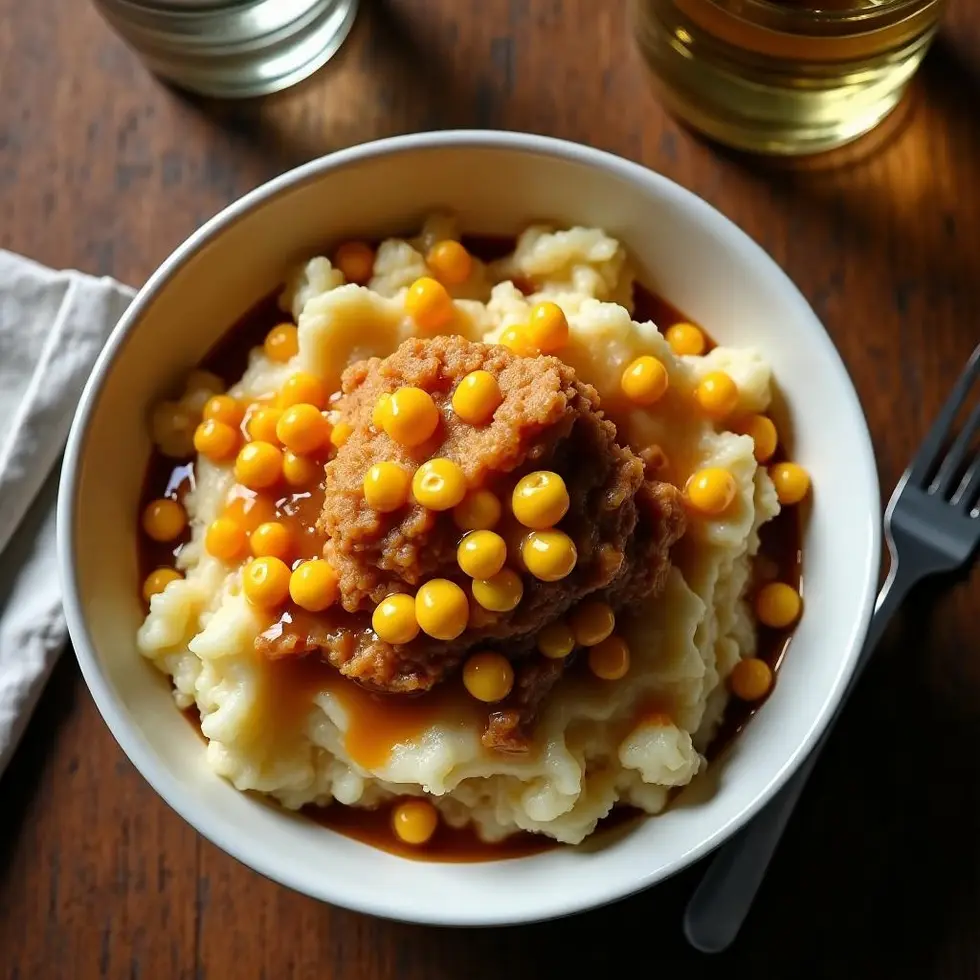
Layering warm ingredients over a cold starch base creates a temperature gradient that slows moisture migration. Mashed potatoes chilled to around 40°F absorb gravy more slowly than room-temperature potatoes, which prevents the bottom layer from turning into a thick paste before you finish eating.
The corn sits between the potatoes and the chicken, acting as a physical barrier that keeps the gravy from pooling at the bottom. Sweet corn kernels hold their shape under heat because their cell walls contain more pectin than most vegetables, which means they stay firm even when drenched in hot liquid.
Fat Distribution Across Layers
Each component introduces a different type of fat. The mashed potatoes carry butter, the fried chicken brings vegetable oil, and the gravy contains rendered chicken fat or drippings. When you scoop through all three, the combination coats your tongue with a blend that tastes richer than any single fat source alone.
The shredded cheddar melts partially but not completely, which gives you pockets of stretchy cheese interspersed with areas where the gravy flows freely. That uneven melting happens because the cheese sits on top of ingredients at different temperatures, so some pieces soften while others stay firmer.
Why Crispy Chicken Holds Up
Chicken fried at 375°F develops a crust through rapid moisture evaporation. The high heat drives water out of the flour coating before oil can penetrate deeply, which leaves a dry, crisp surface that resists sogginess longer than chicken fried at lower temperatures.
Cutting the fried chicken into bite-size pieces after draining distributes the crust more evenly across the bowl. Each piece exposes more surface area to the gravy, so you get crispy edges and sauced centers in the same bite.
How to Build a Copycat KFC Bowl
The Coating Process
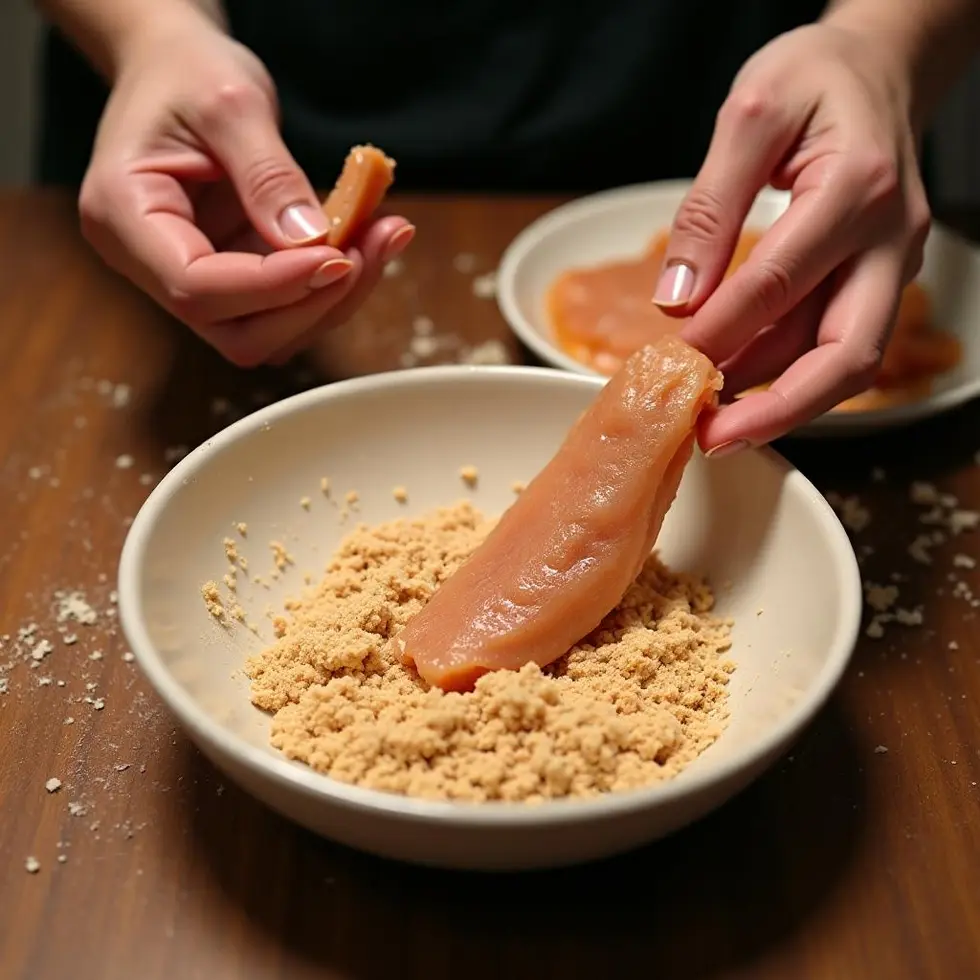
Mix 1 cup all-purpose flour with 1 teaspoon paprika and 1 teaspoon garlic powder in a shallow bowl. The paprika adds color and mild heat, while garlic powder contributes a savory base that mimics the seasoning blend used in many restaurant-style fried chicken recipes.
Coat 450 grams of chicken tenders or breast strips evenly in the flour mixture, then shake off the excess. Too much loose flour turns gummy when it hits the oil, while too little leaves bare spots that fry unevenly.
Press the coating lightly onto the chicken to help it adhere. Moisture on the surface of the chicken activates the starches in the flour, creating a thin paste that hardens into a crust when fried.
Frying Temperature and Timing
Heat 3 tablespoons vegetable oil in a large skillet over medium-high heat until it reaches 375°F. Use a thermometer to confirm the temperature; oil that’s too cool absorbs into the coating, making it greasy, while oil that’s too hot burns the flour before the chicken cooks through.
Fry the chicken for 4 to 5 minutes per side until golden and the internal temperature reaches 165°F. The timing depends on the thickness of the strips, so check the thickest piece with a digital thermometer to avoid undercooking.
Drain the fried chicken on paper towels immediately after removing it from the skillet. Resting the chicken on a wire rack instead of paper towels keeps the bottom crust crisper, but paper towels work well enough if you cut the chicken within a minute or two.
Assembly Order
Divide 3 cups of prepared mashed potatoes among 4 bowls, spreading them into an even layer. The potatoes form the base, so they need enough surface area to support the other ingredients without spilling over the sides.
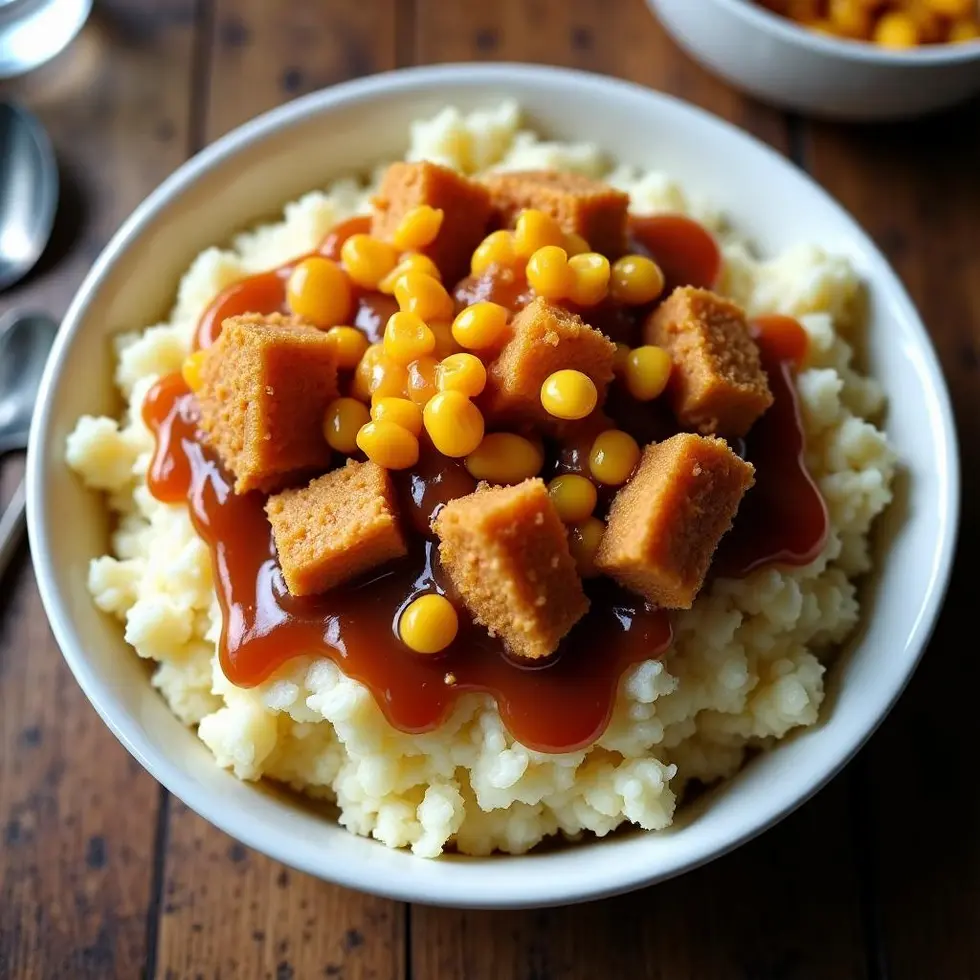
Layer 1 cup cooked sweet corn over the mashed potatoes, followed by the crispy chicken pieces and 1 cup shredded cheddar cheese. Drizzle 1 cup warm brown gravy over the top and serve immediately while the temperature contrast between the cold potatoes and warm gravy is still sharp.
Shortcut Tips, Toppings and Storage
Prep Components in Advance
Make the mashed potatoes and gravy up to 2 days ahead, then store them separately in the refrigerator. Cold mashed potatoes hold their shape better during assembly, and reheated gravy pours more smoothly than gravy that’s been sitting at room temperature.
Fry the chicken the day you plan to serve the bowls. Fried chicken stored overnight loses its crisp texture even when reheated, so fresh frying gives you the best crust-to-sauce contrast.
Flavor Variations
Add a pinch of cayenne pepper to the flour mixture for mild heat, or use smoked paprika instead of regular paprika for a deeper, smoky flavor. Both spices dissolve into the coating without changing the frying temperature or timing.
Swap the cheddar for Monterey Jack if you prefer a milder cheese, or use a Mexican blend for a slightly tangy profile. The cheese melts at the same rate regardless of variety, so the substitution doesn’t affect the assembly method. Daily Dish highlights the appeal of copycat comfort food that gives you full control over seasoning and portion size.
Storage and Reheating
Store leftover components separately in airtight containers for up to 3 days. The mashed potatoes, corn, and gravy reheat well in the microwave, but the fried chicken loses crispness once refrigerated. Reheat the chicken in a 375°F oven for 8 to 10 minutes to restore some of the crust texture, though it won’t be as crisp as freshly fried.
Assemble the bowls just before serving. Pre-assembled bowls turn soggy as the gravy soaks into the potatoes and chicken, which blurs the layered texture that makes the dish satisfying.
Control the Frying Temperature First
The single variable that decides whether your loaded potato bowl tastes right is the oil temperature during frying. Chicken fried below 360°F absorbs oil faster than moisture evaporates, which leaves a greasy coating that softens under gravy. Chicken fried above 385°F burns the flour before the interior reaches 165°F, leaving you with a bitter crust and undercooked meat.
Use a thermometer, adjust the heat as needed, and fry in small batches to keep the temperature steady. That control makes the difference between crispy chicken that holds up under sauce and soggy chicken that collapses as soon as the gravy hits it.
Frequently Asked Questions
Can I use frozen mashed potatoes instead of homemade?
Frozen mashed potatoes work well in this recipe as long as you prepare them according to the package instructions and let them cool to around 40°F before assembling the bowls. Cold potatoes absorb gravy more slowly than warm potatoes, which keeps the texture layered instead of soupy. Avoid instant mashed potatoes made with just water, as they tend to turn thin and watery when gravy is added.
How do I keep the chicken crispy after frying?
Drain the fried chicken on paper towels or a wire rack immediately after removing it from the oil, then cut it into bite-size pieces within 2 minutes. The longer the chicken sits before cutting, the more steam builds up under the crust, which softens the coating. Assemble the bowls as soon as the chicken is drained and cut to maximize the crispy texture before the gravy is drizzled on top.
Can I bake the chicken instead of frying it?
Baking the chicken at 425°F for 18 to 20 minutes gives you a firmer coating, but it won’t develop the same crisp, golden crust that frying at 375°F produces. If you choose to bake, coat the chicken in the seasoned flour mixture, then spray it lightly with vegetable oil before placing it on a parchment-lined baking sheet. The oil helps the coating brown, though the texture will be drier than fried chicken.
What type of gravy works best for this recipe?
Brown gravy made from chicken or beef drippings gives the most authentic flavor, but jarred brown gravy or packet gravy prepared according to the instructions works well if you’re short on time. The gravy should be warm when you drizzle it over the bowls, as cold gravy thickens and clumps instead of flowing smoothly over the cheese and chicken. Reheat refrigerated gravy over low heat, whisking constantly to prevent lumps.
Copycat KFC Bowl
Ingredients
Method
- Mix flour, paprika, and garlic powder in a shallow bowl, then coat chicken pieces evenly and shake off excess.
- Heat vegetable oil in a large skillet over medium-high heat to 375°F / 190°C, then fry chicken for 4 to 5 minutes per side until golden and cooked to 165°F / 74°C.
- Drain chicken on paper towels, then cut into bite-size pieces.
- Divide mashed potatoes among 4 bowls, then layer corn, crispy chicken pieces, and shredded cheese on top.
- Drizzle warm gravy over each bowl and serve immediately.
