
Pressing sticky dough into a pool of oil creates a fried bottom crust without deep frying the entire pizza.
The crust forms from direct contact between wet dough and hot oil in a confined pan. Yeast fermentation creates gas bubbles that expand during the rise, giving the interior a soft, airy structure while the edges crisp where they touch the metal. The oil spreads evenly across the bottom when the dough is cold, then heats during baking to create the characteristic golden underside. Using this pizza dough recipe pizza hut style at home relies on the same principle: frying in the pan before the toppings ever go on.
The dough takes about 15 minutes of active work and 90 to 120 minutes of rising. You can top and bake it immediately after the first rise or refrigerate it covered for up to 24 hours, which gives better flavor development. Either way, the yield is enough for two 9-inch pan pizzas.
What Makes Pan Pizza Different From Regular Crust
The Role of Oil in the Pan
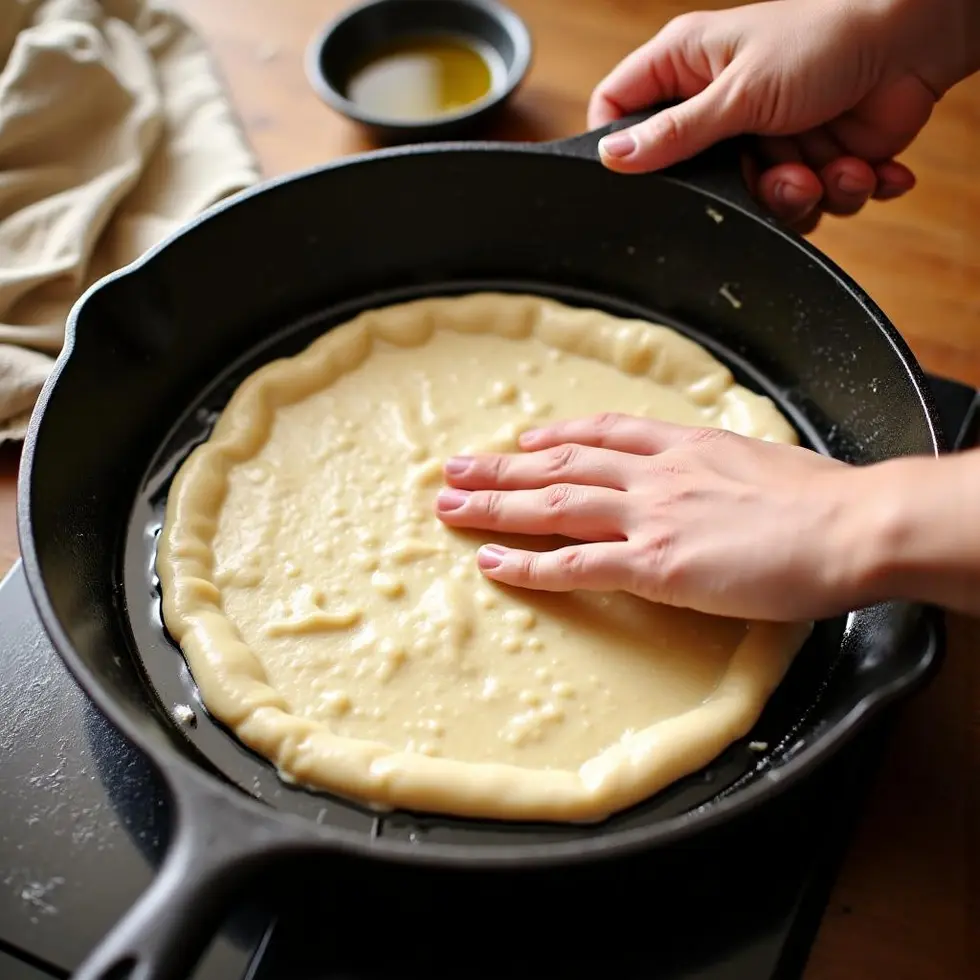
Most pizza doughs bake on a dry surface or a lightly dusted peel. Pan pizza dough sits in 3 tablespoons of vegetable oil from the moment you shape it. The oil coats the bottom completely and climbs partway up the sides. When the pan heats in the oven, the oil fries the dough from underneath, creating a golden crust that stays crisp even after the pizza cools. The homemade version tastes richer because the oil is fresh and you control exactly how much goes into the pan.
The dough itself contains 2 tablespoons of oil mixed into the flour. This internal fat tenderizes the gluten network, giving the crumb a softer chew compared to lean doughs made with only flour, water, yeast, and salt. The combination of oil inside the dough and oil outside the dough produces a crust that is both tender and crispy.
Why Active Dry Yeast and Warm Water Matter
Active dry yeast needs warm water at 110°F to wake up. Too cool and fermentation slows; too hot and the yeast dies. The 5-minute foam test confirms the yeast is alive before you commit the flour. Sugar speeds up the initial fermentation, giving you visible bubbles faster. Once the yeast is foamy, the dough builds structure quickly because the flour hydrates evenly and the yeast spreads throughout the mixture.
The dough is sticky when first mixed, which is normal for a high-hydration dough. Five minutes of kneading on a floured surface develops enough gluten to hold gas bubbles during the rise. You should feel the dough change from tacky and loose to smooth and elastic. That texture shift tells you the gluten is ready.
How to Make and Proof the Dough

Mixing and Kneading the Dough
Combine 240 ml of warm water, 2 teaspoons of active dry yeast, and 1 teaspoon of sugar in a bowl. Let the mixture stand for 5 minutes until it turns foamy. Add 300 grams of all-purpose flour, 1 teaspoon of salt, and 2 tablespoons of vegetable oil. Stir until the dough comes together into a sticky mass. Turn the dough out onto a floured surface and knead for 5 minutes. The dough should feel smooth and elastic by the end.
Kneading develops the gluten strands that trap carbon dioxide during fermentation. Without enough kneading, the dough won’t rise properly and the finished crust will be dense. Flour your hands lightly if the dough sticks, but avoid adding too much extra flour, which makes the crust dry.
Proofing in the Pan
Pour 3 tablespoons of vegetable oil into a 9-inch round pan or cast iron skillet. Spread the dough to cover the bottom of the pan, pressing it gently with your fingers. Cover the pan with plastic wrap and let the dough rise in a warm place for 90 to 120 minutes, until it doubles in size and looks puffy. The oil keeps the dough from sticking and ensures an even fry when baked.
The dough ferments faster in a warm kitchen, around 75 to 80°F. If your kitchen is cold, place the covered pan near a warm oven or in a turned-off oven with the light on. The dough is ready when it springs back slowly after a gentle poke. Many home bakers who recreate this pizza dough recipe pizza hut method find that the second hour of rising makes the biggest difference in final texture, as the gluten relaxes and the crumb becomes lighter.
Temperature control matters. According to resources like the Pizza Making Forum, proofing temperature directly affects fermentation speed and flavor development.
Breadsticks, Stuffed Crust and Storage
Using the Dough for Breadsticks
Divide the dough into 8 equal pieces instead of pressing it into a pan. Roll each piece into a rope about 6 inches long. Place the ropes on an oiled baking sheet, brush with melted butter, and bake at 425°F for 12 to 15 minutes until golden. The same dough works for copycat pizza hut pan pizza dough breadsticks because the oil and yeast create a soft interior that holds up to brushing and baking.
Season the breadsticks with garlic powder, dried oregano, or grated cheese immediately after they come out of the oven. The steam helps the seasonings stick. Serve with marinara or ranch dressing.
Refrigerating and Freezing the Dough
After the first rise, you can refrigerate the dough covered for up to 24 hours. Cold fermentation slows yeast activity and develops deeper flavor. Let the dough come to room temperature for 30 minutes before topping and baking. For stuffed crust pizza dough, pinch the edge of the dough around a string cheese stick or shredded cheese before the final rise, then bake as usual.
Freeze the dough after shaping it in the oiled pan. Wrap the pan tightly in plastic wrap and foil, then freeze for up to 3 months. Thaw overnight in the refrigerator, then let it rise at room temperature for 1 hour before baking. Frozen dough loses a small amount of rise power, so expect a slightly denser crust.
Store baked pizza wrapped in foil in the refrigerator for up to 3 days. Reheat in a 375°F oven for 10 minutes to restore the bottom crispness. The oil in the pan keeps the crust from drying out during storage.
Control the Oil and the Rise
The difference between a flat, greasy crust and a crispy, airy one comes down to oil measurement and fermentation time. Use exactly 3 tablespoons of oil in the pan, no more. Extra oil pools under the dough and makes it heavy. Let the dough rise until it doubles, even if that takes the full 2 hours. Rushing the rise produces a dense crumb that won’t hold toppings well.
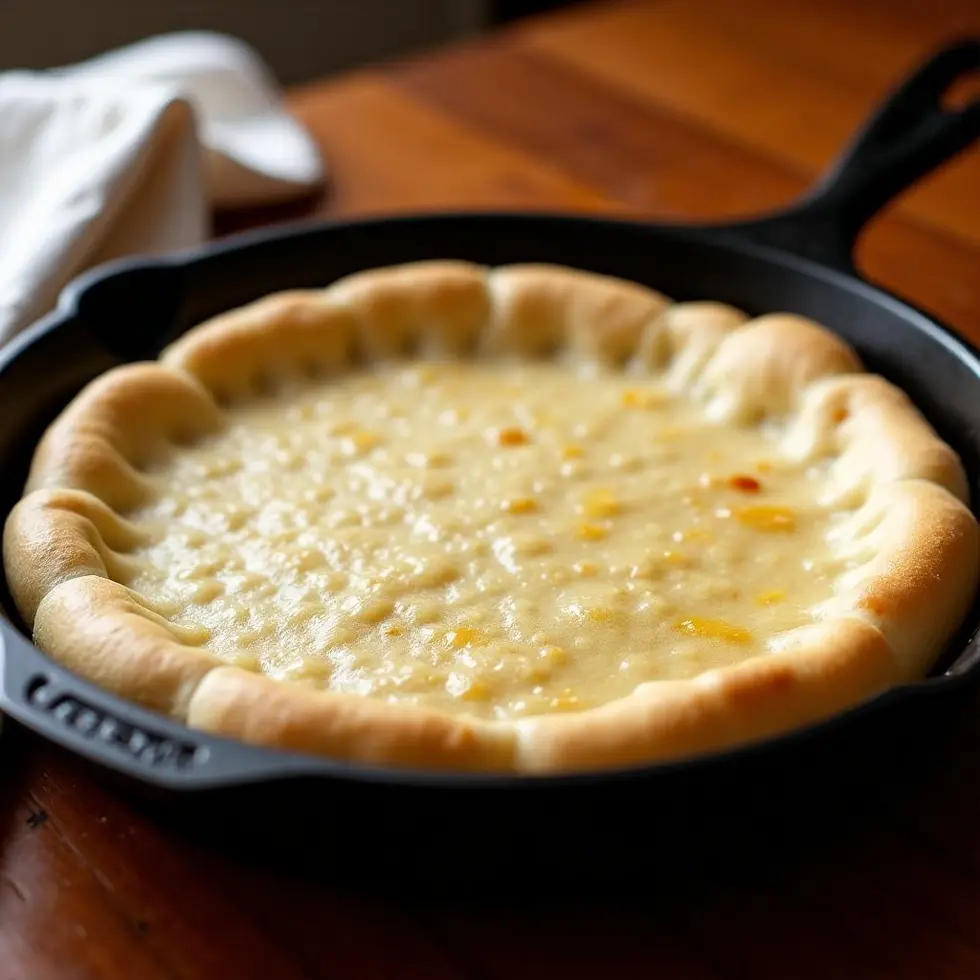
Watch the dough surface during the final 30 minutes of proofing. When you see small bubbles under the plastic wrap and the dough jiggles slightly when you move the pan, it’s ready to top and bake. That’s the moment when gluten relaxation and gas production are both at their peak.
Frequently Asked Questions
Can I use instant yeast instead of active dry yeast?
Yes, but skip the 5-minute foam step. Mix instant yeast directly with the flour, then add the warm water. Use the same amount: 2 teaspoons. Instant yeast ferments slightly faster, so check the dough at 75 minutes instead of 90.
Why is my dough not rising?
The water was likely too hot and killed the yeast, or the yeast was expired. Test yeast freshness by proofing it in warm water with sugar before mixing the dough. If it doesn’t foam within 5 minutes, replace it with fresh yeast.
Can I bake this dough on a pizza stone?
You can, but you’ll lose the fried bottom crust that defines pan pizza. The dough needs direct contact with oil in a confined pan to create the golden base. A pizza stone produces a different texture: crisper overall but less rich.
How do I prevent the dough from sticking to the pan?
Use the full 3 tablespoons of oil and spread it evenly across the bottom and up the sides before adding the dough. Cast iron and nonstick pans both work well. Avoid ungreased metal pans, which cause sticking even with oil in the dough.
Can I make this dough without a stand mixer?
Yes. Mix the ingredients in a bowl with a wooden spoon, then knead by hand for 5 minutes. The dough is soft enough to handle without machine power, and hand kneading gives you better control over texture.
Copycat Pizza Hut Pan Pizza Dough
Ingredients
Method
- Combine warm water, yeast, and sugar in a bowl and let stand for 5 minutes until foamy.
- Add flour, salt, and 2 tablespoons oil to the yeast mixture and stir until a sticky dough forms.
- Knead the dough on a floured surface for 5 minutes until smooth and elastic.
- Pour 3 tablespoons oil into a 9-inch round pan or cast iron skillet and spread the dough to cover the bottom.
- Cover the pan with plastic wrap and let the dough rise in a warm place for 90 to 120 minutes until doubled and puffy.
- Use immediately for pizza or refrigerate covered for up to 24 hours before topping and baking.
