
When I simmered fresh beans in seasoned broth for ninety minutes instead of the usual fifteen, the texture changed completely—soft, silky, infused all the way through.
You can make a batch of six servings for around four dollars using green beans at their peak season, chicken broth, and pantry spices. Restaurant sides often cost five to seven dollars per person, which means replicating this steakhouse green beans side dish at home saves you at least twenty-five dollars every time you serve it to a family. The flavor comes from the long simmer in chicken broth fortified with butter, garlic powder, onion powder, black pepper, and smoked paprika—not from complex ingredients you need to stock up on.
What gives copycat texas roadhouse green beans their distinctive soft texture and seasoned-all-the-way-through taste is the extended cooking time in a concentrated broth. Most green beans are steamed or blanched briefly, which keeps them crisp. This version simmers for seventy-five to ninety minutes, breaking down the fiber and pulling the garlic, onion, and smoked paprika flavors deep into every bean. The broth reduces by half during the simmer, which leaves you with a glossy, concentrated sauce that clings to the beans instead of pooling at the bottom of the bowl.
The technique turns inexpensive fresh beans into a side dish that tastes richer than what you’d expect from such basic ingredients. You control the sodium, adjust the pepper heat, and serve it warm with a spoonful of that seasoned broth spooned over the top.
Why Steakhouse Green Beans Taste Different
The Long Simmer Changes the Texture
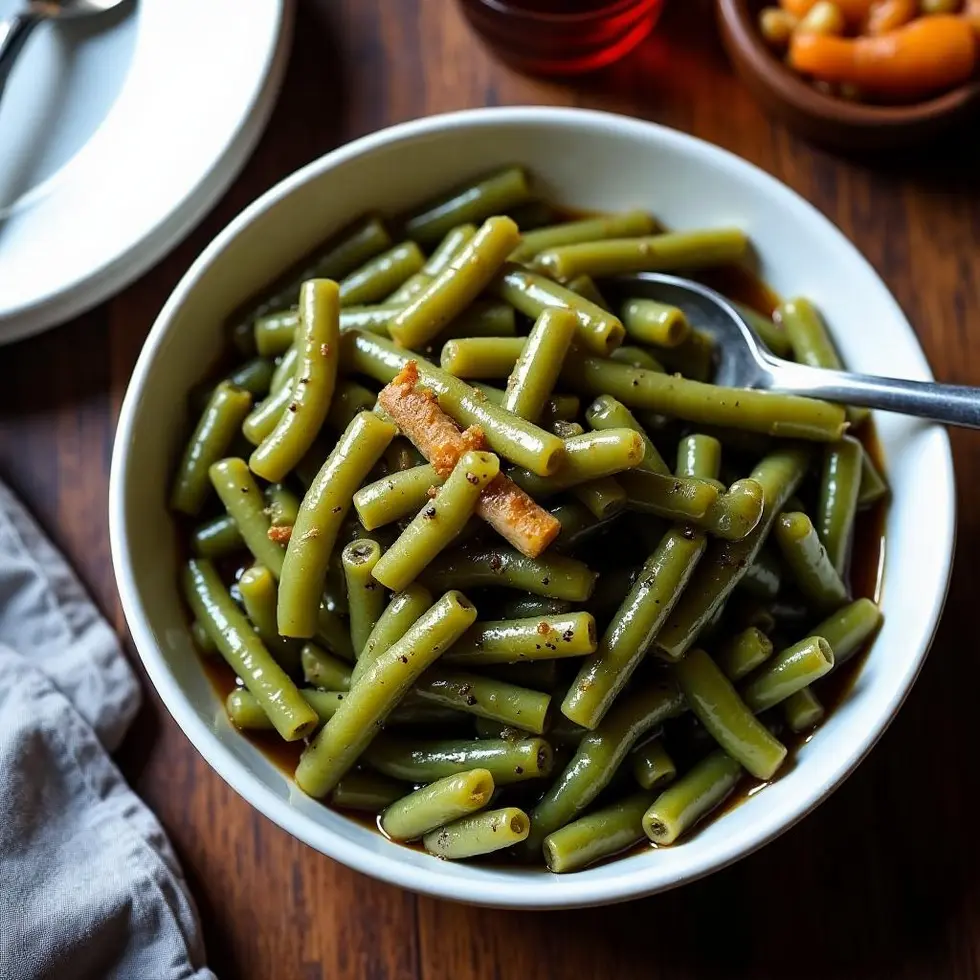
Restaurant-style green beans cook much longer than typical home recipes. While most side dishes simmer for ten to fifteen minutes, this texas roadhouse green beans copycat recipe requires seventy-five to ninety minutes at a low temperature. That extended time softens the beans completely, turning them tender without any crunch. The fiber breaks down, the beans absorb the seasoned broth, and the final texture resembles what you’d get from slow-cooked vegetables rather than steamed ones.
Fresh beans hold their shape during the long simmer because you keep the heat low and the lid on. Frozen or canned beans would turn mushy under the same conditions. Fresh green beans, trimmed and added to boiling broth, maintain structure even as they soften, which is why the recipe calls for 680 grams of fresh beans rather than a quicker frozen option.
The Broth Reduction Concentrates the Flavor
The chicken broth starts at three cups and reduces by half during the simmer. That reduction concentrates the garlic powder, onion powder, black pepper, salt, and smoked paprika into a thicker, more flavorful liquid. The beans don’t just sit in broth—they absorb it as it cooks down, which is why the final dish tastes seasoned throughout rather than seasoned on the surface.
Butter melts into the broth at the start, adding richness and helping the fat-soluble flavors from the smoked paprika disperse evenly. Without the butter, the broth would taste thinner and the beans would lack the glossy coating that makes them look and taste restaurant-ready. Two tablespoons is enough to enrich six servings without making the dish feel heavy.
Smoked Paprika Mimics the Steakhouse Flavor
Many steakhouse green bean recipes include some form of smoky depth. This version uses half a teaspoon of smoked paprika, which provides that familiar warmth without adding heat. Smoked paprika is made from peppers that are dried over wood smoke, so it carries a subtle charred flavor that mimics the smokiness some restaurants achieve with grilling or adding pork products.
The spice also adds color, turning the broth a light amber that coats the beans and makes them look richer. If you prefer a milder version, you can reduce the smoked paprika to a quarter teaspoon, but the half-teaspoon amount matches the balance most diners recognize from the Texas Roadhouse menu.
The combination of garlic powder, onion powder, and pepper seasons the beans without requiring fresh garlic or onions, which keeps the prep time under ten minutes and the cost per batch well under five dollars.
How to Simmer the Green Beans
Start with Boiling Broth and Butter
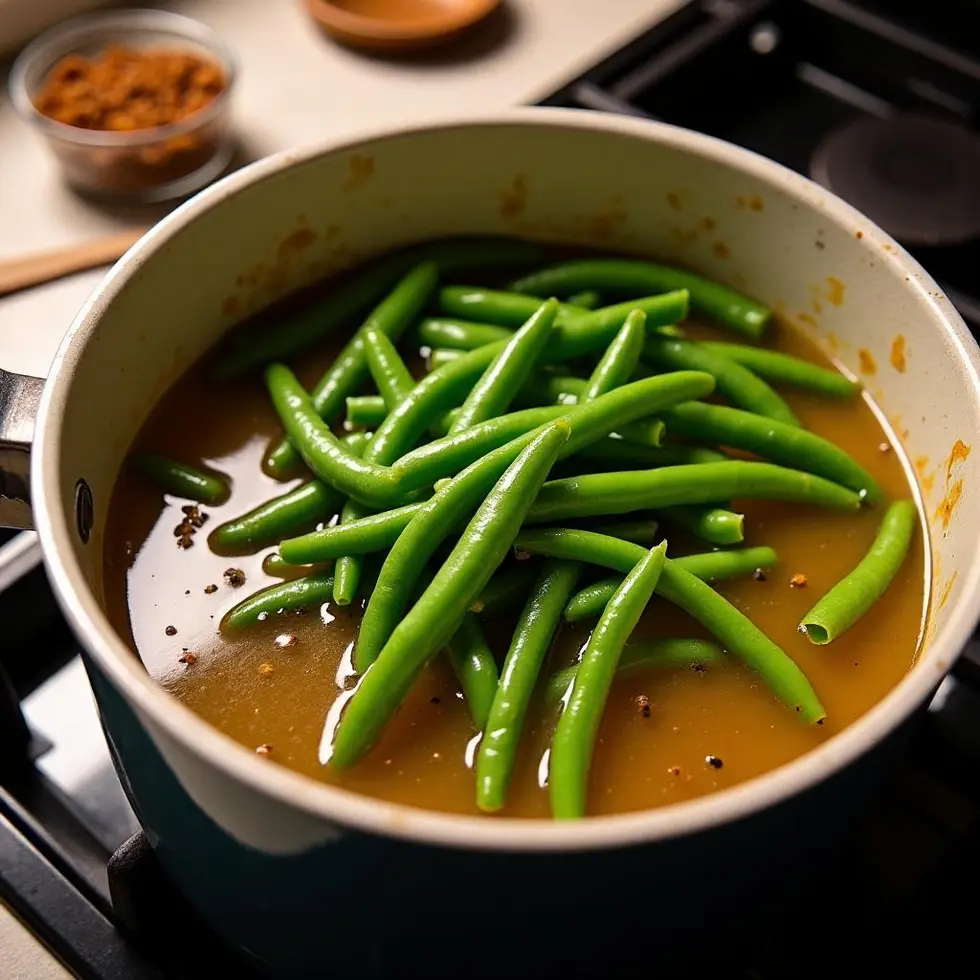
Combine the three cups of chicken broth, two tablespoons of butter, and all the spices—garlic powder, onion powder, black pepper, salt, and smoked paprika—in a large pot over medium-high heat. Bring the mixture to a full boil before adding the beans. Boiling the broth first dissolves the butter completely and disperses the spices evenly, so every bean gets seasoned from the moment it hits the liquid.
If you add the beans to cold broth and then heat everything together, the beans take longer to soften and the spices don’t distribute as well. Starting with a boil also shortens the total cooking time slightly, since the beans begin cooking immediately instead of waiting for the liquid to heat up.
Add the Beans and Reduce the Heat
Once the broth is boiling, add all 680 grams of trimmed fresh green beans and stir to coat them in the liquid. Then reduce the heat to low, cover the pot, and let the beans simmer for seventy-five to ninety minutes. Stir the beans every twenty to thirty minutes to keep them submerged and ensure even cooking.
The low heat is essential. If you simmer the beans over medium heat, the broth reduces too quickly and the beans don’t have enough time to soften all the way through. Low heat allows the beans to cook slowly, absorbing the broth as it gradually reduces. The lid traps steam and keeps the beans moist, so they don’t dry out even during the long cooking time.
Check the Texture and Broth Level
After seventy-five minutes, test a bean by biting into it. The texture should be very tender with no resistance, similar to the slow simmered green beans you’d find at a steakhouse buffet. If the beans still have a slight snap, continue simmering for another ten to fifteen minutes. The broth should have reduced by about half, leaving you with roughly one and a half cups of concentrated, glossy liquid.
If the broth reduces too much before the beans are tender, add a quarter cup of water and continue cooking. If the beans are tender but the broth hasn’t thickened enough, remove the lid and simmer uncovered for the last five to ten minutes to evaporate the excess liquid. Taste the broth and adjust the salt or pepper if needed before serving.
The seasoned broth is part of the dish, so spoon a little over the beans when you plate them. Many slow-simmered vegetable dishes rely on cozy slow-cooking techniques that turn simple ingredients into rich, comforting sides.
Make-Ahead, Swaps and Holiday Serving
Make a Double Batch and Refrigerate
This recipe doubles easily and holds well in the refrigerator for up to four days. Cook two batches in separate pots or use one very large pot with six cups of broth and 1,360 grams of beans. After cooking, let the beans cool completely, then transfer them to an airtight container with the broth. Reheat gently on the stovetop over low heat, adding a tablespoon of water if the broth has thickened too much.
Making a double batch costs around eight dollars and gives you twelve servings, which works out to about sixty-seven cents per serving. That makes it one of the most budget-friendly holiday green bean side dish options you can prepare ahead of time. Reheat only what you need and leave the rest in the fridge for later in the week.
Swap Chicken Broth for Vegetable Broth
If you need a vegetarian version, replace the chicken broth with vegetable broth in the same quantity. The beans will still soften and absorb the seasoning, though the flavor will be slightly less rich. Add an extra half tablespoon of butter or a teaspoon of olive oil to compensate for the lighter body of vegetable broth.
You can also use low-sodium broth and control the salt yourself. Start with a quarter teaspoon of salt, taste the broth after the simmer, and add more if needed. Low-sodium broth costs about the same as regular broth and gives you more flexibility to adjust seasoning for different dietary needs.
Serve with Steakhouse Mains or Holiday Proteins
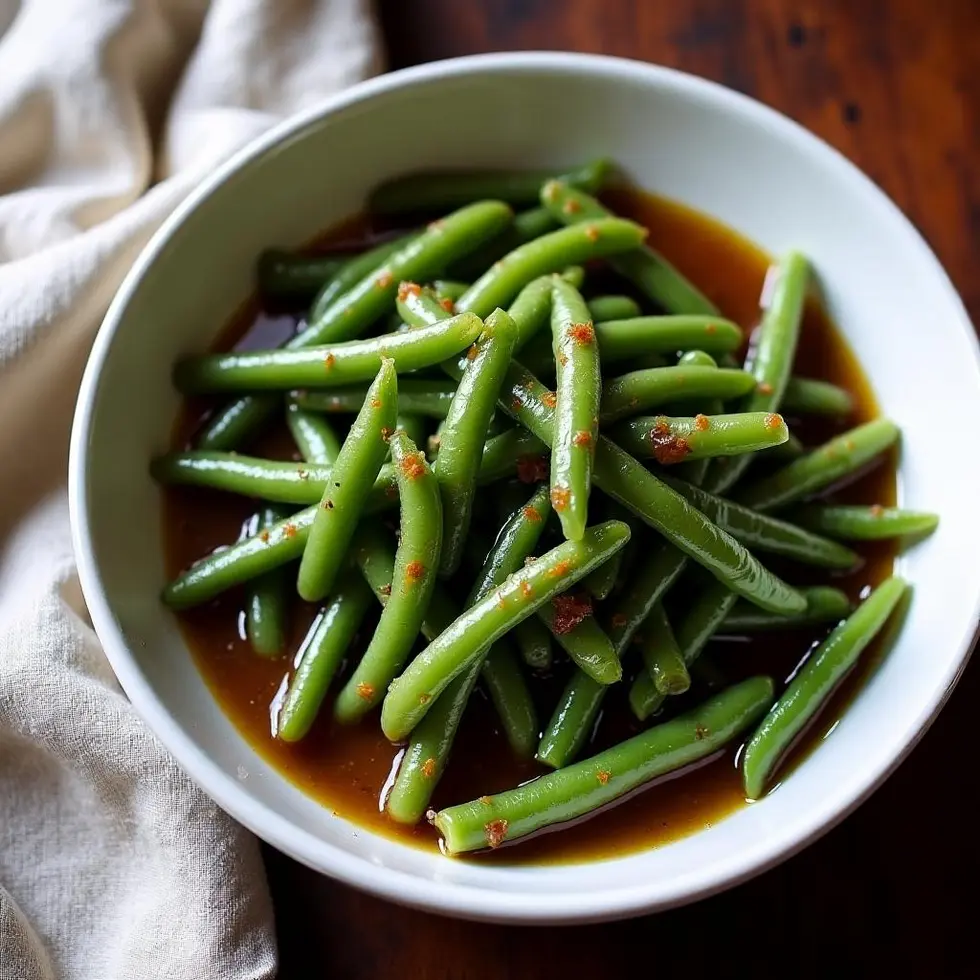
These beans pair well with grilled steak, roasted chicken, or any main protein you’d serve at a holiday table. The savory, slightly smoky broth complements rich meats without competing with them. Serve the beans in a large bowl with a ladle so guests can spoon the broth over their portion, or plate them individually with a spoonful of liquid on each serving.
For holiday meals, you can prep the beans a day ahead and reheat them in a slow cooker on low for an hour before serving. This keeps the beans warm without overcooking them and frees up stovetop space for other dishes. The recipe scales well, so you can make three or four batches to feed a larger group without changing the technique. Many cooks rely on trusted copycat recipes to recreate restaurant favorites at home, especially when feeding a crowd on a budget.
Leftover beans reheat beautifully and taste even better the next day once the flavors have had time to meld.
Getting the Timing Right
The ninety-minute simmer isn’t optional—it’s what transforms these southern style green beans with bacon alternative spices into the tender, fully seasoned side dish you recognize from the steakhouse. If you cut the cooking time short, the beans stay too firm and the broth doesn’t reduce enough to coat them properly. Plan your timing so the beans finish simmering about fifteen minutes before you’re ready to serve, which gives you time to adjust the seasoning and let the flavors settle.
A batch costs less than five dollars, serves six people, and stretches even further if you’re serving it alongside other sides. The method is simple enough to repeat every week, and the ingredients are basic enough that you can keep them stocked without planning a special shopping trip.
Frequently Asked Questions
Can I use frozen green beans instead of fresh?
Frozen green beans will turn mushy during the long simmer because they’ve already been blanched before freezing. Fresh beans hold their structure better over the seventy-five to ninety-minute cooking time. If you only have frozen beans, reduce the simmer time to forty-five minutes and check the texture frequently to avoid overcooking.
How do I store leftover green beans?
Let the beans cool completely, then transfer them to an airtight container with the broth. Refrigerate for up to four days. Reheat gently on the stovetop over low heat, adding a tablespoon of water if the broth has thickened too much in the fridge.
Can I make this recipe in a slow cooker?
Yes. Combine all the ingredients in a slow cooker and cook on low for four to five hours or on high for two to three hours, until the beans are very tender and the broth has reduced. Stir once halfway through to keep the beans submerged.
Why does my broth taste too salty?
If you used regular chicken broth, the salt concentrates as the broth reduces. Next time, use low-sodium broth and add a quarter teaspoon of salt at the start, then taste and adjust after the simmer. You can also dilute an overly salty batch by adding a quarter cup of water and simmering for five more minutes.
Copycat Texas Roadhouse Green Beans
Ingredients
Method
- Combine chicken broth, butter, garlic powder, onion powder, black pepper, salt, and smoked paprika in a large pot over medium-high heat and bring to a boil.
- Add the trimmed green beans to the boiling broth and stir to coat.
- Reduce heat to low, cover, and simmer for 75 to 90 minutes, stirring occasionally, until the beans are very tender and the broth has reduced by half.
- Taste and adjust seasoning if needed, then serve the beans with a spoonful of the seasoned broth.
