
Nutmeg bloomed differently when I whisked it directly into the dry flour mixture instead of the wet ingredients, and the finished donuts carried that warm spice through every bite.
Holiday mornings can feel chaotic when you’re trying to get breakfast on the table while wrapping last-minute gifts or setting up for guests. These baked eggnog donuts solve the problem by giving you a festive treat without deep-frying or complicated steps. You get eight fluffy donuts in 26 minutes total.
The texture comes from baking powder working with the eggnog’s natural richness. Unlike fried donuts that need proofing time or precise oil temperature, this baked eggnog donuts recipe relies on a simple batter that goes straight into the pan. The nutmeg and eggnog create the signature holiday flavor, while the glaze adds a sweet finish that sets in just five minutes.
The entire batch bakes in 12 to 14 minutes at 350°F, and the glaze takes only two ingredients. You can mix the batter while the oven preheats, then transfer the donuts to a wire rack the moment they cool enough to handle.
Why You’ll Love These Baked Eggnog Donuts
Simple Technique, Festive Flavor
The homemade version delivers a softer crumb and fresher nutmeg flavor than most bakery versions because you control the spice level and the batter never sits around losing moisture. Baked donuts skip the oil absorption that can make fried versions heavy, so these stay light and tender. The eggnog brings both moisture and subtle spice, while the melted butter adds richness without making the batter greasy.
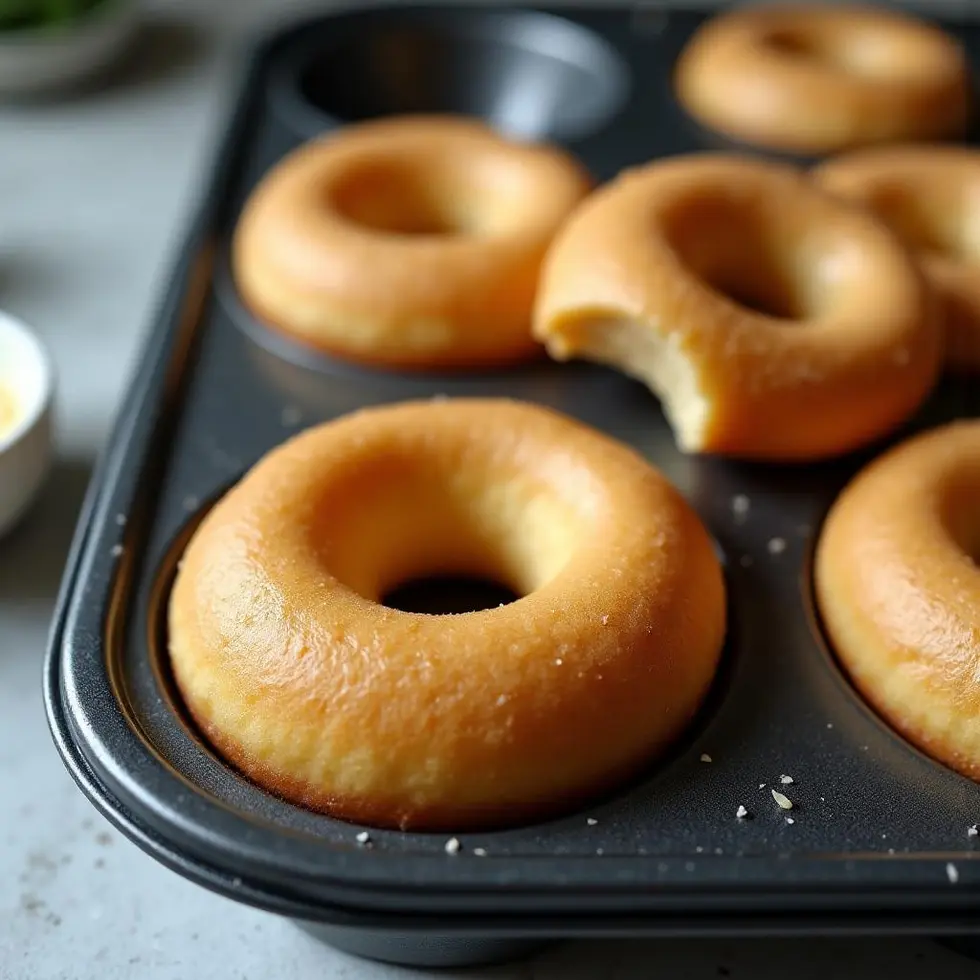
Most home cooks find that donut pans heat more evenly than deep fryers, which means you get consistent golden edges on every donut. The batter fills two-thirds of each cavity, leaving room for the donuts to rise slightly as the baking powder activates. This rise creates the characteristic donut shape without needing yeast or resting time.
The glaze sets quickly because powdered sugar thickens the eggnog without requiring heat. You dip each donut top-down into the glaze, then let it sit for five minutes. The glaze firms up enough to hold its shape but stays soft enough to bite through easily. Many popular donut shops rely on similar glazes, as noted by Restaurantware’s guide to donut types, which explains how simple sugar glazes remain a standard choice for baked varieties.
The entire process takes less than half an hour from start to finish, and the donuts stay fresh for up to two days when stored in an airtight container. That timeline makes them ideal for holiday mornings when you need something ready quickly.
Ingredients For Soft Eggnog Donuts
What Goes Into the Batter and Glaze
All-purpose flour forms the structure, while granulated sugar adds sweetness and helps the donuts brown evenly. Baking powder provides lift without requiring proofing time, and ground nutmeg delivers the warm spice that defines eggnog flavor. Use one full teaspoon of nutmeg instead of the more common half teaspoon because the baking process mellows the spice slightly.
Eggnog serves as both the liquid and the flavoring agent. You need half a cup for the batter and two tablespoons for the glaze, so keep the carton nearby. One large egg binds the ingredients and adds structure, while three tablespoons of melted butter contribute richness and help the donuts stay moist after cooling.
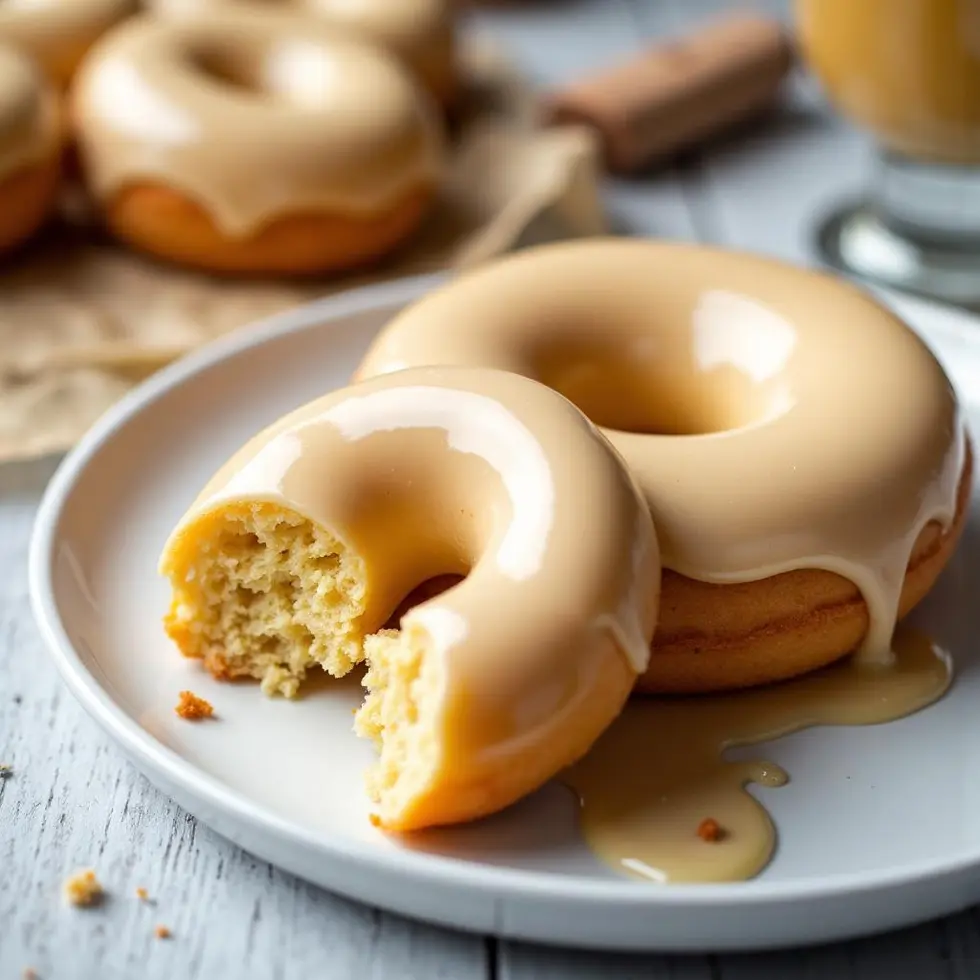
The glaze requires only powdered sugar and eggnog. One cup of powdered sugar creates a thick glaze that clings to the donut surface without dripping off completely. If the glaze feels too thick, add an extra teaspoon of eggnog and whisk until smooth. If it seems too thin, add one tablespoon of powdered sugar at a time until you reach the right consistency.
Fresh nutmeg makes a noticeable difference compared to older jars that have been sitting in the pantry for months. The essential oils fade over time, so if your nutmeg has lost its sharp aroma, replace it before making these donuts. The spice should smell strong and slightly peppery when you open the container.
The ratio of wet to dry ingredients creates a batter that is thick enough to hold its shape in the pan but not so stiff that it bakes into a dense texture. This balance is what separates a tender baked donut from a dry one.
How To Bake And Glaze Eggnog Donuts
Mixing and Baking the Batter
Preheat your oven to 350°F and grease a donut pan with cooking spray, making sure to coat the center post and the outer edges of each cavity. In a large bowl, whisk together the flour, granulated sugar, baking powder, and nutmeg until the spices distribute evenly. In a separate bowl, whisk the eggnog, egg, and melted butter until the mixture looks smooth and slightly frothy.
Pour the wet ingredients into the dry ingredients and fold gently with a spatula until just combined. Stop mixing as soon as you no longer see dry flour streaks. Overmixing activates the gluten in the flour, which leads to tough, chewy donuts instead of tender ones. The batter should look slightly lumpy, and that texture is exactly what you want.
Spoon the batter into the donut pan, filling each cavity about two-thirds full. This leaves room for the donuts to expand as the baking powder releases carbon dioxide during baking. If you fill the cavities too high, the batter will overflow and create uneven shapes. Bake for 12 to 14 minutes, checking at the 12-minute mark. The donuts should look golden around the edges, and a toothpick inserted into the thickest part should come out clean.
Cooling and Glazing
Let the donuts cool in the pan for three minutes after removing them from the oven. This short rest period allows the structure to firm up enough that the donuts release cleanly when you turn the pan over onto a wire rack. If you try to remove them immediately, they may break apart. Transfer the donuts to the rack and let them cool for another five minutes before glazing.
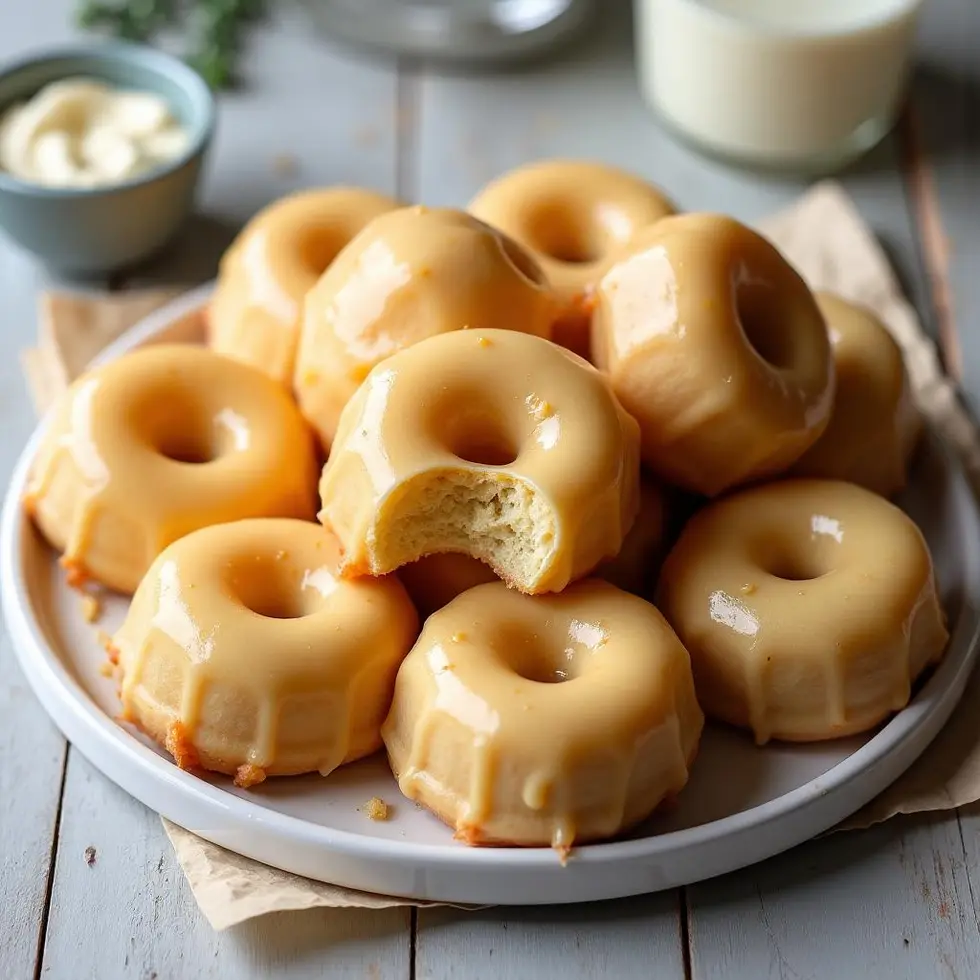
While the donuts cool, whisk together the powdered sugar and two tablespoons of eggnog in a shallow bowl until the glaze looks smooth and slightly runny. Dip the top of each donut into the glaze, twist gently to coat the surface, then lift and let the excess drip back into the bowl. Place the glazed donuts back on the wire rack and let the glaze set for five minutes. The sugar will firm up enough to create a clean finish that does not stick to your fingers when you pick up the donut.
The glaze hardens faster in a cool kitchen, so if your house is warm, place the wire rack in a cooler spot or near an open window. For a thicker glaze layer, dip each donut twice, letting the first coat set for two minutes before applying the second. Farmhouse on Boone demonstrates similar double-dipping techniques for baked donuts, which create a more pronounced sweet finish.
These eggnog baked donuts stay fresh for up to two days when stored in an airtight container at room temperature.
Variations and Serving Ideas
Add a pinch of cinnamon to the batter along with the nutmeg for a deeper spice profile, or replace half the nutmeg with cardamom for a floral note. If you prefer a chocolate version, replace two tablespoons of flour with unsweetened cocoa powder and add one tablespoon of granulated sugar to balance the bitterness.
For a crunchier topping, sprinkle the wet glaze with finely chopped pecans or crushed graham crackers before it sets. The glaze acts as an adhesive, and the toppings stay in place once the sugar firms up. You can also add a drop of vanilla extract to the glaze for a rounder, sweeter finish that complements the nutmeg.
Serve these donuts warm with coffee or hot chocolate for a holiday breakfast. They also work as a dessert option when plated with a dusting of powdered sugar and fresh berries. The donuts hold up well for packing into lunch boxes or wrapping as small gifts, as long as you store them in a container that prevents air exposure.
If you want to make the batter ahead, mix the dry ingredients and the wet ingredients separately, then store both covered in the refrigerator for up to 12 hours. When you are ready to bake, fold the wet into the dry and proceed with the recipe as written. The baking powder stays active as long as the batter has not been mixed yet.
Double the recipe if you need more than eight donuts, but bake them in batches to avoid overcrowding the oven. The donuts bake evenly when air circulates freely around the pan.
Frequently Asked Questions
Can I use store-bought eggnog or does it need to be homemade?
Store-bought eggnog works perfectly for this recipe. The consistency and spice level of commercial eggnog are designed for baking, so you do not need to adjust the measurements. Homemade eggnog can also be used as long as it has a similar thickness to the store-bought version.
What if I do not have a donut pan?
You can bake the batter in a muffin tin instead. Fill each cavity halfway and bake for 10 to 12 minutes, checking for doneness with a toothpick. The result will be muffins rather than donuts, but the flavor and texture remain the same.
How do I prevent the glaze from becoming too runny?
Use powdered sugar rather than granulated sugar, and add the eggnog one tablespoon at a time. If the glaze turns out too thin, whisk in more powdered sugar in small increments until it thickens to the consistency of honey.
Can I freeze these donuts?
Freeze the unglazed donuts in a single layer on a baking sheet, then transfer them to a freezer bag once solid. Thaw at room temperature and apply the glaze just before serving. The glaze does not freeze well because it becomes sticky and loses its smooth finish.
Why did my donuts turn out dense instead of fluffy?
Overmixing the batter is the most common cause of dense donuts. Fold the wet and dry ingredients together just until combined, leaving some small lumps. Also check that your baking powder is fresh, as expired leavening agents lose their strength and will not provide enough lift.
How can I make the nutmeg flavor stronger?
Increase the ground nutmeg to one and a half teaspoons, or add a quarter teaspoon of freshly grated nutmeg to the batter. Freshly grated nutmeg has more potent essential oils than pre-ground versions, which intensifies the warm spice flavor throughout the donuts.
Baked Eggnog Donuts
Ingredients
Method
- Preheat the oven to 350°F / 175°C and grease a donut pan with cooking spray.
- Whisk together flour, sugar, baking powder, and nutmeg in a large bowl.
- In a separate bowl, whisk together eggnog, egg, and melted butter, then fold into the dry ingredients until just combined.
- Spoon the batter into the donut pan, filling each cavity about two-thirds full, and bake for 12 to 14 minutes until golden and a toothpick comes out clean.
- Let the donuts cool in the pan for 3 minutes, then transfer to a wire rack.
- Whisk together powdered sugar and eggnog until smooth to make the glaze.
- Dip the top of each donut into the glaze and let set for 5 minutes before serving.
