
The first time I baked this dessert at 325°F and pulled it out while the center still wobbled, it firmed up perfectly after chilling.
Most homemade versions of this chocolate mousse cheesecake fail because they overbake the base or skip the full chilling time. When the edges set but the center still jiggles, you might think it needs more time. Pull it anyway. That gentle wobble locks in a dense, fudgy texture that firms up during the four-hour refrigeration period.
The method delivers one thick chocolate cheesecake layer plus a fluffy whipped cream mousse layer in just over five hours total, including chill time. You get eight generous slices, each holding its shape on the plate without collapsing or weeping moisture.
Why Chocolate Mousse Works Here
The Mousse Layer Creates Contrast
Whipped cream folded to stiff peaks sits on top of the dense chocolate base without sinking. The contrast between the heavy cheesecake and the airy mousse creates the signature two-texture bite that makes this cheesecake factory chocolate mousse cheesecake copycat feel layered and dynamic instead of one-note rich.
Most cheesecakes rely on a single filling texture. This version stacks two distinct layers, each one doing a separate job. The bottom cheesecake layer carries all the chocolate intensity. The mousse layer lightens the finish and prevents the dessert from feeling too heavy after one slice.
Dark Chocolate Controls Sweetness
Using 200 grams of dark chocolate instead of milk chocolate keeps the sweetness balanced. Dark chocolate has less sugar and more cocoa solids, which deepens the chocolate flavor without making the dessert cloying. The cocoa powder adds another layer of bitterness that cuts through the cream cheese and sugar.
When you melt dark chocolate and let it cool slightly before folding it into the batter, it blends smoothly without seizing. Hot chocolate can curdle the eggs or melt the cream cheese too quickly, creating lumps.
Chocolate Cookie Crust Adds Structure
Chocolate cookie crumbs mixed with melted butter press into a firm base that holds the cheesecake without crumbling. The dark color of the crust matches the chocolate filling, creating a unified visual presentation. Vanilla wafers or graham crackers would look mismatched here.
The crust absorbs some of the moisture from the filling during baking, which keeps the bottom from turning soggy. A thin, compressed crust works better than a thick one because it stays crisp and does not overpower the filling.
How to Make the Layers
Building the Crust First
Mix chocolate cookie crumbs with melted butter until the mixture looks like wet sand. Press the mixture into the bottom of a 9-inch springform pan using the back of a measuring cup or a flat-bottomed glass. Press hard enough that the crust compacts into an even layer with no gaps.
If you press too lightly, the crust will crumble when you slice the cheesecake. If you press too hard, it turns dense and difficult to cut through. Aim for firm compression without mashing the crumbs into a paste.
Mixing the Chocolate Cheesecake Batter
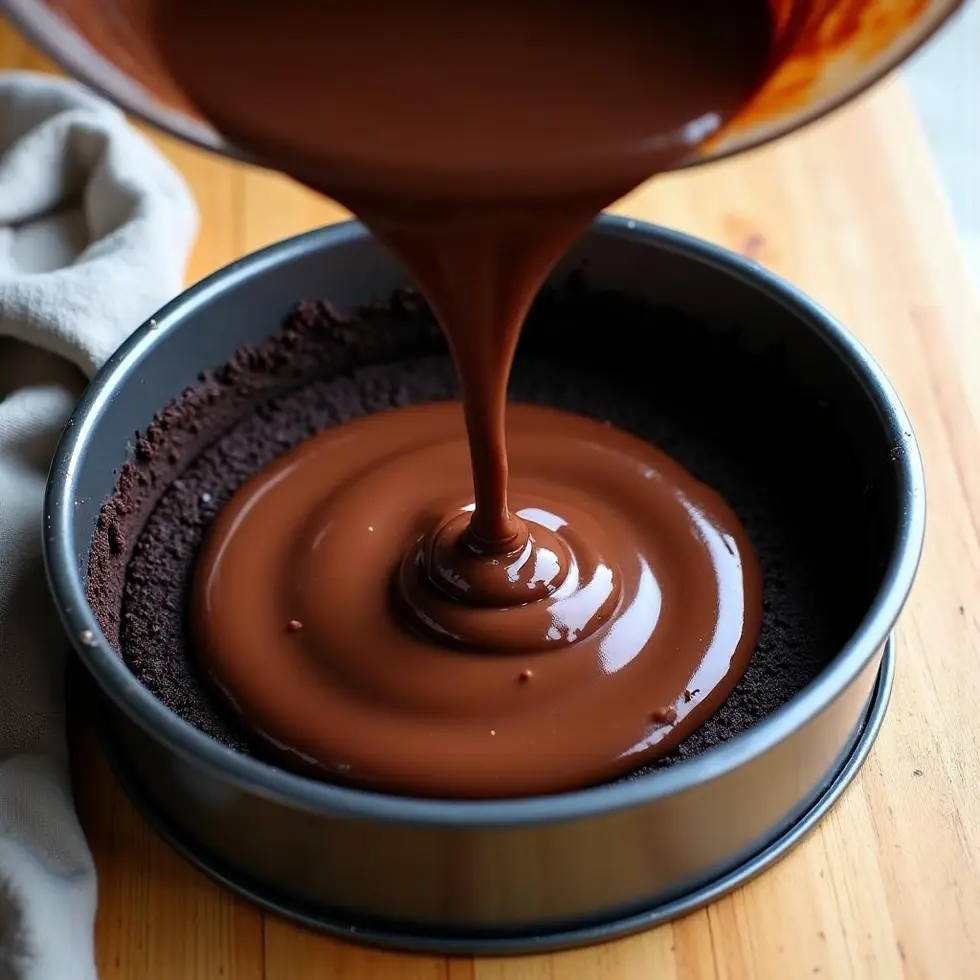
Beat softened cream cheese and sugar together until the mixture turns completely smooth with no lumps. Add the eggs one at a time, beating after each addition until just combined. Fold in the melted dark chocolate and cocoa powder gently, scraping the sides of the bowl to ensure everything blends evenly.
Overmixing the batter once the eggs are added creates too much air, which can cause cracks during baking. Mix just until the batter looks uniform and glossy. Pour the batter over the prepared crust and smooth the top with a spatula.
Bake at 325°F for 50 to 55 minutes. The edges should look set and slightly puffed, while the center still jiggles when you tap the pan. The jiggle indicates that the center remains soft and creamy, which firms up during the cooling and chilling process.
Adding the Whipped Cream Mousse
After the cheesecake cools to room temperature and chills in the refrigerator for at least four hours, spread the whipped cream mousse layer on top. Whip heavy cream to stiff peaks before spreading it over the cold, firm cheesecake base. The cold surface prevents the mousse from melting or sliding off.
Spread the mousse evenly with an offset spatula, starting from the center and working outward. Refrigerate the assembled dessert for another 30 minutes to set the mousse before slicing. Skipping this step can cause the mousse to smear when you cut through it.
Serving and Storage Tips
Slicing Clean Portions
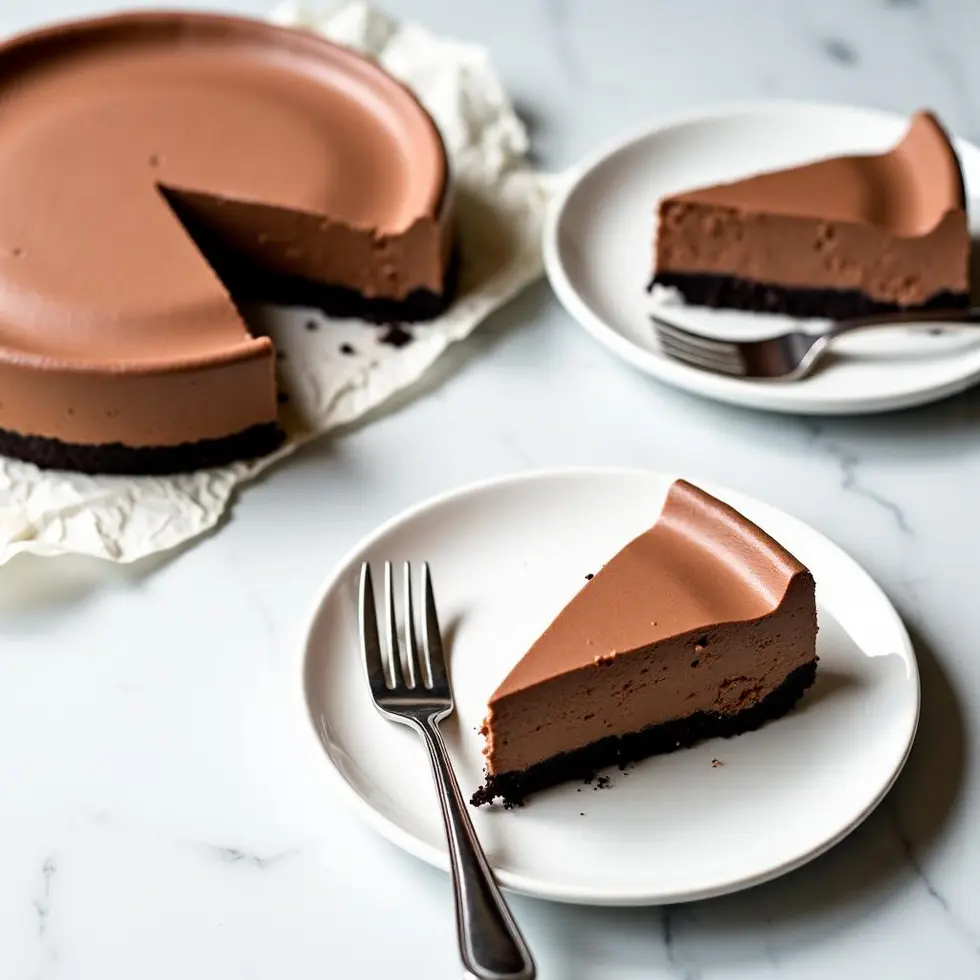
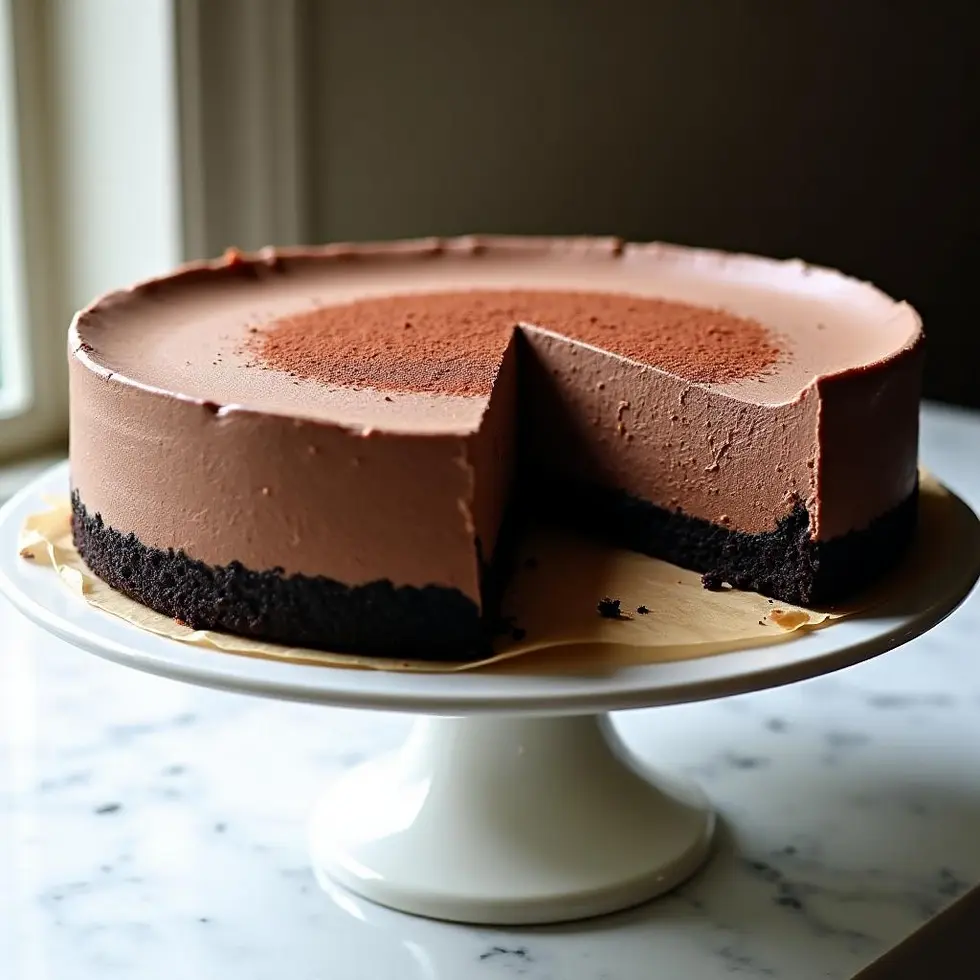
Run a sharp knife under hot water, wipe it dry, and slice straight down through the cheesecake without sawing. Wipe the knife clean after each cut and rewarm it before the next slice. This technique prevents the mousse from dragging or the cheesecake from tearing.
Each slice shows three distinct layers: the dark cookie crust, the dense chocolate cheesecake, and the fluffy white mousse on top. The visual contrast makes the dessert look polished and restaurant-quality on the plate.
Storing Leftovers Properly
Cover the cheesecake tightly with plastic wrap or store it in an airtight container in the refrigerator for up to five days. The mousse layer holds its texture well when kept cold, but it can deflate slightly if left uncovered or exposed to air for too long.
This copycat dessert does not freeze well because the mousse layer loses its airy structure when thawed. The cheesecake base freezes fine, but the mousse turns watery and separates after thawing. If you need to make it ahead, prepare the cheesecake base up to two days in advance and add the mousse layer a few hours before serving.
Customizing the Topping
Add a dusting of cocoa powder or chocolate shavings over the mousse layer for a more finished look. Cocoa powder adds a subtle bitterness that echoes the dark chocolate in the base. Chocolate shavings create visual texture without changing the flavor balance.
You can also serve each slice with a drizzle of chocolate sauce or a dollop of lightly sweetened whipped cream on the side. The homemade version delivers richer chocolate flavor than most restaurant slices because you control the quality of the chocolate and the freshness of the cream cheese. For a similar layered approach using a different cookie flavor, try the Cheesecake Factory Oreo Cheesecake Copycat, which uses the same dense-base-plus-mousse structure with a different crust and mix-in strategy.
Check the Jiggle Before Pulling
The single most common mistake with this cheesecake factory chocolate mousse cheesecake copycat is leaving it in the oven until the center looks completely firm. That extra ten minutes turns the interior dry and grainy instead of smooth and fudgy.
When the edges set and the center still wobbles in a three-inch circle when you tap the pan, the cheesecake is done. Trust that jiggle. The residual heat and the overnight chill finish the job without overbaking the filling. Pull it early, cool it slowly, and refrigerate it fully. That sequence locks in the dense, creamy texture that makes this dessert worth the wait.
Frequently Asked Questions
Can I use milk chocolate instead of dark chocolate?
Yes, but milk chocolate adds more sweetness and less depth. The dessert will taste milder and sweeter overall. Dark chocolate balances the sugar from the cream cheese and the mousse layer, creating a more complex flavor.
Why does my cheesecake crack on top?
Cracks form when the batter is overmixed or the oven temperature is too high. Mix the batter gently after adding the eggs and bake at 325°F. Let the cheesecake cool slowly at room temperature before refrigerating to prevent sudden temperature changes that cause cracks.
Can I make this without a springform pan?
You can use a regular cake pan, but removing the slices will be more difficult. A springform pan lets you release the sides cleanly without disturbing the mousse layer. If you use a regular pan, line it with parchment paper and lift the cheesecake out using the paper overhang.
How do I know when the whipped cream reaches stiff peaks?
Stiff peaks form when you lift the whisk and the cream holds its shape without drooping. The peaks should stand upright and stay firm. Underwhipped cream will slide off the cheesecake. Overwhipped cream turns grainy and starts to separate into butter.
Can I add espresso powder to the chocolate layer?
Yes, adding one teaspoon of espresso powder to the batter deepens the chocolate flavor without making the dessert taste like coffee. Espresso enhances the cocoa notes and adds complexity. Dissolve the espresso powder in a tablespoon of warm water before folding it into the batter.
Chocolate Mousse Cheesecake
Ingredients
Method
- Preheat the oven to 325°F / 163°C and mix the chocolate cookie crumbs with melted butter, then press into the bottom of a 9-inch springform pan.
- Beat the cream cheese and sugar until smooth, add the eggs one at a time, then fold in the melted dark chocolate and cocoa powder until fully combined.
- Pour the chocolate cheesecake batter over the crust and bake for 50 to 55 minutes until the edges are set but the center still jiggles slightly.
- Cool the cheesecake to room temperature, then refrigerate for at least 4 hours or overnight until fully chilled and firm.
- Spread the whipped cream mousse layer evenly over the chilled cheesecake, then refrigerate for 30 minutes before slicing and serving.
