
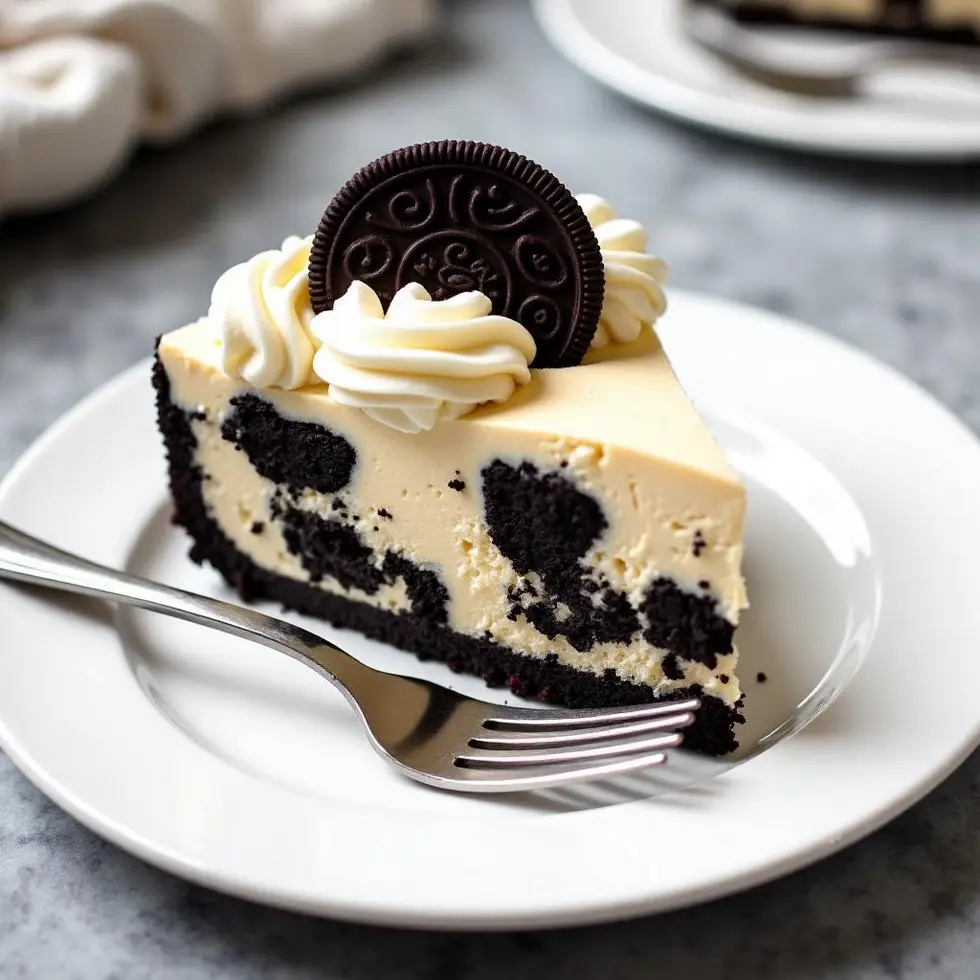
Oreo cookie crumbs mixed with melted butter press into a dark, buttery crust that holds its shape without crumbling when you slice the first piece.
Cream cheese batter folded with chopped Oreo cookies creates the signature cookies and cream texture that sets this dessert apart from plain cheesecake. The cookie chunks suspend evenly throughout the filling instead of sinking to the bottom, which happens when batter is overmixed or when cookies are added too early in the process. A gentle fold at the end keeps those dark cookie pieces visible in every slice.
The restaurant-style version relies on a slow bake at moderate heat followed by an extended cooling period inside the turned-off oven. That approach prevents the top from cracking and keeps the center creamy instead of dense. Home ovens fluctuate more than commercial ones, so the slight jiggle in the center after an hour of baking tells you more than a timer ever could.
The homemade cheesecake factory oreo cheesecake copycat allows you to control sweetness, cookie distribution, and topping choices without paying premium dessert prices. You can adjust the Oreo-to-batter ratio, swap in double-stuffed cookies, or leave the top plain instead of piling on whipped cream. Active prep takes about 25 minutes, but total time including baking and chilling stretches to just over 5 hours, with most of that happening unattended.
Why Oreo Cheesecake Is So Popular
The Chocolate Cookie Crust Foundation
Crushed Oreo cookies create a crust that tastes richer than plain graham cracker bases because the chocolate wafer portion carries cocoa flavor and a slight bitterness that balances the sweet cream cheese filling. The filling itself contains 680 grams of cream cheese—about 24 ounces—beaten with three-quarters of a cup of granulated sugar and a full cup of sour cream. That sour cream adds tanginess and keeps the texture smooth without making the batter runny.
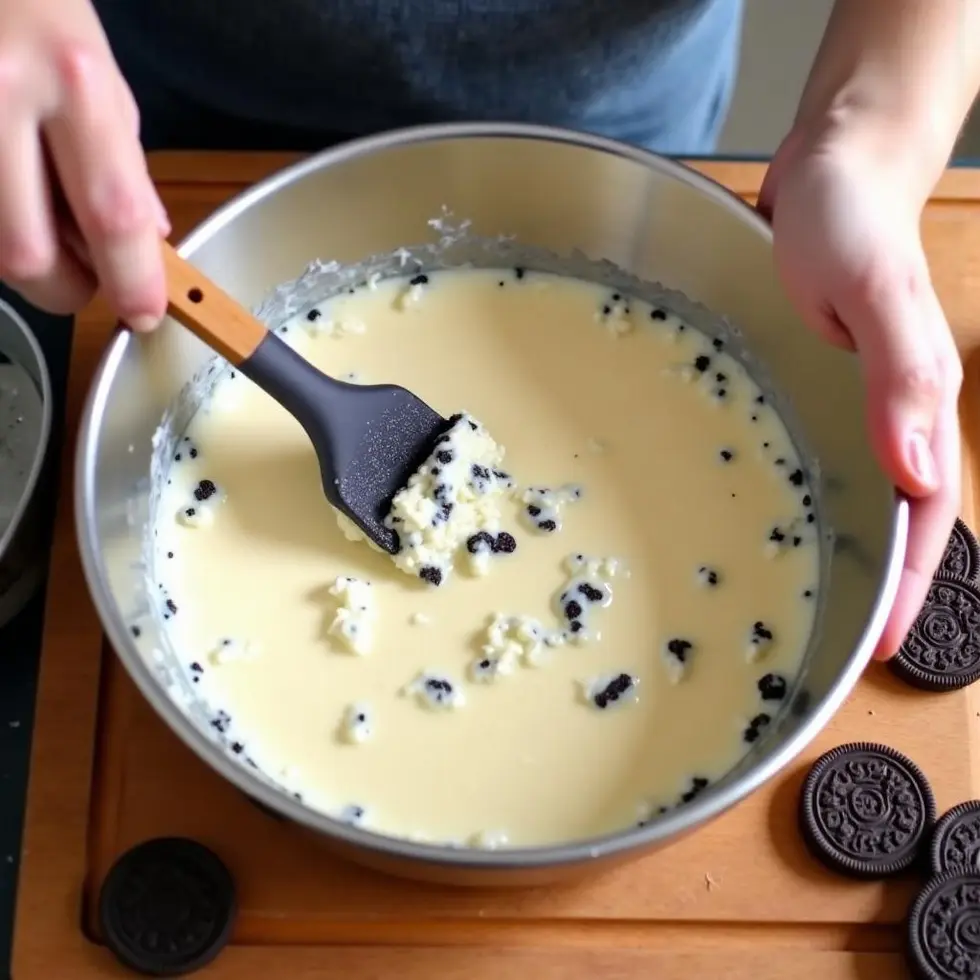
The cookie chunks folded into the batter stay intact during baking because they are added after the eggs and sour cream have been fully incorporated. Overmixing at this stage breaks down the cookies into a gray mush, so a few gentle folds with a spatula distribute the pieces without destroying them. Six whole Oreo cookies chopped into rough chunks provide enough contrast in every slice without overwhelming the creamy base.
Low Temperature Baking Prevents Cracks
Baking at 325°F for 55 to 60 minutes gives the proteins in the eggs and cream cheese enough time to set without curdling. The edges firm up first, while the center remains soft enough to jiggle slightly when you tap the pan. Leaving the cheesecake inside the turned-off oven with the door cracked open for one hour allows the temperature to drop gradually instead of shocking the surface with cold air, which causes cracks.
Restaurants typically use water baths to maintain even heat, but this method skips that step and achieves similar results through controlled cooling. The chilling period in the refrigerator—at least four hours, ideally overnight—finishes the setting process and develops the flavor as the vanilla extract and sour cream meld with the cream cheese. The cookies and cream cheesecake tastes sharper when served immediately after baking, but mellows into a balanced dessert after a full night in the fridge.
Many copycat cheesecake recipes rely on room-temperature ingredients and minimal mixing to avoid incorporating too much air, which expands during baking and then collapses into cracks as the cheesecake cools.
How to Make the Copycat Cheesecake
Pressing the Oreo Crust
Crush 18 Oreo cookies into fine crumbs using a food processor or by sealing them in a zip-top bag and rolling them with a heavy pan. Mix the crumbs with four tablespoons of melted unsalted butter until the texture resembles wet sand. Press the mixture firmly into the bottom of a 9-inch springform pan, using the bottom of a measuring cup or a flat glass to pack it evenly. An uneven crust bakes unevenly and can crack when you remove the springform ring.
Beat the softened cream cheese and sugar on medium speed until no lumps remain, scraping down the sides of the bowl at least once. Add the sour cream and mix until smooth, then add the eggs one at a time, beating just until the yellow streaks disappear. Overmixing after adding eggs incorporates too much air, which creates bubbles that rise to the surface and pop, leaving pockmarks.
Folding Cookie Chunks and Baking
Chop the remaining six Oreo cookies into rough chunks—each cookie should break into about four or five pieces. Fold them into the batter using a silicone spatula, scraping the bottom of the bowl to lift the batter over the cookies instead of stirring in circles. Pour the batter over the crust and tap the pan gently on the counter twice to release any large air bubbles trapped underneath.
Bake at 325°F for 55 to 60 minutes. The edges should look set and slightly puffed, while the center jiggles like soft-set gelatin when you gently shake the pan. If the center looks liquid or ripples, bake for another five minutes and check again. Turn off the oven, crack the door open about four inches, and leave the cheesecake inside for one hour. This gradual temperature drop prevents the surface from contracting too quickly.
The oreo cheesecake recipe produces a filling that tastes creamier than versions made with heavy cream because sour cream has a higher fat content and lower water content, which means less moisture escapes during baking. The result is a denser, richer texture that slices cleanly when chilled.
If you prefer a chocolate-forward dessert with a different texture, the Cheesecake Factory Chocolate Mousse Cheesecake Copycat layers a dark mousse over a similar cookie crust using a no-bake method.
Chilling, Toppings, and Storage
Refrigeration Time and Texture
Remove the cheesecake from the oven after the one-hour cooling period and refrigerate it for at least four hours, though overnight chilling improves both texture and flavor. The filling firms up completely during this time, transforming from a soft custard into a sliceable dessert. Running a thin knife around the edge of the pan before releasing the springform ring prevents the sides from sticking and tearing.
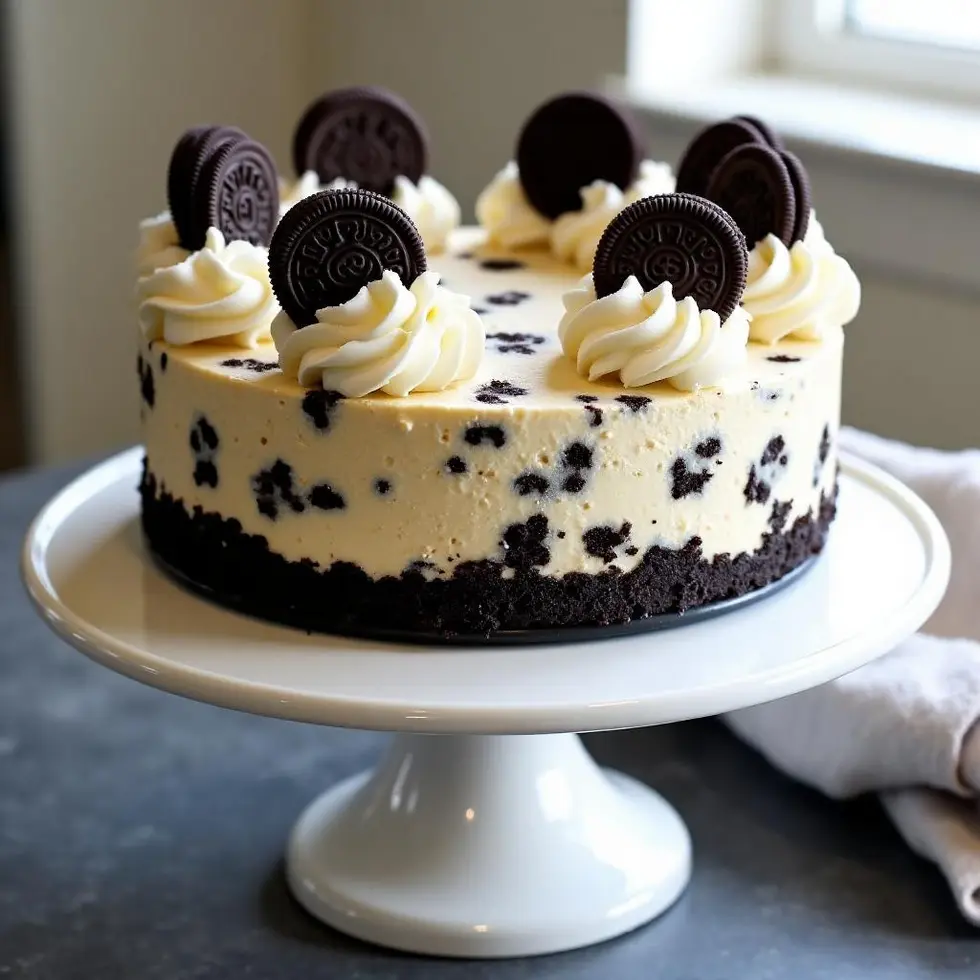
Top the chilled cheesecake with one cup of whipped cream spread evenly across the surface, or pipe rosettes around the edge for a more formal presentation. Crush a few additional Oreo cookies and sprinkle them over the whipped cream just before serving. The whipped cream softens after a few hours, so add it right before you plan to serve rather than topping the entire cheesecake if you intend to store leftovers.
Storage and Make-Ahead Options
Store the cheesecake in the refrigerator for up to five days, covering it loosely with plastic wrap or aluminum foil to prevent it from absorbing other flavors. If you plan to freeze it, slice the cheesecake first and wrap individual pieces in plastic wrap, then place them in a freezer-safe container. Frozen slices keep for up to two months and thaw in the refrigerator in about four hours.
The cheesecake tastes best when served cold, straight from the fridge. Let it sit at room temperature for no more than 10 minutes before slicing, which makes cutting easier without softening the filling. A thin, sharp knife dipped in hot water and wiped dry between cuts produces the cleanest slices.
For a lighter variation, Broma Bakery suggests folding crushed Oreos into a no-churn cheesecake ice cream base, which delivers similar flavor in a frozen form. The Cheesecake Factory offers the original version on their menu, but homemade versions allow you to control sweetness and cookie distribution.
Chill It Completely Before Slicing
Skipping the full chilling time results in a filling that smears instead of slicing cleanly, leaving each piece looking messy on the plate. The overnight rest not only sets the texture but also lets the vanilla extract and sour cream develop deeper flavor that balances the sweetness of the Oreo cookies.
The cookie chunks inside the filling soften slightly as they absorb moisture from the cream cheese, creating pockets of softer texture that contrast with the firm crust. That textural variation is what makes this cheesecake factory copycat dessert feel more complex than a plain vanilla version. Try adding the chopped cookies to your next batch and notice how the filling holds them in place without turning gray or mushy.
Frequently Asked Questions
Can I use a different cookie for the crust?
You can substitute chocolate graham crackers or chocolate wafer cookies for the Oreo crust, though the flavor will be less sweet and slightly less buttery. Use the same quantity of crumbs and melted butter to maintain the crust structure.
Why did my cheesecake crack on top?
Cracks form when the surface cools too quickly or when the batter is overmixed and contains too much air. Leaving the cheesecake in the turned-off oven with the door cracked for one hour prevents rapid temperature changes. Mixing just until the ingredients combine also reduces the chance of cracks.
Can I bake this cheesecake without a springform pan?
A springform pan makes removing the cheesecake easier, but you can use a regular 9-inch cake pan lined with parchment paper that extends over the edges. Lift the cheesecake out using the parchment overhang after chilling, though the sides may not look as neat.
How do I know when the cheesecake is done baking?
The edges should be set and slightly puffed, while the center jiggles gently when you tap the pan. It should move like soft gelatin, not liquid. If the center looks wet or ripples, bake for another five minutes and check again.
Can I make this cheesecake ahead of time?
Yes, bake the cheesecake up to two days in advance and store it covered in the refrigerator. Add the whipped cream topping just before serving to keep it fresh. Freeze individual slices for up to two months if you need to prepare it further in advance.
Oreo Cheesecake
Ingredients
Method
- Preheat the oven to 325°F / 163°C and crush 18 Oreo cookies into fine crumbs, then mix with melted butter and press into the bottom of a 9-inch springform pan.
- Beat the cream cheese and sugar until smooth, then add sour cream, eggs one at a time, and vanilla extract, mixing just until combined.
- Chop the remaining 6 Oreo cookies into chunks, fold them into the cheesecake batter, and pour the mixture over the crust.
- Bake for 55 to 60 minutes until the edges are set but the center still jiggles slightly, then turn off the oven and let the cheesecake cool inside with the door cracked for 1 hour.
- Refrigerate for at least 4 hours or overnight until fully chilled and firm.
- Top with whipped cream and additional Oreo pieces before slicing and serving.
