
Cracking the oven door after baking lets the cheesecake cool gradually, which prevents the surface from splitting and keeps the center silky.
Most people assume the restaurant version tastes richer because of a complex ingredient list, but the real difference comes from two specific steps: fully softened cream cheese that gets beaten until completely smooth, and a slow cool-down inside a turned-off oven. When cream cheese enters the mixer still cold, it creates lumps that baking won’t fix. Room-temperature cream cheese, on the other hand, blends into a filling that sets evenly and slices cleanly without streaks or grainy patches.
The crust in this cheesecake factory strawberry cheesecake copycat relies on melted butter mixed thoroughly with graham cracker crumbs, then pressed firmly into the bottom of a springform pan. That firm press creates a crust that holds together when you slice through it, rather than crumbling onto the plate. The strawberry topping uses preserves warmed just enough to coat fresh sliced berries, which creates a glossy finish that clings without sliding off.
Active prep takes 25 minutes, baking runs 50 to 55 minutes, and the cheesecake needs at least four hours in the refrigerator to chill completely before serving. The entire process spans about five and a half hours, but most of that time requires no attention from you.
What Makes Strawberry Cheesecake Shine
Cream Cheese Temperature Matters
Softened cream cheese beats into a smooth, airy filling because the fat molecules blend evenly without resistance. Cold cream cheese, even when beaten longer, leaves dense pockets that show up as streaks in the finished cheesecake. Leave the cream cheese on the counter for 60 to 90 minutes before you start mixing, or until it gives easily when you press a finger into the wrapper.
The Slow Cool Technique
Turning off the oven and cracking the door open after baking allows the cheesecake to drop in temperature at a controlled rate, which prevents the sudden contraction that causes cracks. The center will still jiggle slightly when you turn off the heat at 325°F, but it firms up completely during the one-hour rest inside the oven and the four-hour chill in the refrigerator. This gradual cool-down also keeps the texture creamy rather than dense.
Preserves Create the Gloss
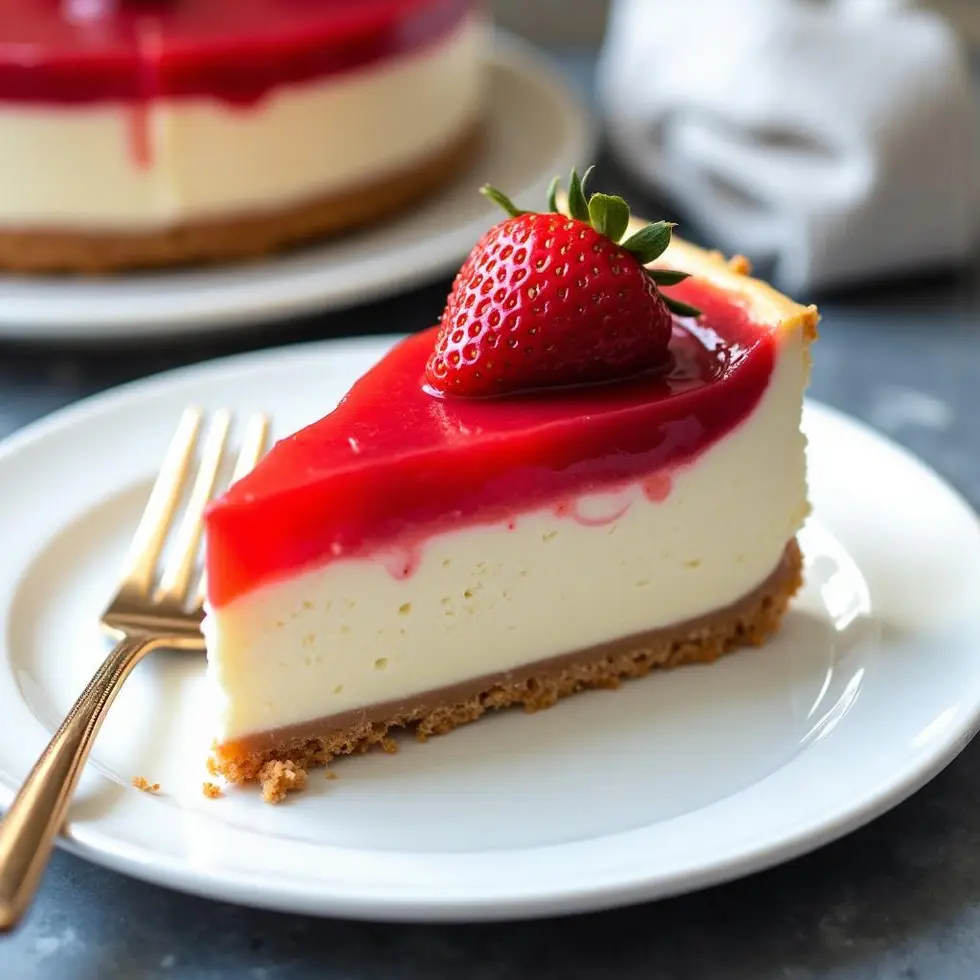
Strawberry preserves warmed until pourable coat fresh strawberries with a glossy layer that looks polished and professional. The preserves contain pectin, which thickens as it cools and helps the topping cling to the surface of the cheesecake. Toss the sliced strawberries with the warm preserves, then spoon the mixture over the chilled cheesecake just before serving so the berries stay bright and the sauce doesn’t soak into the filling.
If you’re recreating other popular desserts at home, the Cheesecake Factory cheesecake copycat recipe uses the same base technique with different topping options.
That slow cool-down step transforms the texture from grainy to velvety, which is why skipping it often leads to disappointing results.
How to Make the Copycat Version
Building the Crust
Preheat the oven to 325°F. Mix 200 grams of graham cracker crumbs with 85 grams of melted unsalted butter until the mixture looks like wet sand and holds together when you press it. Pour the mixture into the bottom of a 9-inch springform pan, then use the bottom of a measuring cup or a flat glass to press it firmly and evenly across the base. The crust should feel compact, not loose.
Mixing the Filling
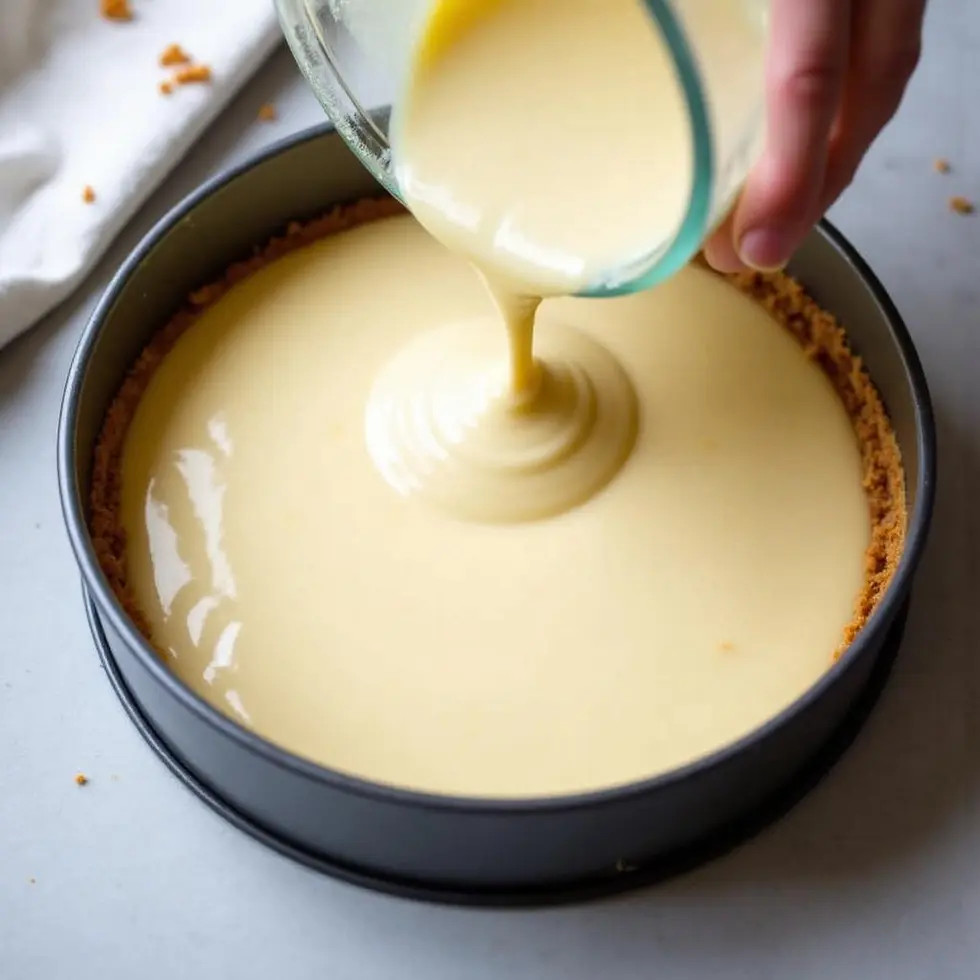
Beat 680 grams of softened cream cheese with 200 grams of granulated sugar on medium speed until completely smooth, scraping down the sides of the bowl at least twice. Add three large eggs one at a time, beating just until each one disappears into the batter. Overbeating after adding eggs incorporates too much air, which can cause cracks during baking. Stir in 240 milliliters of sour cream and two teaspoons of vanilla extract until the filling looks uniform and glossy.
Pour the filling over the crust, then tap the pan gently on the counter to release any trapped air bubbles. Bake for 50 to 55 minutes, until the edges look set but the center still jiggles when you shake the pan lightly. The jiggle should be noticeable but not liquidy.
Cooling and Chilling
Turn off the oven, crack the door open about four inches, and leave the cheesecake inside for one hour. This step prevents the surface from cracking as the temperature drops. After the oven cool-down, transfer the cheesecake to the refrigerator and chill for at least four hours, or overnight if you have the time. The filling won’t slice cleanly until it’s completely cold and firm.
Many homemade cheesecakes turn out denser than expected because the eggs get overbeaten, so stop mixing as soon as each egg blends in.
Topping and Make-Ahead Tips
Preparing the Strawberry Topping
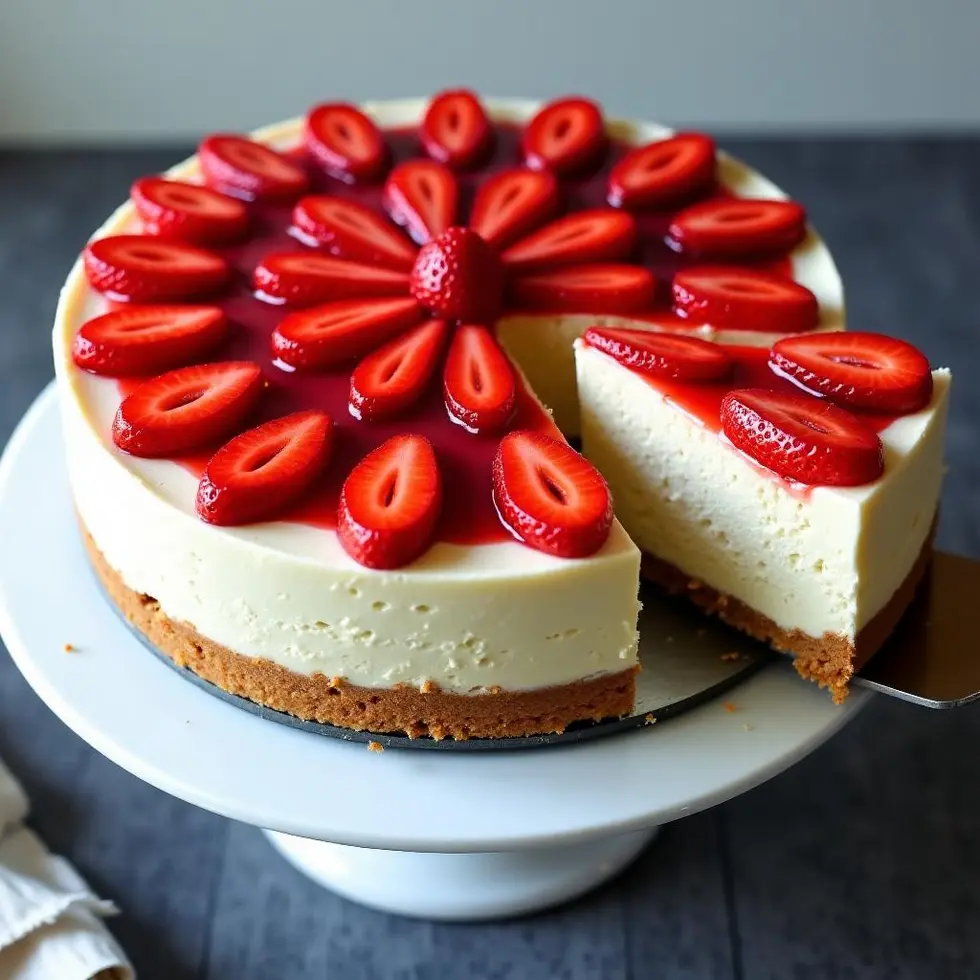
Warm 120 grams of strawberry preserves in a small saucepan over low heat or in the microwave for about 20 seconds, just until the preserves turn pourable but not hot. Toss 450 grams of fresh sliced strawberries with the warm preserves in a bowl until every piece is coated. Spoon the strawberry mixture over the chilled cheesecake right before serving so the topping stays glossy and the berries keep their texture.
Customizing the Topping
You can swap the strawberry preserves for seedless raspberry jam or apricot preserves if you want a different fruit flavor, or use a mix of sliced strawberries and blueberries for a more varied look. For a lighter topping, skip the preserves and arrange fresh strawberries on top, then brush them lightly with a thin layer of warmed honey.
Storing and Serving
The cheesecake stays fresh in the refrigerator for up to five days when covered loosely with plastic wrap or stored in an airtight container. Slice it with a sharp knife dipped in hot water and wiped dry between cuts to get clean edges. Each of the eight servings delivers about 520 calories, making this a rich dessert best served in modest slices.
For another restaurant-style option, Rock Recipes offers a strawberry shortcake cheesecake variation that layers cake with the filling.
Let It Chill Completely
Cheesecake filling firms up only after several hours in the refrigerator, so cutting into it too early leaves you with a slice that sags and a filling that doesn’t hold its shape. Patience during the chill step makes the difference between a dessert that looks polished and one that falls apart on the plate.
Plan the baking around your schedule so the cheesecake has time to cool in the oven, then chill overnight if possible. The texture improves as it sits, and the flavors settle into a more balanced profile. Slice it cold, top it just before serving, and you’ll notice how closely this homemade version mirrors the restaurant-style richness.
Frequently Asked Questions
Can I bake this cheesecake without a springform pan?
You can use a regular cake pan, but removing the cheesecake cleanly becomes much harder without the detachable sides of a springform pan. If you use a standard pan, line it with parchment paper that extends over the edges so you can lift the cheesecake out once it’s fully chilled.
Why does my cheesecake crack even after following the slow cool method?
Cracks usually form when the oven temperature is too high or when the filling gets overbeaten after adding the eggs. Check your oven temperature with a separate thermometer to confirm it’s accurate, and mix the eggs in gently, stopping as soon as they blend into the batter.
Can I freeze strawberry cheesecake?
Yes, wrap the cheesecake tightly in plastic wrap and then in aluminum foil before freezing for up to two months. Thaw it overnight in the refrigerator before adding the strawberry topping, since freezing can make fresh berries watery. Add the topping only after the cheesecake has fully thawed.
How do I know when the cheesecake is done baking?
The edges should look firm and set, while the center jiggles slightly when you gently shake the pan. If the entire surface looks solid and doesn’t move at all, the cheesecake is overbaked and may turn dry. The jiggle should be noticeable but not liquidy, similar to the movement of softly set gelatin.
Strawberry Cheesecake
Ingredients
Method
- Preheat the oven to 325°F / 163°C and mix graham cracker crumbs with melted butter, then press into the bottom of a 9-inch springform pan.
- Beat cream cheese and sugar until smooth, then add eggs one at a time, followed by sour cream and vanilla extract.
- Pour the filling over the crust and bake for 50 to 55 minutes until the edges are set but the center still jiggles slightly.
- Turn off the oven, crack the door open, and let the cheesecake cool inside for 1 hour to prevent cracking.
- Refrigerate for at least 4 hours or overnight until completely chilled and firm.
- Warm the strawberry preserves until pourable, toss with sliced strawberries, and spoon over the chilled cheesecake before serving.
