
Melted mozzarella bubbling over panko-crusted chicken at exactly two minutes keeps the coating crisp instead of soggy.
When you need dinner on the table before everyone scatters, this one works. You skip the deep fryer, skip the oven preheat, and still get that restaurant-style golden crust and stretchy cheese pull most people crave on a busy weeknight. The air fryer heats up in three minutes, cooks the coating crisp in ten, and finishes the mozzarella layer in two more without soaking the breading.
You can plate restaurant-style chicken parm in air fryer in twenty-four minutes total, including the three-minute preheat. Two cutlets fit into a standard six-quart basket without crowding, which means you can cook for two or scale up in batches without changing the timing.
The panko coating crisps faster and stays drier than a flour-based breading because the larger crumbs create more surface area for hot air circulation. The marinara and cheese go on in the final two minutes only, which keeps the crust from steaming underneath.
Why the Sauce Waits Until the End
Adding marinara and mozzarella before the cutlet finishes cooking traps steam against the breading. That steam softens the crust immediately.
The panko coating needs dry, circulating heat at 400°F (200°C) for the full ten minutes to reach its crispest texture. When you layer sauce too early, moisture from the marinara transfers into the breadcrumb layer, breaking down the delicate crust you just built. The cheese also releases fat and liquid as it melts, which further saturates the coating underneath.
The Two-Minute Finishing Window
Once the chicken reaches 165°F (74°C) at the thickest part and the coating turns golden, you have exactly two minutes to melt the cheese without soaking the breading. Spoon one-third cup of marinara evenly over both cutlets, then sprinkle half a cup of shredded mozzarella on top. Return the basket to the air fryer and cook for two more minutes at the same 400°F (200°C) setting.
The cheese should melt completely and begin to bubble at the edges, but it will not have time to release enough liquid to penetrate the crust. This timing window mirrors the broiler finish used in restaurant kitchens, where chicken parm gets assembled just before serving to preserve the crisp coating diners expect.
Serving immediately after that two-minute finish ensures the coating stays crunchy through the first few bites, which is the texture window that defines restaurant-style chicken parm.
How to Make Chicken Parm in the Air Fryer
Preheat the air fryer to 400°F (200°C) for three minutes. This step stabilizes the basket temperature before the breaded cutlets go in, which prevents the coating from sticking to the metal surface during the first few minutes of cooking.
Mix half a cup of panko breadcrumbs, one-quarter cup of grated Parmesan cheese, one teaspoon of Italian seasoning, and one teaspoon of garlic powder in a shallow dish. Beat one egg in a separate shallow bowl. Pound two chicken breast cutlets to half-inch thickness so they cook evenly in the short twelve-minute window.
Coating and Oil Application
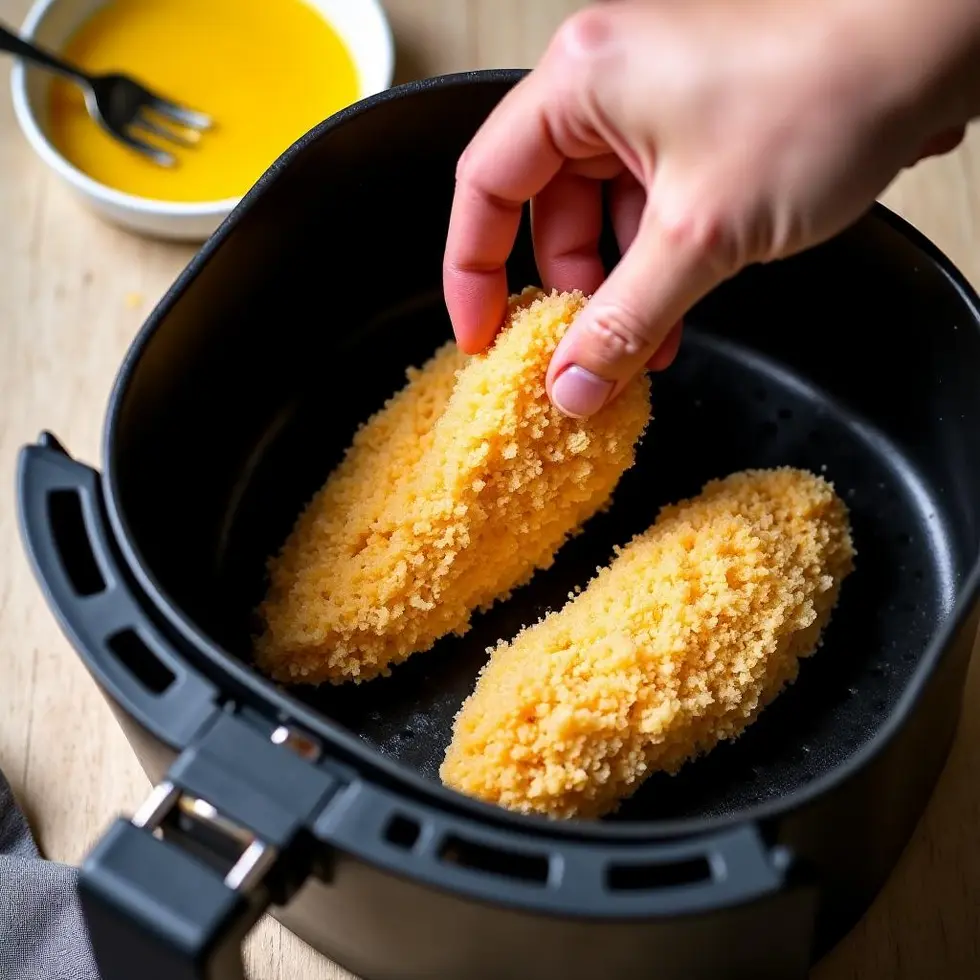
Dip each cutlet into the beaten egg, letting the excess drip off, then press both sides firmly into the panko mixture. The pressure matters—panko that sits loosely on the surface will blow around in the air fryer instead of adhering during cooking. Once both cutlets are coated, spray both sides lightly with olive oil spray, which helps the breadcrumbs brown and crisp faster than they would with no added fat.
Place the breaded cutlets in a single layer in the air fryer basket, leaving at least half an inch of space between them. Air fryers depend on rapid hot air circulation to create the Maillard browning that mimics deep frying, and crowding the basket blocks that airflow. If your basket is smaller than six quarts, cook one cutlet at a time rather than overlapping them.
Air fry for ten minutes, flipping the cutlets halfway through at the five-minute mark. Check the internal temperature at the thickest part of each cutlet—it should reach 165°F (74°C). If the coating looks pale at eight minutes, add two more minutes before flipping. The coating should turn a deep golden brown, not light tan, which signals that the panko has fully crisped.
Compared to oven baking, the air fryer crisps the coating in half the time and uses less oil than pan frying, which makes it faster and less messy for weeknight cooking. The Diary of a Real Housewife notes that air fryer chicken tenderloins benefit from the same light oil spray and even spacing, which confirms the method across different cuts.
Once the chicken reaches temperature, spoon marinara sauce over each cutlet, top with shredded mozzarella, and air fry for two more minutes until the cheese melts and bubbles.
Pasta Pairings, Sandwiches and Leftovers
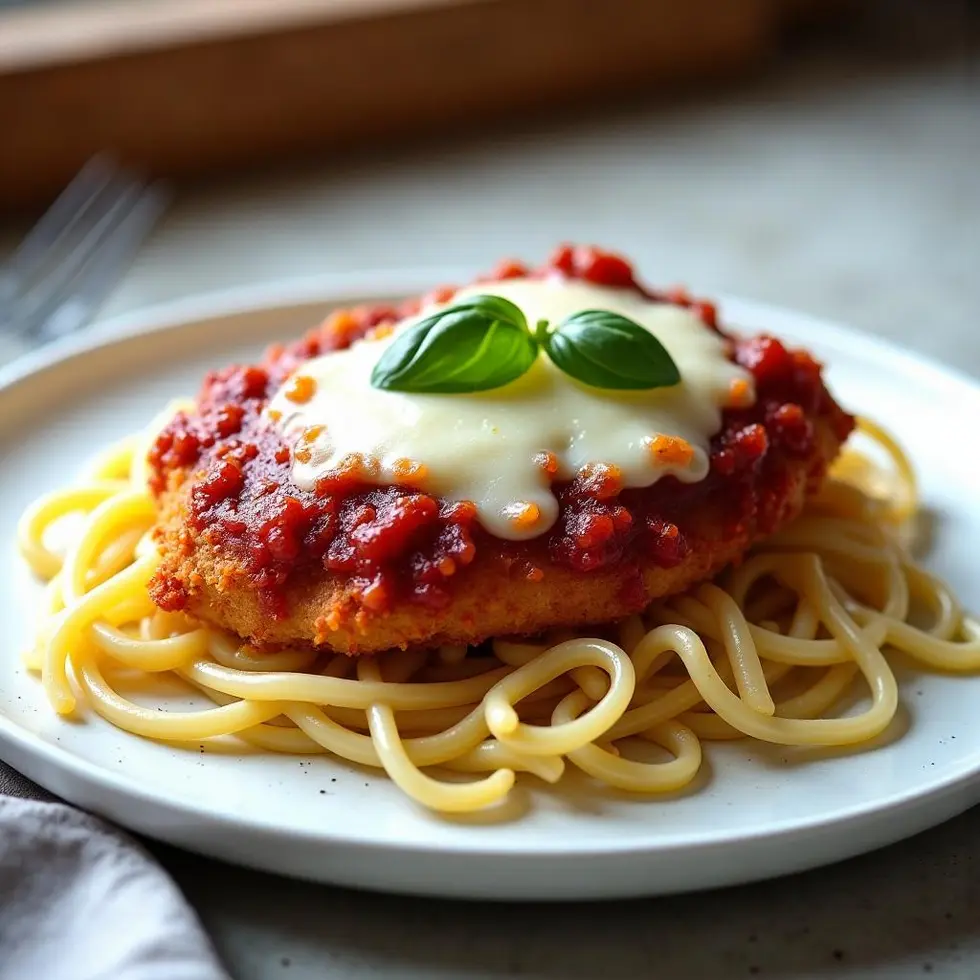
Serving the cutlet over spaghetti or penne turns it into the plated restaurant meal most people recognize. Toss the pasta with a little extra marinara and a pinch of garlic powder before layering the chicken on top, which keeps the noodles from tasting plain underneath the saucy cutlet.
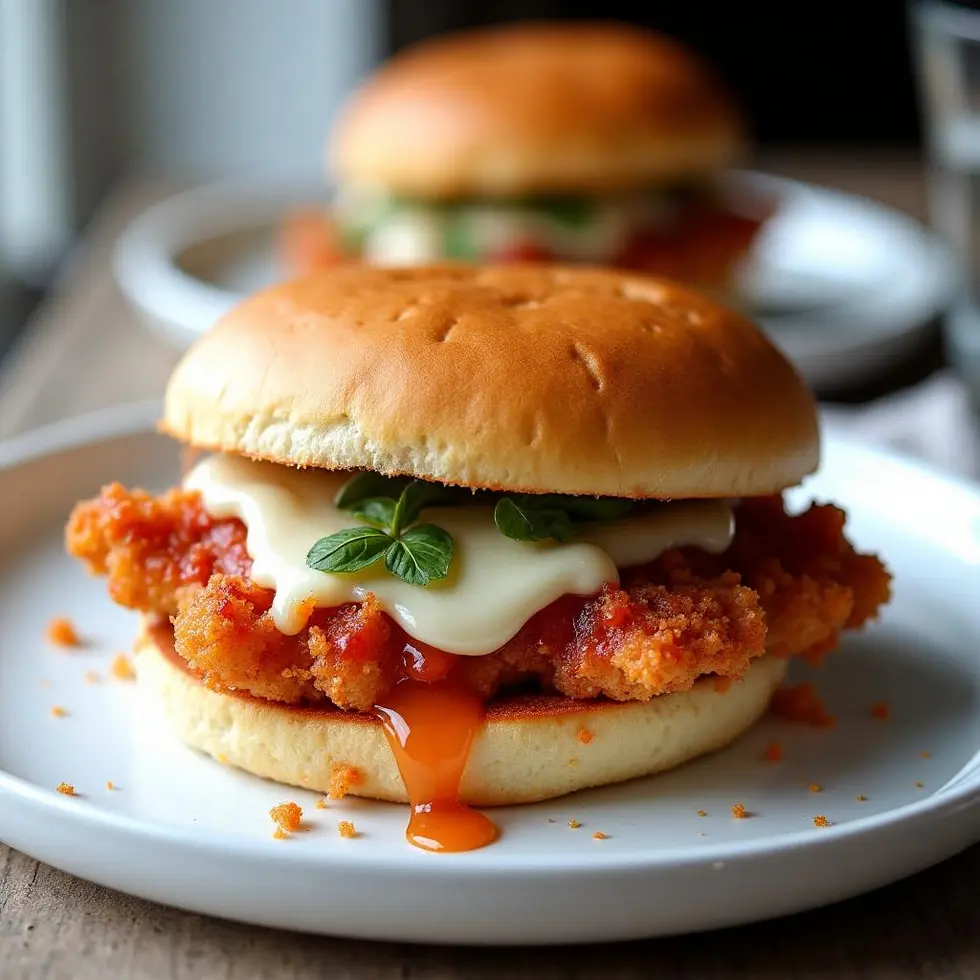
For a chicken parm sandwich, toast a hoagie roll or ciabatta, spread a thin layer of marinara on the bottom half, place the hot cutlet on top, and add another spoonful of sauce and cheese. The quick chicken sandwich recipe approach of toasting the bun first prevents the bread from going soggy under the sauce, which is the most common sandwich failure point.
Reheating Without Losing the Crunch
Leftover chicken parm loses most of its crispness after refrigeration because the coating absorbs moisture from the sauce and cheese. To revive it, place the cutlet back in the air fryer at 375°F (190°C) for four to five minutes without adding more sauce. The lower temperature reheats the chicken without scorching the already-cooked coating, and the dry heat evaporates some of the trapped moisture.
If you plan to make this ahead, coat and bread the cutlets up to four hours in advance, then refrigerate them uncovered on a wire rack. The uncovered storage keeps the panko dry, which improves the final texture when you air fry them later. Do not add the sauce and cheese until after the initial ten-minute cook.
If you have crispy air fryer cheese sticks left over from another meal, you can serve them alongside the cutlet as an appetizer-style plate, which adds another crunchy texture without needing a side dish.
Plating the cutlet within five minutes of cooking gives you the best texture window—after that, the steam from the cheese and sauce continues to soften the coating even on the counter.
Coat, Cook, Then Sauce
The coating crisps best when it gets the full ten minutes of dry heat before any moisture touches it. Once you layer the sauce and cheese, the two-minute finish melts everything without enough time to soak through.
Serve it over pasta for the plated version, or tuck it into a toasted roll if you want the handheld sandwich style instead.
Frequently Asked Questions
Do I need to preheat the air fryer for chicken parm?
Yes, preheating for three minutes at 400°F (200°C) stabilizes the basket temperature and prevents the coating from sticking during the first few minutes. Skipping the preheat can cause uneven browning and longer cook times.
Can I use regular breadcrumbs instead of panko?
You can, but panko creates a crispier coating because the larger crumbs allow more air circulation. Regular breadcrumbs pack more densely and tend to turn softer faster once the sauce and cheese are added.
What if my air fryer basket is smaller than six quarts?
Cook one cutlet at a time instead of crowding the basket. Overlapping the cutlets blocks airflow and results in pale, soft spots on the coating where the hot air could not reach.
Can I make the breaded cutlets ahead of time?
Yes, bread the cutlets up to four hours in advance and refrigerate them uncovered on a wire rack. The uncovered storage keeps the panko dry, which improves the final texture when you cook them.
Why does my coating turn out soggy even in the air fryer?
Adding the sauce and cheese too early traps steam against the breading. Wait until the cutlet reaches 165°F (74°C) and the coating turns golden, then add the marinara and mozzarella for only the final two minutes.
How do I reheat leftover chicken parm without losing the crunch?
Place the cutlet in the air fryer at 375°F (190°C) for four to five minutes without adding more sauce. The lower temperature reheats the chicken and evaporates some of the moisture without scorching the coating.
Chicken Parmesan
Ingredients
Method
- Preheat the air fryer to 400°F / 200°C for 3 minutes.
- Mix panko, Parmesan, Italian seasoning, and garlic powder in a shallow dish, then dip each cutlet in beaten egg and press into the breadcrumb mixture to coat both sides.
- Spray both sides of the breaded cutlets lightly with olive oil spray and place in a single layer in the air fryer basket.
- Air fry for 10 minutes, flipping halfway, until the coating is golden and the chicken reaches 165°F / 74°C at the thickest part.
- Spoon marinara sauce over each cutlet, top with shredded mozzarella, and air fry for 2 more minutes until the cheese melts.
- Serve immediately over pasta or on a toasted roll for a sandwich.
