
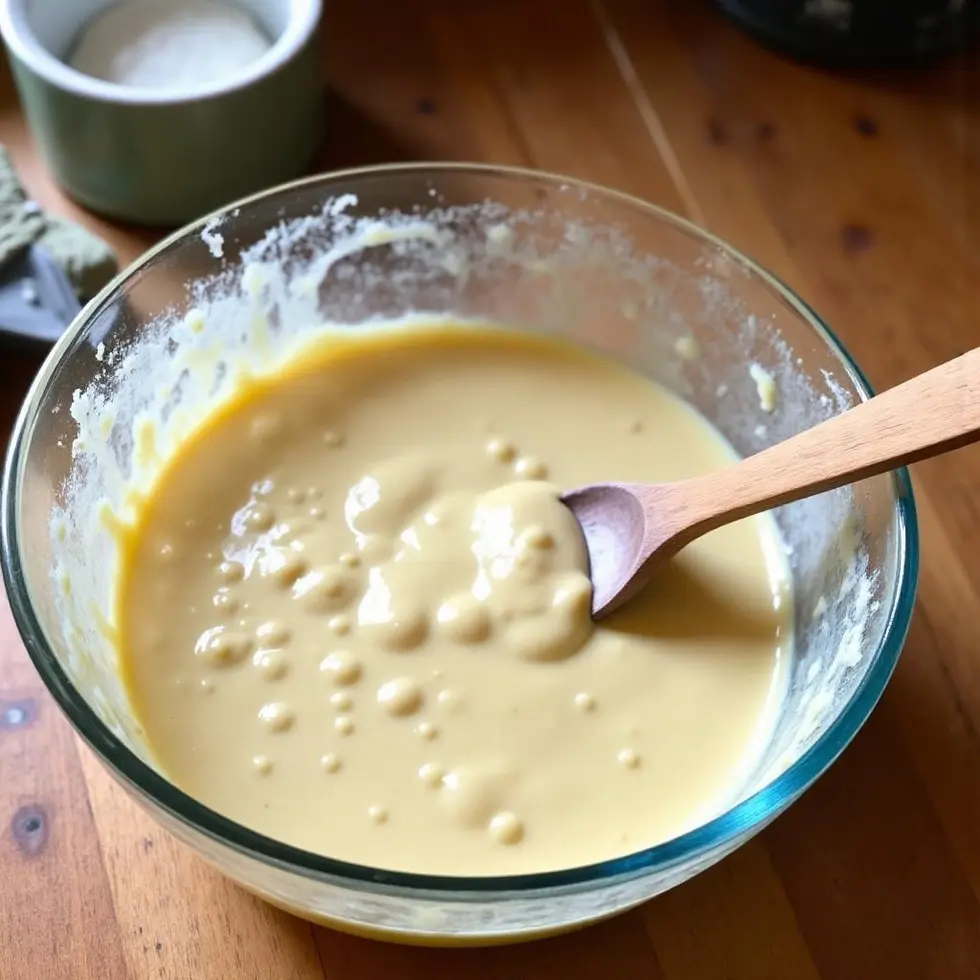
I stirred buttermilk into the dry ingredients just until I could still see lumps, and ten minutes later the batter had thickened enough to hold its shape on the griddle.
As written, expect 4 servings out of this copycat ihop pancake recipe.
Flat pancakes usually result from overworked batter or skipping the rest period. Both baking powder and baking soda need a few minutes to hydrate and start producing the carbon dioxide bubbles that create lift. Without that pause, you end up with thin, dense rounds that spread across the pan instead of rising upward.
The entire process takes 30 minutes from start to finish, including the ten-minute rest that does most of the structural work. Four servings come together on one griddle without needing to reheat the surface between batches.
When you see bubbles forming on the surface and the edges looking dry instead of wet, you know the pancake has set enough to flip. That moment, combined with the golden brown crust underneath, produces the thick, airy texture most home versions miss.
Why Diner Pancakes Are Thicker Than Yours
The Batter Was Overmixed
Most home cooks stir pancake batter until it looks smooth. That action develops gluten strands in the flour, which tightens the structure and prevents the batter from rising. Restaurant-style pancakes stay fluffy because the batter is mixed just until the dry ingredients disappear, leaving visible lumps.
Those lumps break down during the ten-minute rest. The flour absorbs the buttermilk slowly, and the baking powder begins releasing gas. By the time you pour the batter onto the griddle, the texture has thickened without becoming dense.
When you make this copycat IHOP pancake recipe at home, stop stirring as soon as you no longer see dry flour at the bottom of the bowl. The batter should look rough, not glossy.
The Batter Went Straight to the Pan
Skipping the rest period is the single most common mistake. Baking powder needs time to activate fully, especially when combined with baking soda and buttermilk. The acid in buttermilk reacts with both leaveners, but that reaction intensifies after a few minutes of contact.
During the ten-minute rest, the batter thickens visibly. This change means the batter will hold its shape on the griddle instead of spreading thin. According to Food Network, resting also allows the flour to hydrate evenly, which improves the final crumb.
Set a timer for exactly ten minutes and resist the urge to stir again. The resting batter will look slightly bubbly on the surface, which signals that the leaveners are working.
How to Make IHOP-Style Pancakes
Combine the Dry and Wet Ingredients Separately
Whisk together 2 cups all-purpose flour, 2 tablespoons granulated sugar, 2 teaspoons baking powder, 1 teaspoon baking soda, and 1/2 teaspoon salt in a large bowl. In a separate bowl, whisk 2 cups buttermilk, 2 large eggs, and 1/4 cup melted butter until the eggs break up completely.
Pour the wet ingredients into the dry ingredients and stir with a wooden spoon or spatula just until combined. Stop as soon as you no longer see loose flour at the bottom. The batter should still have lumps throughout.
Leave the batter on the counter, uncovered, for ten minutes. Do not stir during this rest. The surface may develop small bubbles, which indicates the leaveners are activating.
Cook on a Preheated Griddle at 350°F
Heat a griddle or large skillet over medium heat until it reaches 350°F. If you do not have a thermometer, flick a drop of water onto the surface. It should sizzle and evaporate within a second or two.
Brush the griddle with 1 tablespoon vegetable oil, then pour 1/4 cup batter per pancake. Cook for 2 to 3 minutes without touching the pancakes. You will see bubbles forming on the surface and the edges will look dry instead of wet.
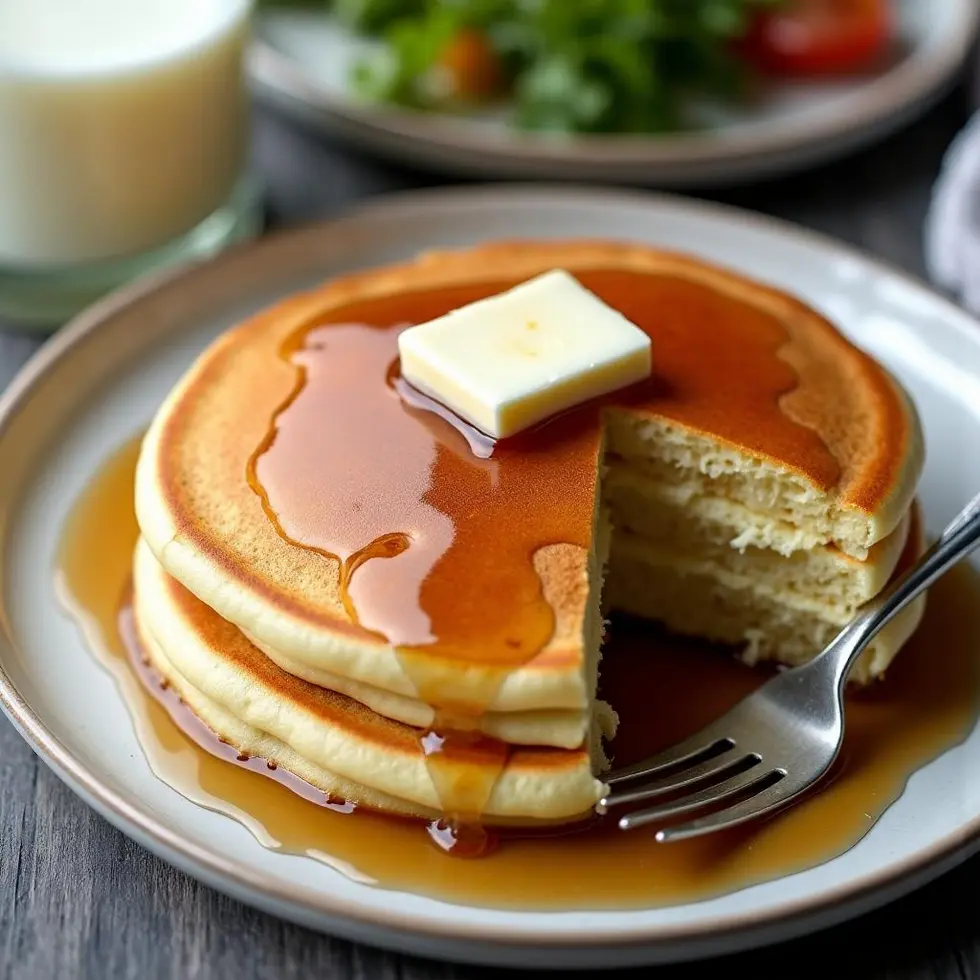
Flip each pancake once and cook for 1 to 2 minutes on the second side until golden brown. The homemade version tastes richer because the buttermilk and butter create a tender crumb that holds syrup without turning soggy. Serve immediately with butter and maple syrup.
Griddle Temperature, Toppings and Freezing
Keep the Heat Steady at 350°F
If the griddle runs too hot, the pancakes will brown on the outside before cooking through. If it runs too cool, they will spread thin and turn pale. Most diner-style pancakes cook at a steady 350°F, which gives you enough time to develop a golden crust while the interior sets.
Use a thermometer to check the surface temperature before pouring the first batch. If you are working on a stovetop, medium heat usually holds the right range. Cast iron holds heat longer than nonstick, so you may need to adjust slightly between batches.
Wipe the griddle with a paper towel dipped in vegetable oil between rounds to prevent sticking. Avoid using butter directly on the griddle, as it can burn at this temperature.
Add Fresh Fruit or Store for Later
You can fold fresh blueberries, sliced bananas, or chopped strawberries into the batter just before pouring. Add about 1/2 cup fruit per batch and distribute it evenly so each pancake gets a few pieces.
To freeze, let the pancakes cool completely, then stack them with parchment paper between each layer. Store in a freezer bag for up to two months. Reheat in the toaster or microwave for a quick breakfast.
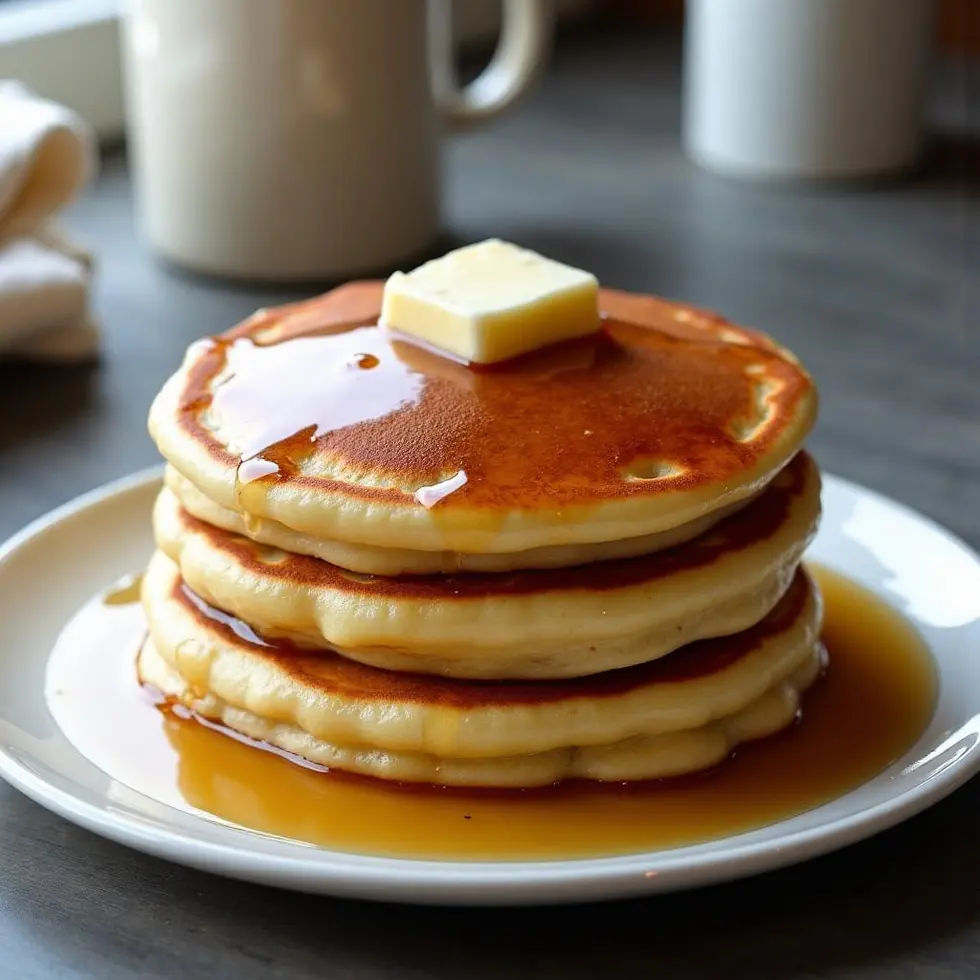
For a restaurant-style presentation, stack three pancakes on each plate and place a pat of butter on top while they are still hot. The butter will melt down the sides, and the syrup will pool in the layers. If you enjoy other diner-style breakfasts, this pancake technique adapts well to variations like buttermilk waffles or crepes using the same batter rest principle.
Wait for the Bubbles Before You Flip
The single check that prevents flat, undercooked pancakes is waiting for bubbles to form on the entire surface before flipping. If you flip too early, the center will stay wet and the pancake will collapse. If you wait until the bubbles have popped and the edges look fully dry, the structure has set enough to hold its shape.
Most home cooks flip based on time rather than visual cues. Use the bubbles as your signal, and you will get thick, fluffy rounds every time.
Frequently Asked Questions
Can I use regular milk instead of buttermilk?
Buttermilk provides the acidity needed to react with both baking powder and baking soda, which creates the signature lift. You can make a substitute by adding 2 tablespoons lemon juice or white vinegar to 2 cups whole milk and letting it sit for five minutes before using.
Why do my pancakes turn out flat even after resting the batter?
Flat pancakes usually result from expired baking powder or baking soda. Check the dates on both leaveners before starting. If they are fresh and the pancakes still fall flat, you may be overmixing the batter or cooking at too low a temperature.
Can I double this recipe for a larger batch?
Yes, you can double all the ingredients and follow the same method. The batter will still need a ten-minute rest, and you may need to work in multiple batches on the griddle. Keep finished pancakes warm in a 200°F oven while you cook the rest.
How do I know when the griddle is hot enough?
A drop of water should sizzle and evaporate within a second or two when the griddle reaches 350°F. If the water sits without reacting, the surface is too cool. If it evaporates instantly, lower the heat slightly.
Can I make the batter the night before?
It is best to make the batter fresh and rest it for ten minutes before cooking. Storing the batter overnight causes the leaveners to lose their strength, which results in denser pancakes. If you need to prep ahead, measure the dry ingredients and the wet ingredients separately, then combine them just before cooking.
Copycat IHOP Pancakes
Ingredients
Method
- Whisk together flour, sugar, baking powder, baking soda, and salt in a large bowl.
- Whisk buttermilk, eggs, and melted butter in a separate bowl, then pour into the dry ingredients and stir just until combined with a few lumps remaining.
- Let the batter rest for 10 minutes at room temperature without stirring.
- Heat a griddle or large skillet over medium heat to 350°F / 175°C, brush with vegetable oil, and pour 1/4 cup batter per pancake.
- Cook for 2 to 3 minutes until bubbles form on the surface and edges look set, then flip and cook for 1 to 2 minutes until golden brown.
- Serve immediately with butter and maple syrup.
