
Melting three cups of white cheddar into warm cream produces a glossy sauce that clings to every pasta curve without separating.
A bowl of copycat Panera mac and cheese costs roughly $2.50 per serving when you make it at home, compared to nearly $8 at the restaurant. You control the cheese ratio, the sauce thickness, and the portion size without paying for packaging or delivery fees. The entire recipe uses seven pantry-stable ingredients and yields four generous servings in 20 minutes.
This homemade version relies on whole milk, heavy cream, and shredded white cheddar to build a sauce that stays smooth from the first bite to the last forkful. The roux technique prevents graininess, and stirring off the heat keeps the cheese from splitting into oil and solids.
Why Panera Mac and Cheese Is So Creamy
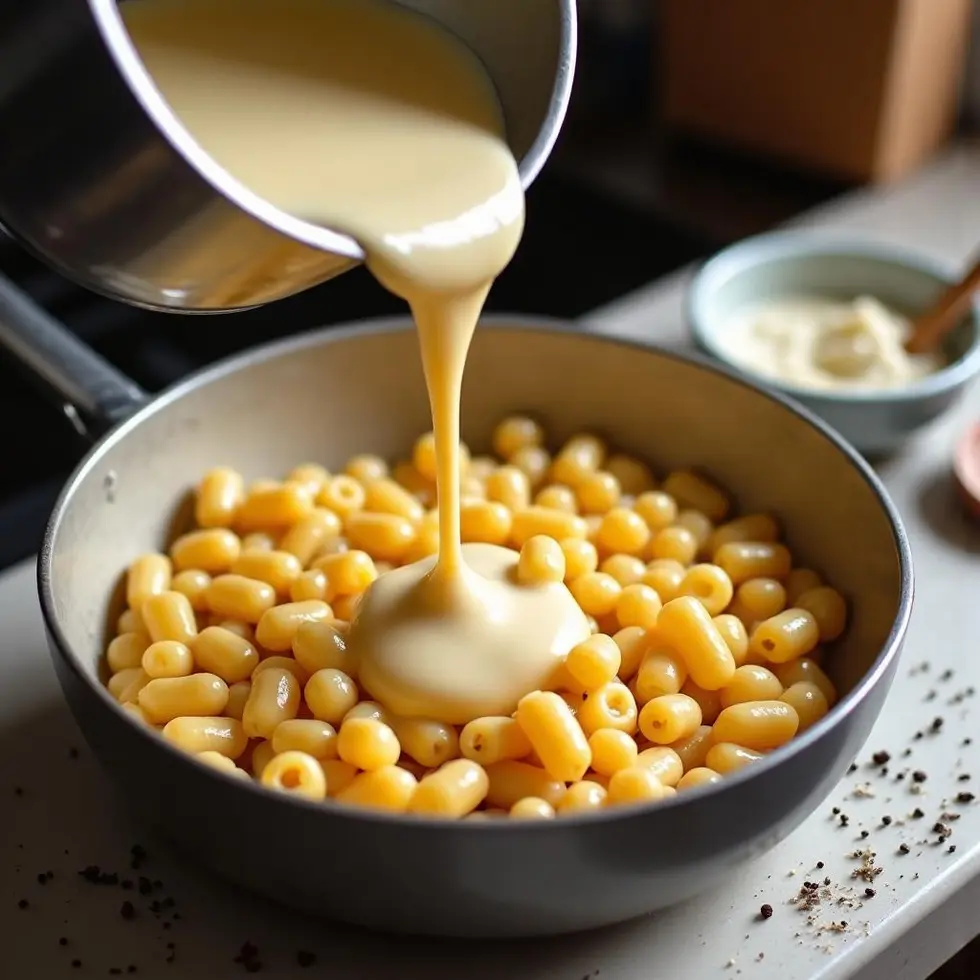
The Roux Foundation
Restaurants often build their cheese sauces on a butter-and-flour roux cooked for exactly one minute. This brief cooking time removes the raw flour taste without darkening the color, which keeps the finished sauce pale and silky. The equal ratio of butter to flour creates enough structure to hold the dairy and cheese in suspension.
When you melt 3 tablespoons of butter over medium heat and whisk in 3 tablespoons of all-purpose flour, the mixture turns smooth and lightly golden within 60 seconds. That golden stage signals the starch has bloomed, ready to thicken the milk and cream without forming lumps. Skipping this step or rushing it leads to a thin, separated sauce.
Heavy Cream and White Cheddar
Adding 1/2 cup of heavy cream to 2 cups of whole milk raises the fat content just enough to keep the cheese emulsified without making the sauce feel greasy. White cheddar melts more smoothly than yellow cheddar because it contains fewer added colorants, and its sharper flavor balances the richness of the cream.
The homemade version tastes cleaner because you shred the cheese yourself, avoiding the anti-caking agents in pre-shredded bags. Those agents can make the sauce grainy or prevent the cheese from melting completely. Stirring the cheese in off the heat prevents the proteins from seizing, which is why the sauce stays glossy instead of breaking into pools of fat.
Most copycat recipes rely on similar ratios, but texture depends on how you handle the heat. Michel Dumas explores a high-protein variation that uses cottage cheese for extra creaminess without adding heavy cream.
Whisking constantly during the milk-and-cream addition keeps the roux from clumping, and you need the full 4 to 5 minutes of stirring to reach a thick, bubbling consistency before removing the pan from the burner.
How to Make White Cheddar Mac
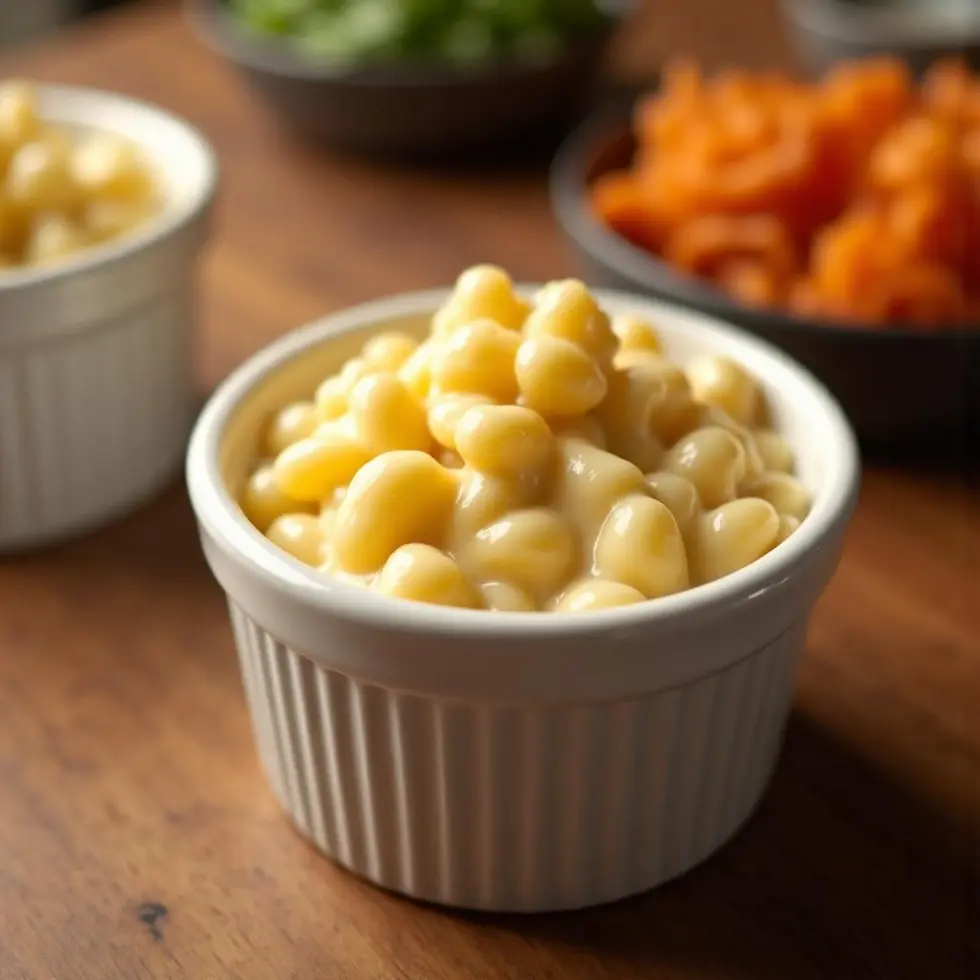
Pasta and Sauce Timing
Cook 340 grams of elbow macaroni in salted boiling water until al dente, following the package directions minus one minute. Draining the pasta while it still has a slight bite prevents it from turning mushy when you toss it with the hot cheese sauce. Reserve no pasta water unless you plan to thin the sauce later.
While the pasta cooks, prepare the cheese sauce. Melt the butter in a large saucepan over medium heat, whisk in the flour, and cook for one minute until smooth and lightly golden. Gradually pour in the milk and cream, whisking constantly to prevent lumps. Stir the mixture for 4 to 5 minutes until it thickens and begins to bubble.
Cheese Incorporation
Remove the saucepan from the heat before adding the 3 cups of shredded white cheddar, 1/2 teaspoon of salt, and 1/4 teaspoon of black pepper. Stir gently until the cheese melts completely and the sauce turns smooth and glossy. Residual heat from the pan is enough to melt the cheese without causing it to separate.
Add the drained macaroni to the cheese sauce and toss gently until every piece is evenly coated. Serve immediately while the sauce is hot and creamy, because the texture firms as it cools. If you need to hold the mac and cheese for a few minutes, cover the pan and keep it over the lowest heat setting, stirring occasionally to prevent the bottom from scorching.
The stirring method matters as much as the ingredients: folding the pasta into the sauce rather than pouring the sauce over the pasta ensures complete coverage without breaking the noodles.
Serving, Storage and Reheating Tips
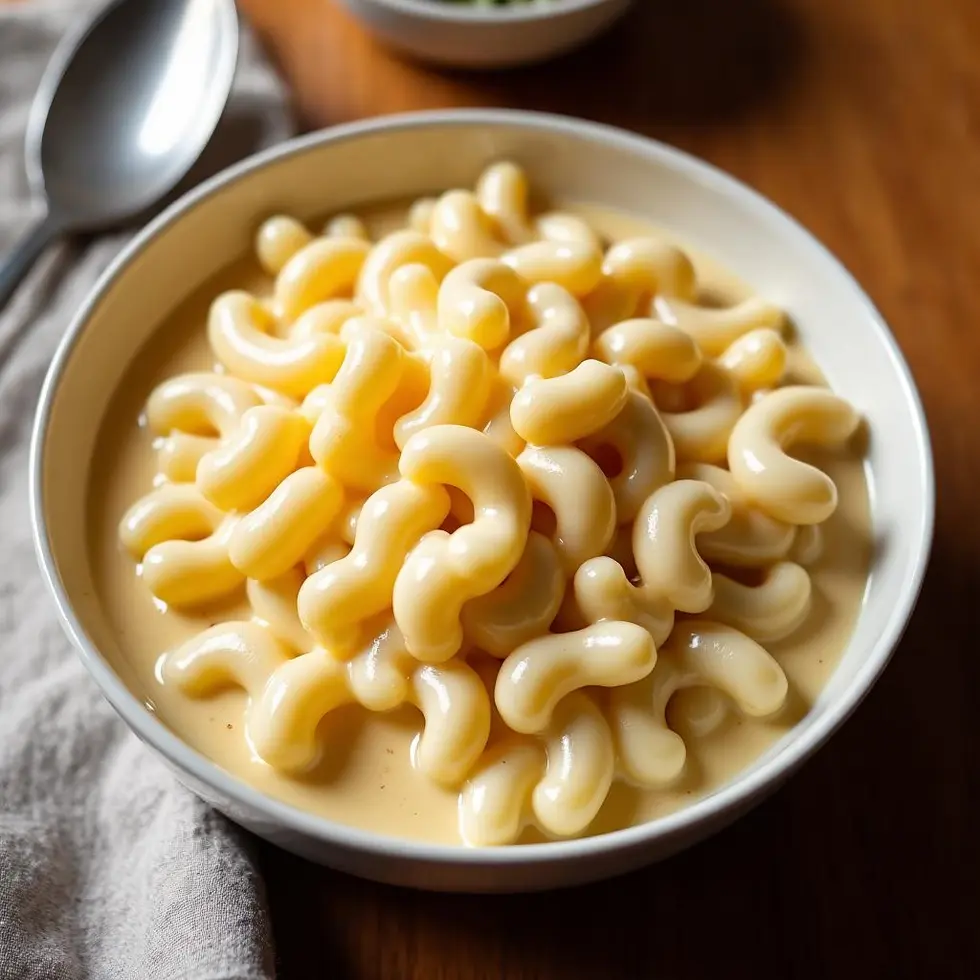
Portion and Pairing Ideas
This recipe yields four servings at roughly 520 calories each. You can stretch it to six smaller portions by serving it alongside roasted vegetables or a green salad. The creamy white cheddar mac pairs well with acidic sides like pickled onions or a vinegar-based slaw, which cut through the richness without requiring extra ingredients.
For a heartier meal, top each bowl with a handful of steamed broccoli florets or roasted cherry tomatoes. These additions increase the serving size without raising the per-portion cost significantly. Avoid adding extra cheese on top unless you account for the added calories and fat.
Storing and Reheating
Store leftover mac and cheese in an airtight container in the refrigerator for up to three days. The sauce thickens as it cools, so you need to add moisture when reheating. Pour 2 tablespoons of milk per serving into a saucepan, add the mac and cheese, and warm it over low heat, stirring frequently until the sauce loosens.
Microwave reheating works in 30-second intervals at 50% power, with a tablespoon of milk stirred in before heating. High microwave power can cause the cheese to separate, so gentle heat and added liquid keep the texture smooth. Do not freeze this mac and cheese; the dairy-based sauce breaks and turns grainy when thawed.
Batch cooking this recipe on a Sunday gives you four servings for the week at less than half the restaurant price, and the entire process takes 20 minutes from pantry to plate.
White Cheddar Makes the Difference
Using white cheddar instead of yellow or a blend changes both the flavor and the sauce stability. The sharper, cleaner taste comes through without competing with artificial coloring, and the cheese melts into a smooth emulsion when you stir it in off the heat. That one ingredient swap turns a standard mac and cheese into a restaurant-style dish.
You spend roughly $10 on ingredients and end up with four servings that reheat well, freeze poorly, and taste best the day you make them. The cost per bowl stays under $3 even when you choose organic dairy and premium cheese.
Frequently Asked Questions
Can I use yellow cheddar instead of white cheddar?
Yellow cheddar works, but it contains added colorants that can make the sauce slightly grainy and give it a sharper, less clean flavor. White cheddar melts more smoothly and produces a paler, creamier sauce closer to the restaurant-style version.
Why does my cheese sauce turn grainy?
Graininess happens when you add cheese over direct heat or use pre-shredded cheese with anti-caking agents. Remove the pan from the burner before stirring in the cheese, and shred your own block cheese for a smoother texture.
Can I make this ahead and reheat it later?
You can refrigerate the mac and cheese for up to three days and reheat it with a splash of milk over low heat or in the microwave at 50% power. The sauce thickens as it cools, so adding milk loosens the consistency without diluting the flavor.
How do I keep the mac and cheese creamy if I need to hold it for a party?
Transfer the mac and cheese to a slow cooker set on warm, and stir in 1/4 cup of milk every 30 minutes to prevent the sauce from drying out. Cover the slow cooker to trap steam, which helps maintain the creamy texture for up to two hours.
Can I freeze leftover copycat Panera mac and cheese?
Freezing is not recommended because the dairy-based sauce separates and turns grainy when thawed. Refrigerate leftovers instead and reheat them within three days for the best texture and flavor.
Copycat Panera Mac and Cheese
Ingredients
Method
- Cook the macaroni in salted boiling water according to package directions until al dente, then drain and set aside.
- Melt the butter in a large saucepan over medium heat, whisk in the flour, and cook for 1 minute until smooth and lightly golden.
- Gradually whisk in the milk and cream, stirring constantly until the mixture thickens and begins to bubble, about 4 to 5 minutes.
- Remove from heat, stir in the white cheddar cheese, salt, and black pepper until the cheese melts completely and the sauce is smooth.
- Add the cooked macaroni to the cheese sauce and toss gently until every piece is evenly coated.
- Serve immediately while hot and creamy for the best restaurant-style texture.
