
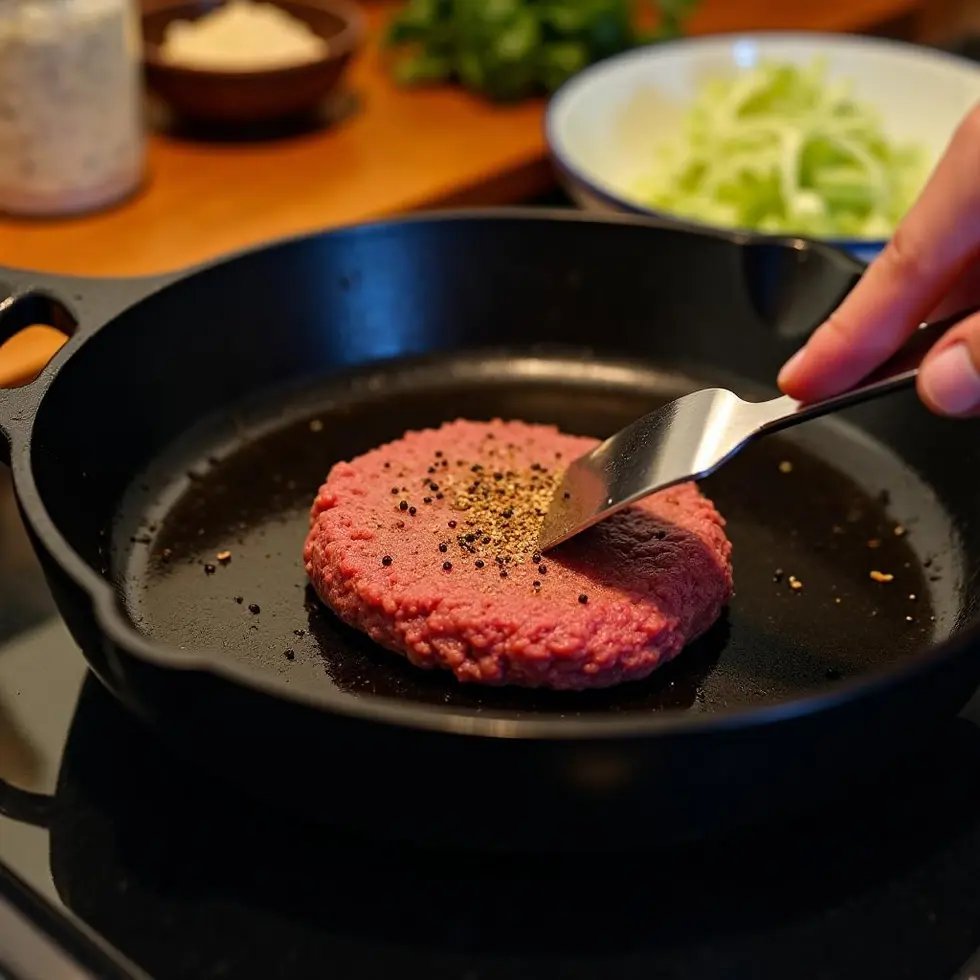
I pressed the thumb indent into the center of each patty and watched them stay level in the hot skillet instead of puffing into domes.
Most patties bulge in the middle as heat contracts the edges faster than the center, which pushes moisture out and leaves you with a dry, rounded burger. The shallow indent counters that contraction. Fat percentage matters just as much: 80/20 ground beef holds enough fat to keep the interior tender while the exterior browns, but 90/10 or 93/7 often turns dry before you build any crust. If all you have is leaner beef, handle it gently and pull it off heat the moment it reaches 160°F / 71°C, because a few extra seconds can cross the line from moist to chalky.
This juicy cheeseburger recipe depends on seasoning applied to the surface right before the cook, not mixed into the meat, which preserves the loose texture that makes each bite tender. Bun choice and toasting time control whether the structure holds or collapses halfway through, and sauce placement determines whether the bottom bun soaks through or stays crisp until the last bite.
The Secret to Juicy Cheeseburgers
Start With the Right Ground Beef
The 80/20 ratio — 80 percent lean meat to 20 percent fat — gives you the best balance between moisture and structural integrity. Leaner blends dry out before you develop a deep brown crust, and fattier mixes can release so much grease that the patty shrinks noticeably. Most grocery stores label ground beef by fat percentage, so you can choose 80/20 without asking. If you only find 85/15, it still works, but watch the internal temperature closely and remove the patties the moment they reach 160°F / 71°C to avoid a grainy texture.
Shape each portion into a loose patty slightly wider than your bun, because the edges will pull inward as the proteins contract. Avoid compacting the meat or kneading it like dough, which creates a dense, sausage-like chew rather than the tender crumb you want in a good burger.
Season the Surface, Not the Interior
Garlic powder and black pepper belong on the outside. Mixing salt or spices into raw ground beef changes the protein structure, giving you a firmer, almost ham-like texture instead of a loose, juicy bite. Season both sides right before the patties hit the heat, so the seasoning clings to the surface moisture without drawing out liquid prematurely. The Maillard reaction between the beef proteins and the heat creates the caramelized crust that carries most of the flavor, and surface seasoning amplifies that effect without interfering with the interior.
The thumb indent in the center of each patty counteracts the natural bulge that occurs as the edges cook faster than the middle, keeping the surface flat so the cheese sits evenly and the bun fits snugly.
How to Cook the Perfect Cheeseburger
Cast Iron or Grill: Heat Control Matters Most
A cast iron skillet holds steady heat and develops a better crust than most nonstick pans, which tend to release steam instead of browning the surface. Preheat the skillet over medium-high heat until a drop of water sizzles on contact. Place the patties down without pressing them — flattening with a spatula squeezes out the fat and moisture you worked to preserve. Cook for 4 minutes on the first side without moving them, then flip once and cook for another 3 to 4 minutes until the internal temperature reaches 160°F / 71°C, the safe minimum for ground beef according to AllRecipes.
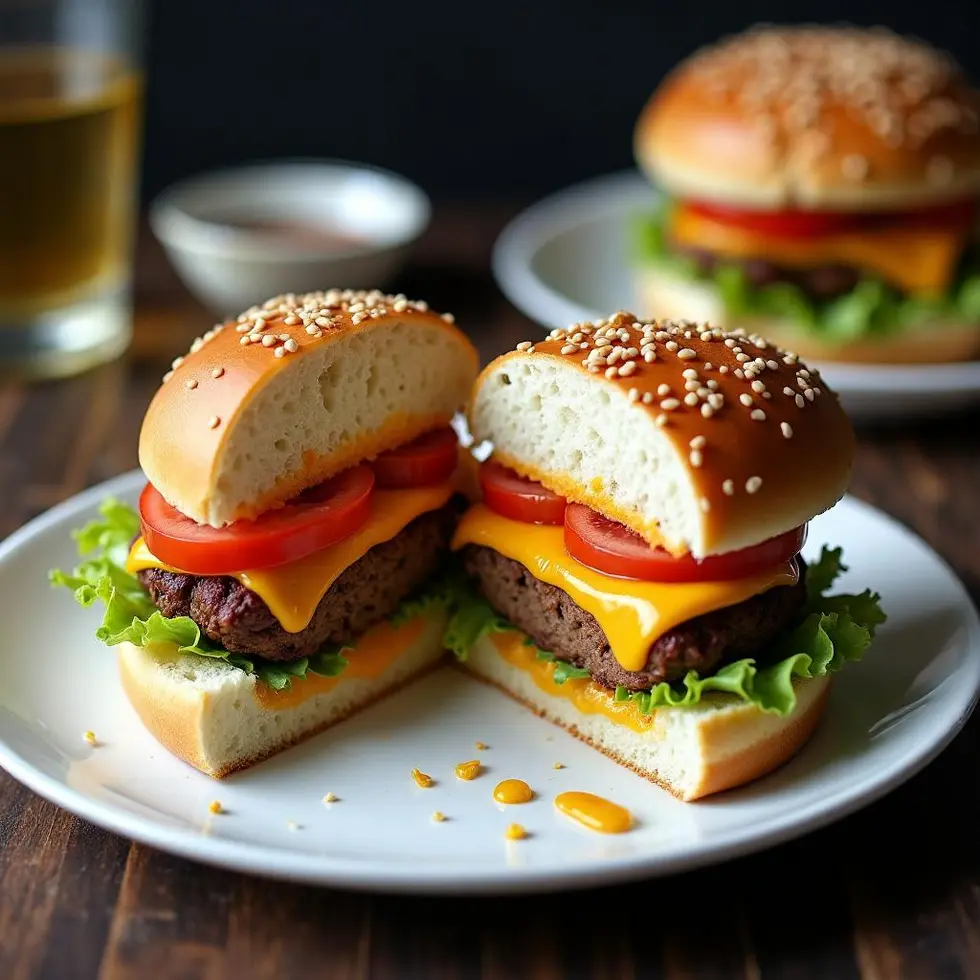
During the final 60 seconds, place one cheddar slice on each patty and cover the pan with a lid or foil to trap heat and melt the cheese evenly. The residual heat softens the cheese without overcooking the beef, so you get a smooth, glossy layer instead of dry, cracked edges.
Toast the Buns in the Same Pan
After you remove the patties, place the burger buns cut-side down in the same skillet for 1 to 2 minutes. The beef drippings left in the pan add flavor and help the buns develop a golden, slightly crisp surface that holds up under sauce and toppings. A toasted bun creates a moisture barrier that keeps the bottom from turning soggy, especially when you layer a wet ingredient like tomato directly on top of the patty.
Pull the buns off heat as soon as the edges turn golden brown, because they can scorch quickly in a hot pan.
Toppings, Sauces and Burger Night Ideas
Build From the Bottom Up
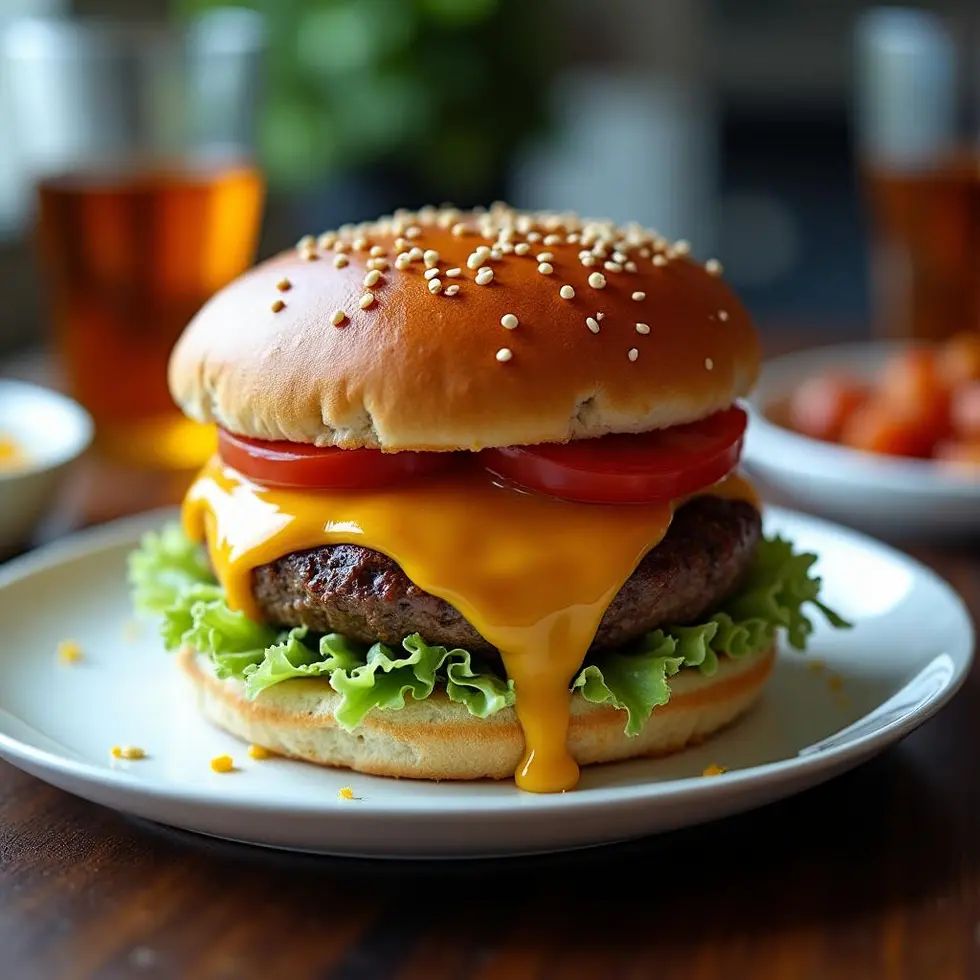
The bottom bun gets the sauce first — a simple mix of mayonnaise and ketchup — which forms a thin protective layer against the lettuce and tomato moisture. Shredded lettuce sits on top of the sauce, followed by the tomato slice, then the hot patty with melted cheese. This order keeps the lettuce crisp and prevents the tomato juice from soaking through the bun before you finish eating. The top bun goes on last, and you can add a small dab of sauce there if you want extra tang in every bite.
If you prefer a thicker sauce, whisk in a pinch of garlic powder or a dash of pickle juice to sharpen the flavor without adding extra moisture. For a different take on cheeseburger flavor layered into a creamy pasta, try this Cheeseburger Mac and Cheese Recipe that uses similar seasoning and cheese.
Swap Toppings Without Losing Structure
Raw onion, pickles, or jalapeños can replace the tomato if you want more crunch or heat, but avoid piling on too many wet ingredients at once, or the bun will soften before you finish. Sliced avocado works well on top of the cheese, where the heat softens it slightly without turning it mushy. If you skip the lettuce, add a second thin tomato slice to keep the moisture balance, or replace it with arugula for a peppery bite.
Cheddar melts smoothly and has a sharp flavor that cuts through the richness of the beef, but you can swap in American cheese for a creamier, saltier finish, or use Swiss if you want a milder, slightly nutty taste.
The Thumb Indent Makes the Difference
Most home cooks skip the shallow indent in the center of each patty, and the result is a burger that puffs up in the middle and cooks unevenly. That small step — pressing your thumb into the raw meat before seasoning — keeps the surface flat as the edges contract, which means the cheese sits level and the bun fits evenly from edge to edge. The indent also helps the patty cook through at a consistent rate, so you hit 160°F / 71°C without drying out the outer layer.
If you want to explore other burger-inspired recipes, Creative Homemaking offers a cheeseburger soup that uses similar seasoning in a creamy base, and The New York Times shares a bacon cheeseburger meatball recipe that adapts the classic flavors into a shareable appetizer. For this version, the simplest swap that changes the least is replacing the cheddar with American cheese, which melts faster and creates an even smoother layer without altering the seasoning or the cook time.
Frequently Asked Questions
Can I use frozen burger patties instead of fresh ground beef?
Frozen patties work, but thaw them completely and pat them dry before cooking to avoid excess moisture that prevents browning. Season the surface right before cooking, and use the same 160°F / 71°C target. Pre-formed frozen patties often have salt mixed in, so taste before adding extra seasoning.
Why does my burger shrink so much in the pan?
Overworking the meat or using a lean fat ratio causes the patty to contract as the proteins tighten and the fat renders out. Use 80/20 ground beef, handle it gently, and shape the patty slightly wider than the bun to account for normal shrinkage. Avoid pressing down with a spatula during cooking, which squeezes out moisture and fat.
How do I know when the burger is done without cutting it open?
Use an instant-read thermometer inserted into the side of the patty. Ground beef should reach 160°F / 71°C for food safety. The surface should feel firm to the touch, and juices should run clear, but the thermometer is the most reliable method for checking doneness without losing moisture.
Can I make the sauce ahead of time?
Yes, mix the mayonnaise and ketchup up to three days in advance and store it in an airtight container in the refrigerator. The flavors meld together as it sits, and you can whisk in a small amount of pickle juice or garlic powder right before serving if you want a sharper taste.
What if I only have a nonstick pan instead of cast iron?
A nonstick pan can work, but it often releases steam instead of building a deep crust. Preheat it over medium-high heat until very hot, and avoid crowding the pan so each patty has space to brown. You may need an extra 30 to 60 seconds per side to develop the same level of caramelization you would get in cast iron.
Cheeseburger
Ingredients
Method
- Mix mayonnaise and ketchup in a small bowl until smooth, then set aside.
- Divide the ground beef into 4 equal portions, shape into patties slightly larger than the buns, season both sides with garlic powder and black pepper, and press a shallow indent in the center of each patty with your thumb.
- Heat a cast iron skillet or grill over medium-high heat, cook the patties for 4 minutes on the first side without moving, flip once, and cook for 3 to 4 minutes until the internal temperature reaches 160°F / 71°C.
- Place one cheese slice on each patty during the last 60 seconds of cooking and cover the pan to melt the cheese.
- Toast the burger buns cut-side down in the same pan for 1 to 2 minutes until golden.
- Spread the sauce on the bottom bun, layer with lettuce, tomato, the cheeseburger patty, and the top bun.
