
Russet potatoes develop the fluffiest interior because their high starch content breaks down into soft, tender cells while the exterior crisps.
The texture you want from these wedges is a crisp, golden shell that cracks when you bite, then gives way to a soft, fluffy middle. That combination comes from a thin coating of seasoned flour and rapid hot air circulation, not oil saturation. The coating absorbs just enough moisture from the potato to cling during cooking, while the air fryer’s heat dries it into a papery crust without any heavy breading.
Compared to oven-baked wedges, this potato wedges recipe air fryer finishes faster because the compact basket concentrates heat and pulls moisture out more aggressively. Oven wedges need 40 minutes and often turn soft in the middle before the outside browns. Air fryer wedges take 18 minutes and stay crispy even after they cool slightly, because the coating sets dry rather than steaming under its own weight.
The entire process takes 28 minutes from slicing to serving, with 10 minutes of prep and 18 minutes in the basket. No deep fryer, no oil pool, no waiting for a full oven to preheat. You coat the wedges once, flip them once at the halfway mark, and serve them hot with any dipping sauce you prefer.
Spacing matters more than most beginners expect—overlapping wedges steam instead of crisping, because trapped moisture never escapes.
The Coating That Makes KFC Wedges Different
Seasoned Flour Versus Plain Breading
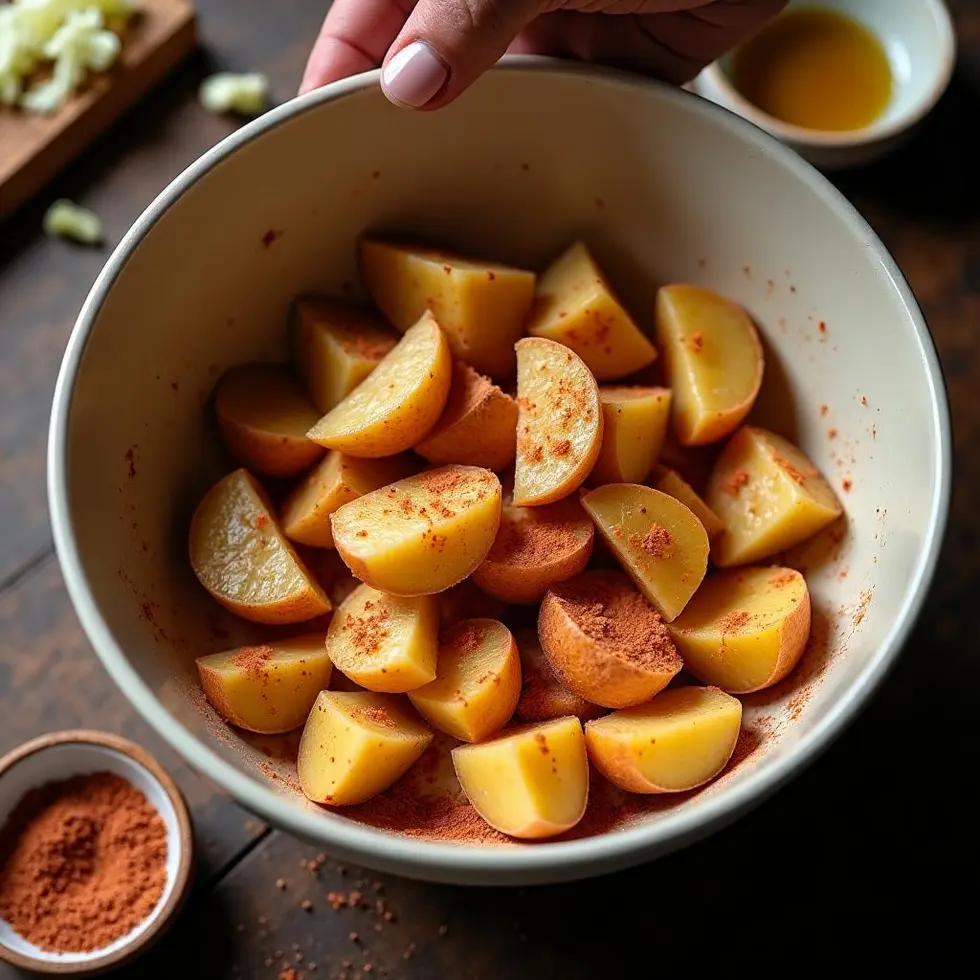
The restaurant-style wedges rely on a dry flour mixture seasoned with paprika, garlic powder, onion powder, black pepper, and salt. This blend coats the potato surface lightly, absorbing just enough moisture to adhere without creating a thick crust. Heavy breading or batter would trap steam and turn soft in the air fryer, while this thin coating dries fast and browns evenly.
Paprika contributes the signature orange-brown color and a mild peppery sweetness that balances the savory garlic and onion. The combination tastes familiar without relying on complex proprietary blends or hard-to-find spices.
Russet potatoes work best because their low moisture and high starch content create a fluffy interior that contrasts with the crisp shell. Yukon golds or red potatoes hold more water and turn waxy rather than tender, which changes the mouthfeel completely.
Oil Application and Coating Method
Tossing the wedges in a tablespoon of olive oil before adding the flour ensures every surface gets light coverage. The oil helps the flour adhere and promotes browning, but you want just enough to coat—not enough to pool at the bottom of the bowl. Excess oil turns the coating gummy and prevents the dry, crisp finish you’re chasing.
After the oil toss, add the flour mixture and shake the bowl until each wedge is evenly dusted. Bare spots brown inconsistently, while clumps of flour taste chalky. A light, even layer gives you uniform color and texture across every piece.
The coating sets fast in the air fryer because the circulating heat pulls moisture out from the surface within the first few minutes. By the time you flip the wedges, the bottom side has already formed a dry shell that won’t stick to the basket.
How to Make Potato Wedges in the Air Fryer
Preheating and Basket Arrangement
Preheat the air fryer to 400°F / 200°C for 3 minutes. A hot basket sears the coating on contact, which sets the crust before moisture can soften it. Skipping the preheat leaves the wedges sitting in a cooler basket long enough for the coating to turn tacky, and they often stick when you try to flip them.
Arrange the wedges in a single layer with space between each piece. Overlapping wedges trap steam and turn soft where they touch, creating pale, limp spots instead of crisp edges. Most standard air fryer baskets hold about 3 servings worth of wedges without crowding; if you’re cooking more, work in batches rather than stacking them.
Spacing allows hot air to reach every surface, which is the reason air fryers brown food faster than ovens. Packed baskets defeat that advantage and force you to add time, which dries out the interior before the outside finishes.
Timing, Temperature, and the Flip
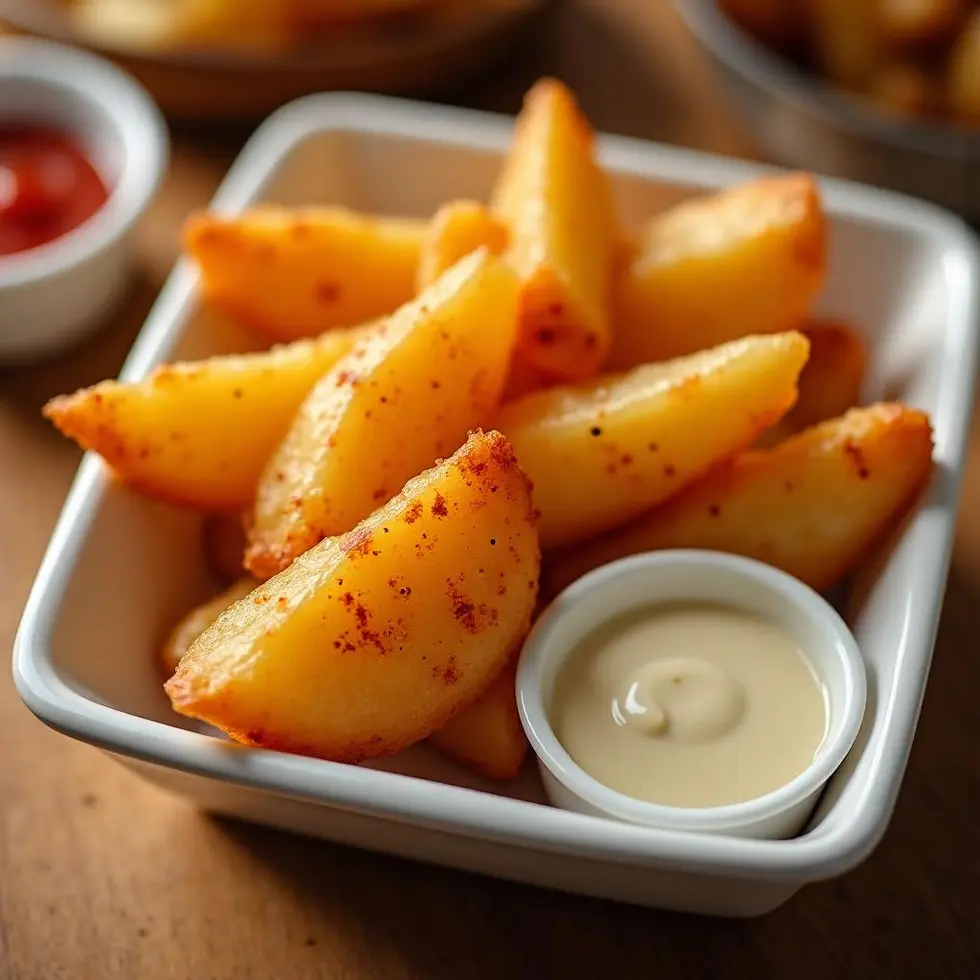
Air fry the wedges at 400°F / 200°C for 16 to 18 minutes total, flipping them halfway through. The high temperature drives moisture out of the coating quickly, creating the dry, crisp shell that mimics deep-fried texture without submerging the potatoes in oil. Lower temperatures leave the coating pale and soft, while higher heat can scorch the paprika before the potato cooks through.
Check the wedges at 16 minutes. The coating should look golden brown and feel dry when you touch it with a spatula, and the interior should feel tender when you pierce a thick wedge with a fork. If the coating is pale or the potato resists the fork, add 2 more minutes and check again.
Flipping at the halfway mark ensures both sides brown evenly. The bottom side cooks faster because it sits directly against the hot basket, so turning the wedges balances the color and prevents one side from over-browning while the other stays pale. Savory Experiments recommends checking the wedges early when adapting oven recipes to the air fryer, because the concentrated heat shortens cook time significantly.
Visual cues tell you more than the timer. Golden edges and a dry coating mean the wedges are ready; pale flour patches or wet-looking surfaces mean they need more time.
Seasoning Blends and Dipping Sauces
Adjusting the Spice Mix
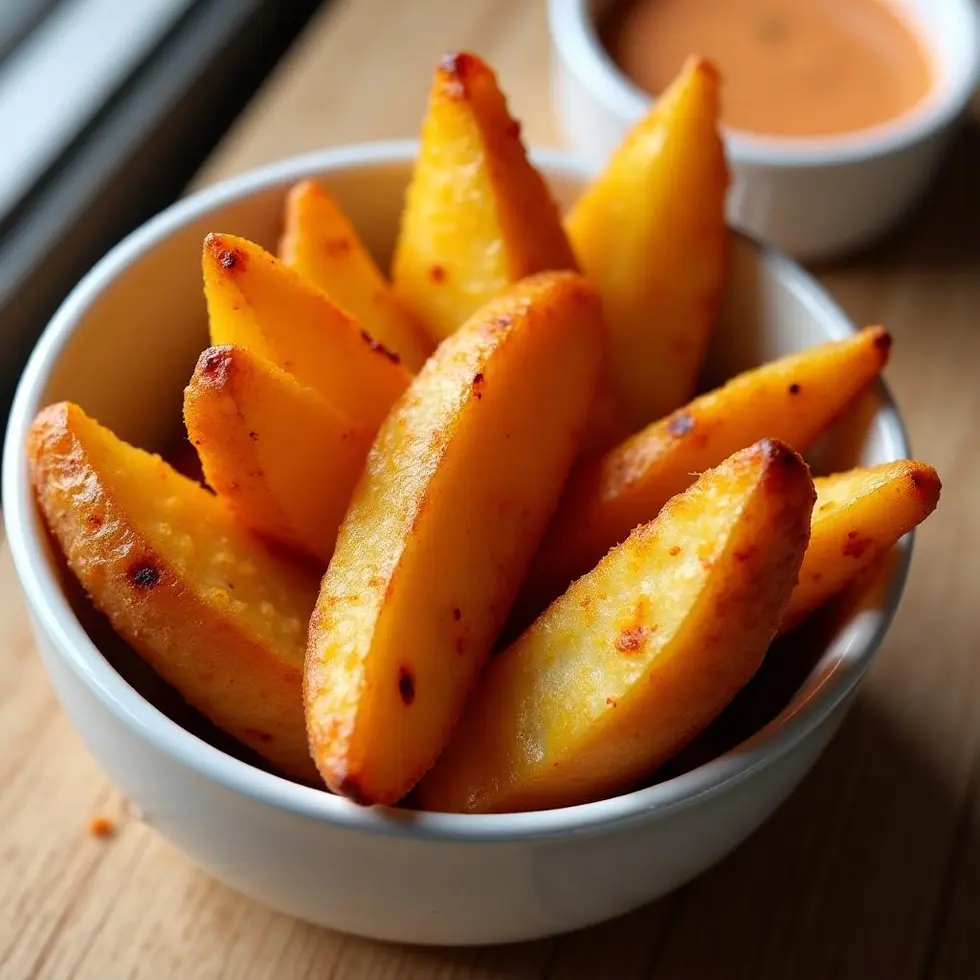
The base recipe uses paprika, garlic powder, onion powder, black pepper, and salt. You can swap smoked paprika for regular paprika to add a subtle wood-fired flavor that makes the wedges taste grilled rather than fried. Cayenne or chili powder brings heat; start with a quarter teaspoon if you want mild warmth, or double it for a bolder kick.
Cumin and coriander shift the flavor toward a more earthy, smoky profile that pairs well with ranch or cilantro-lime dipping sauces. Italian seasoning or dried oregano gives the wedges a Mediterranean angle that works with aioli or tzatziki. Whatever blend you choose, keep the total seasoning amount around 2 teaspoons so the coating doesn’t taste oversalted or chalky.
Mix the spices into the flour thoroughly before tossing the wedges. Uneven distribution leaves some pieces bland and others overpowering, because the coating is thin enough that every pinch of spice shows up in the bite.
Serving with Dipping Sauces
Serve the wedges immediately while the coating is still dry and crisp. They hold texture for about 15 minutes after cooking, but reheating doesn’t restore the original crunch—the coating absorbs moisture from the potato as it cools, turning softer with every passing minute.
Ranch dressing, garlic aioli, and ketchup are classic pairings that balance the savory, peppery coating. For a tangy contrast, try a mustard-based sauce or a spicy mayo spiked with sriracha. The wedges also work alongside grilled proteins or sandwiches, much like the way peanut oil gives Chick-fil-A sandwiches a clean, neutral frying base that doesn’t compete with the chicken’s seasoning.
If you’re serving a crowd, keep finished batches warm in a 200°F oven on a wire rack while you cook the rest. Stacking them in a bowl traps steam and softens the coating before they reach the table.
Texture Depends on Spacing and Timing
The difference between crisp wedges and soft ones comes down to how much moisture escapes during cooking. Crowded baskets trap steam, which keeps the coating wet and prevents browning. Leaving space between each wedge lets hot air pull moisture out fast, creating the dry shell that cracks when you bite.
Check the wedges at 16 minutes and trust your eyes. If the coating looks golden and dry, they’re done. If it still looks pale or feels tacky, give them 2 more minutes and check again. Air fryer models vary in heat intensity, so timing is always a starting point, not a guarantee.
Frequently Asked Questions
Can I use sweet potatoes instead of russet potatoes?
Sweet potatoes work, but they cook faster and turn softer inside because they hold more moisture. Reduce the cook time by 2 to 3 minutes and check for tenderness at 14 minutes. The coating may not crisp as thoroughly because sweet potatoes release more steam as they cook.
Do I need to soak the potato wedges before coating them?
Soaking removes surface starch, which can help prevent sticking, but it also adds moisture that slows down crisping. If you soak the wedges, dry them completely with a towel before tossing them in oil and flour. Wet potatoes won’t hold the coating evenly.
Why are my wedges sticking to the air fryer basket?
Sticking happens when the basket isn’t preheated or when the wedges are placed too close together. Preheat the air fryer for 3 minutes before adding the wedges, and make sure they’re arranged in a single layer with space between each piece. A light oil coating also helps prevent sticking.
Can I make these wedges ahead of time?
Wedges lose their crisp texture within 30 minutes after cooking, so they’re best served fresh. If you need to prep ahead, cut and coat the potatoes, then refrigerate them uncovered for up to 2 hours before air frying. Don’t store cooked wedges—they turn soft and won’t crisp up again when reheated.
How do I reheat leftover potato wedges?
Reheat leftover wedges in the air fryer at 375°F / 190°C for 3 to 4 minutes. The coating will firm up slightly, but it won’t be as crisp as freshly cooked wedges. Avoid microwaving—it steams the coating and makes the wedges limp.
Can I double the recipe?
You can double the recipe, but cook the wedges in batches to avoid overcrowding the basket. Stacking or overlapping wedges prevents even browning and leaves some pieces undercooked. Keep finished batches warm in a low oven while you cook the rest.
KFC-Style Potato Wedges
Ingredients
Method
- Preheat the air fryer to 400°F / 200°C for 3 minutes.
- Combine flour, paprika, garlic powder, onion powder, black pepper, and salt in a large bowl.
- Toss the potato wedges with olive oil, then coat evenly with the seasoned flour mixture.
- Arrange the wedges in a single layer in the air fryer basket without overcrowding.
- Air fry for 16 to 18 minutes at 400°F / 200°C, flipping halfway, until golden brown and crispy.
- Check at 16 minutes — the coating should be golden and the interior tender when pierced with a fork.
- Serve immediately while hot and crispy with your favorite dipping sauce.
